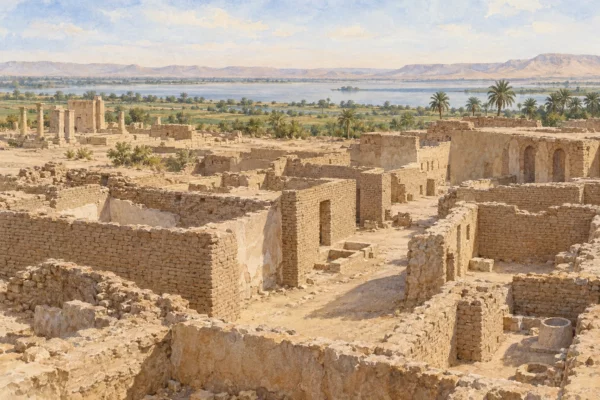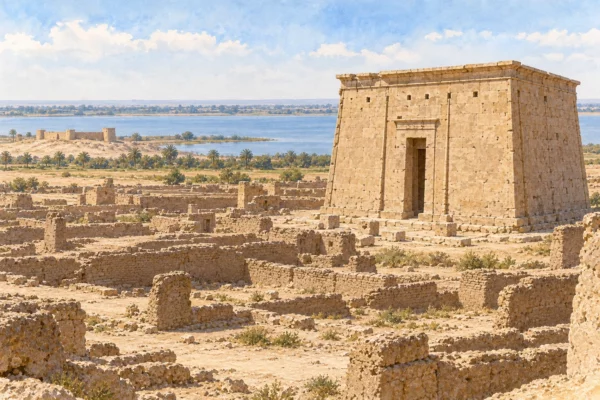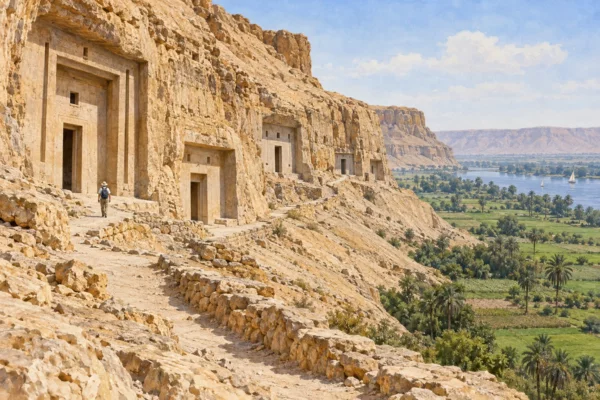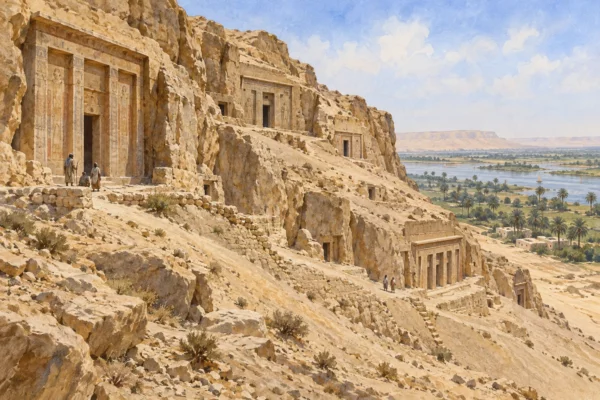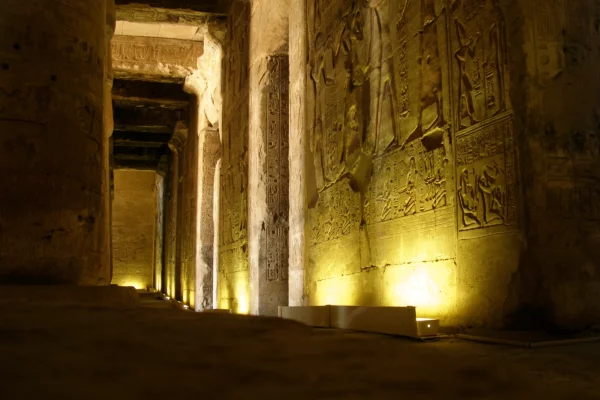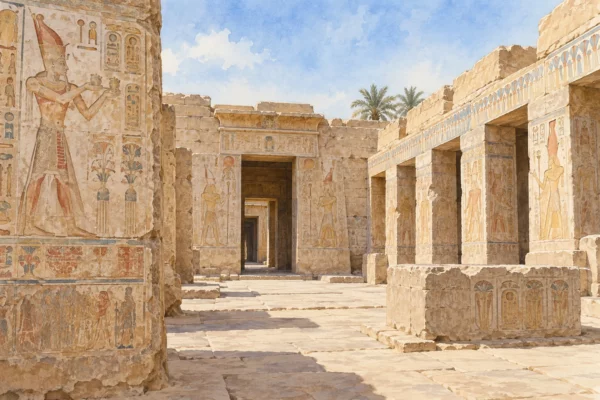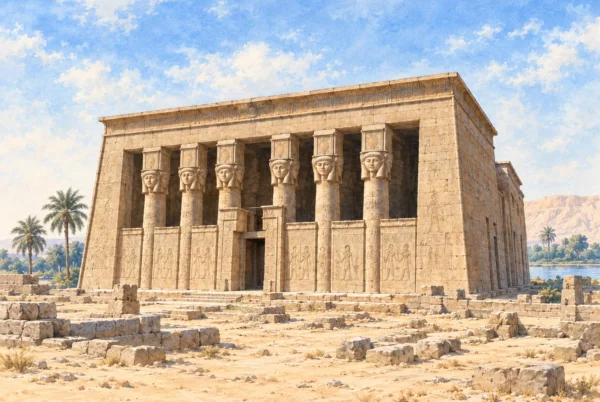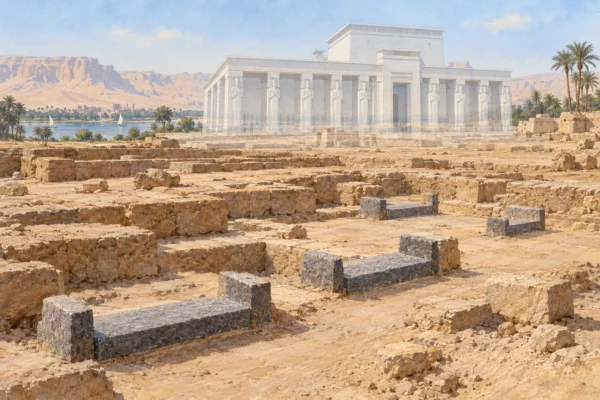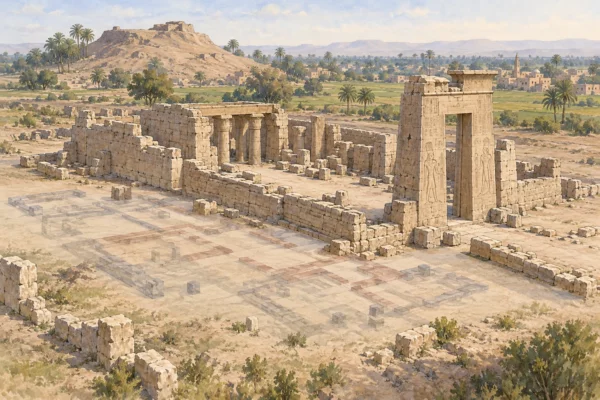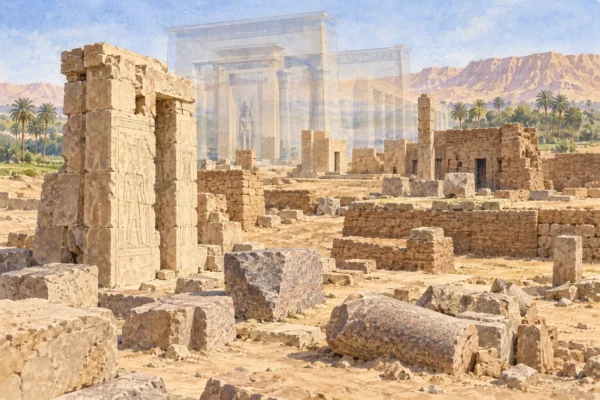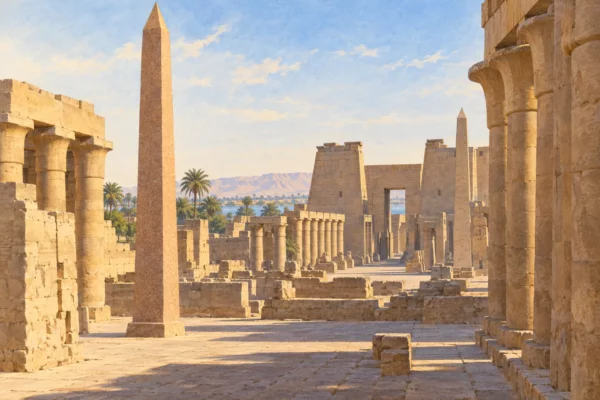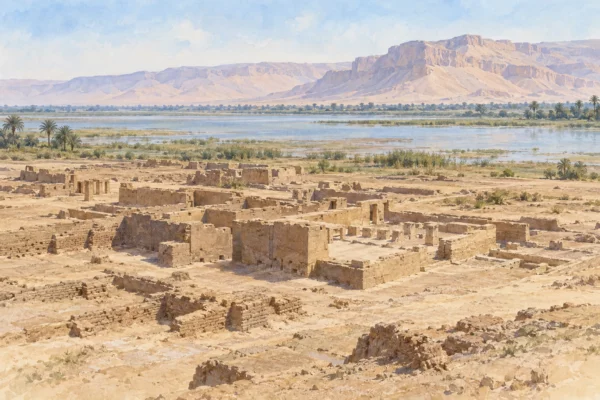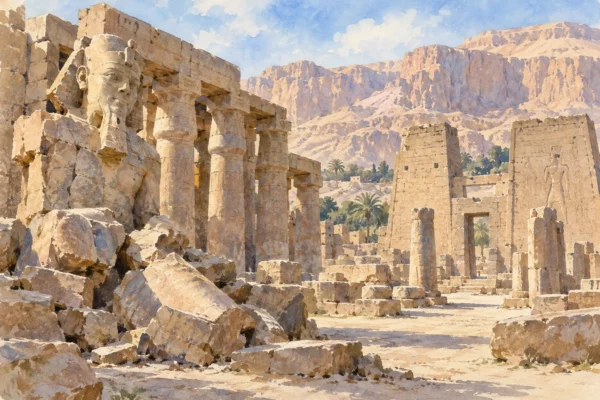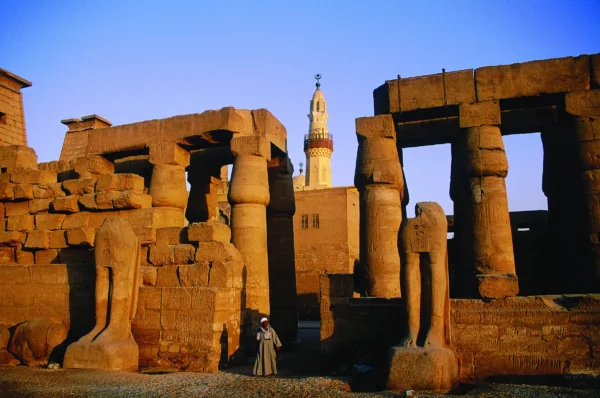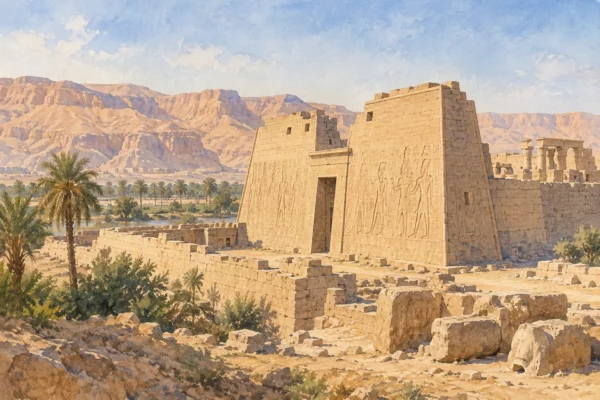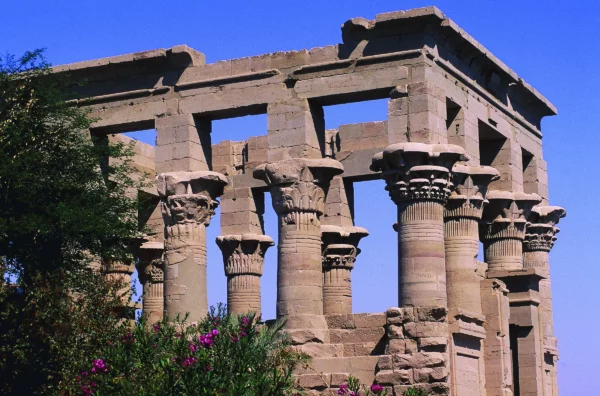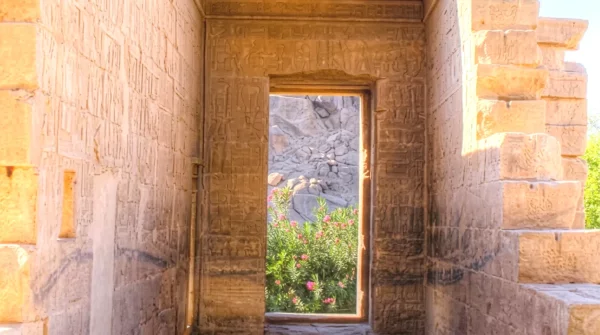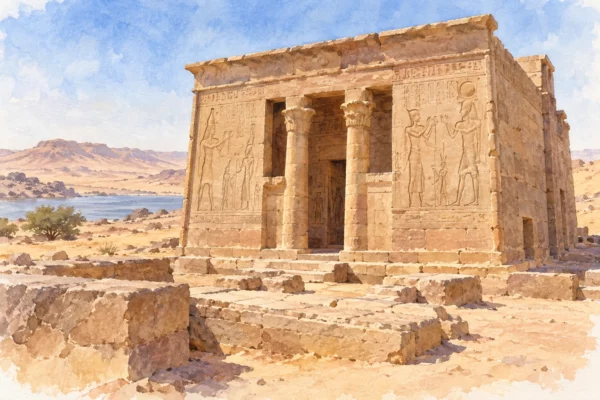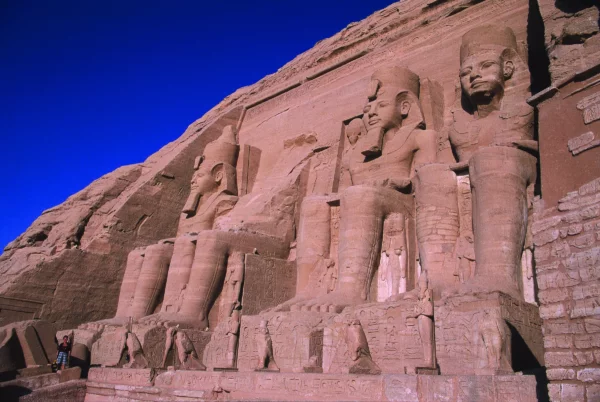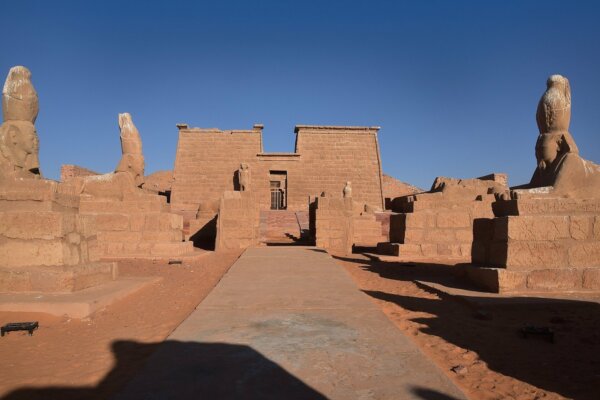
Wadi es-Sebua, a temple saved from the waters
Wadi es-Sebua: a temple of Ramses II, an avenue of sphinxes and a rescue that transformed the Nubian landscape.
Read the articlePyramids, temples, tombs and sunken cities: discover the archaeological sites of Egypt, their remains and their history.
Wadi es-Sebua: a temple of Ramses II, an avenue of sphinxes and a rescue that transformed the Nubian landscape.
Read the articleButo, today Tell el-Fara’in, lies in the north-west of the Nile Delta. Beneath its earth mounds lie the traces of many successive occupations. The oldest known go back to the…
Read the articleIn the eastern Delta, Tell el-Dab‘a covers ancient Avaris, capital of the Hyksos rulers of the 15th Dynasty. This identification is firmly established by the excavations of the Austrian Archaeological…
Read the articlePi-Ramses was the great residence of the eastern Delta under Ramses II and his successors. Its main area is identified around Qantir, while Tell el-Dab‘a/Avaris further south belongs to an earlier…
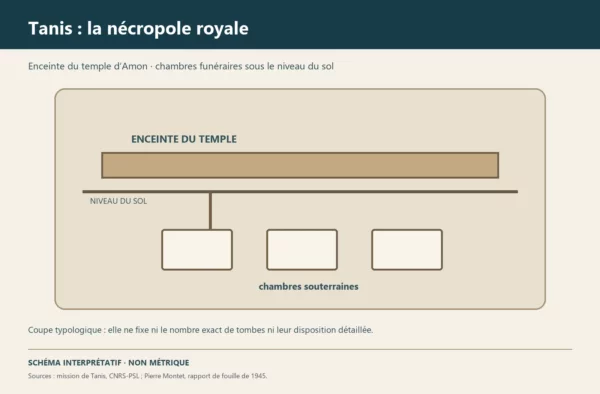
Read the articleTanis, Tell San el-Hagar in the eastern Delta, became a great political and religious centre of the Third Intermediate Period. Its temples of Amun, Mut and Khonsu and its royal…
Read the articleTell Basta, ancient Per-Bastet, was the centre of the cult of Bastet in the eastern Delta. The main temple is the result of centuries of work: the presence of Old…
Read the articleNaucratis, in the western Delta, was an active trading port from the 7th century BC. The label of Greek trading post recalls an essential role, but the research of the…
Read the articleAlexander founded Alexandria in 331 BC on the Mediterranean coast, near the older nucleus of Rhakotis. The city became the capital of the Ptolemies, then a Roman and Byzantine metropolis.…
Read the articleThe Pharos lighthouse was built at the entrance to the harbour of Alexandria under the first Ptolemies, probably completed under Ptolemy II. The building no longer stands. The present Qaitbay area…
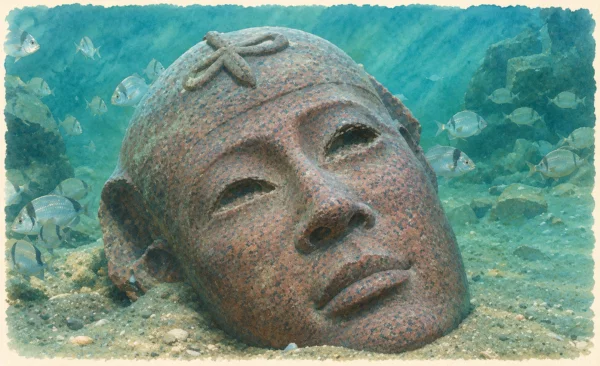
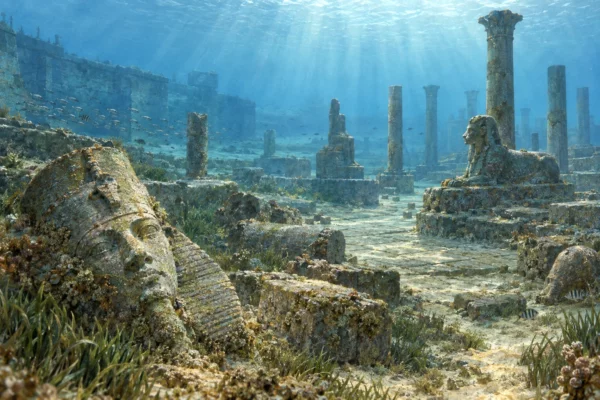
Read the articleThonis-Heracleion occupied the Canopic mouth of the Nile, in Aboukir Bay. The city controlled trade long before the foundation of Alexandria and remained active in the Ptolemaic period. The two…
Read the articleCanopus, west of Thonis-Heracleion in the Canopic region, was a religious and urban centre on the Alexandrian coast. Part of its remains now lies beneath Aboukir Bay. It must be…
Read the articleTaposiris Magna and Plinthine lie on the northern shore of ancient Lake Mareotis, west of Alexandria. These two neighbouring sites, about 2.2 kilometres apart, did not form a single town.…
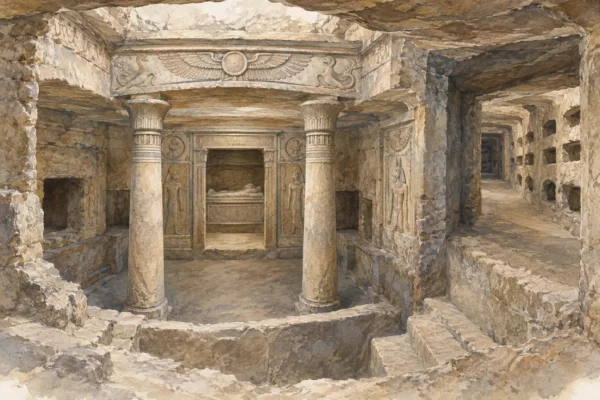
Read the articleThe catacombs of Kom el-Shuqafa are a Roman underground necropolis in Alexandria. They combine funerary spaces, meeting rooms and decoration blending Egyptian traditions with Graeco-Roman forms. They are neither a…
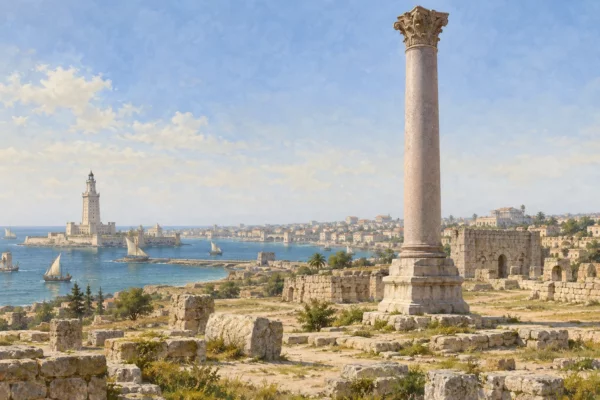
Read the articleThe great column of Alexandria is a monument erected at the end of the 3rd century AD in honour of Diocletian. Its traditional name of Pompey’s Pillar is mistaken: Pompey…
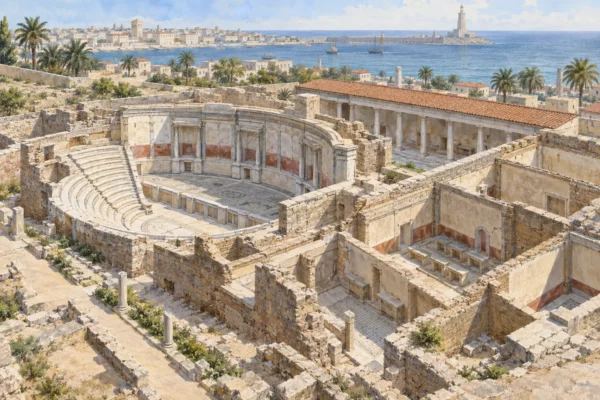
Read the articleKom el-Dikka is an excavated area in the heart of Alexandria. It preserves a small theatre or odeon, auditoria, baths and houses of Roman and Byzantine phases. The classification ‘2nd–6th…
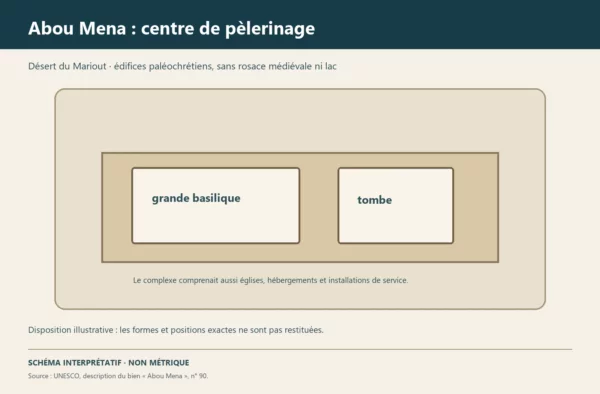
Read the articleAbu Mena, south-west of Alexandria, grew up around the tomb of St Menas from late Antiquity. The pilgrimage centre combined a sanctuary, buildings for receiving visitors and housing. It should…
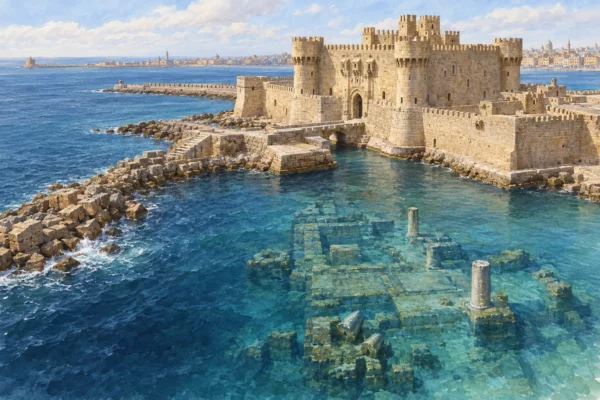
Read the articleThe Mamluk sultan Qaitbay had the fort of Alexandria built between 1477 and 1479 at the tip of the former island of Pharos. The place coincides with that of the…
Read the articleIn the north of the Saqqara plateau, near ancient Memphis, large mudbrick tombs were built for the elites of the first dynasties, c. 3100–2700 BC. Their visible part took the…
Read the articleNorth-west of Giza, Abu Rawash is often associated with the pyramid of King Djedefre. Cemetery M, however, belongs to a much earlier time: the middle of the 1st Dynasty, around…
Read the articleAt the beginning of the 3rd Dynasty, c. 2667–2648 BC according to the chronology of the Egyptian ministry, King Netjerikhet had an unprecedented funerary complex built at Saqqara. Today he…
Read the articleSouth of the complex of Djoser, on the Saqqara plateau, lies the interrupted building site of another pyramid of the 3rd Dynasty. It is attributed to King Sekhemkhet, whose royal…
Read the articleAt Zawyet el-Aryan, between Giza and Saqqara, an unfinished pyramid recalls the architectural experiments of the 3rd Dynasty, at the beginning of the Old Kingdom. It is called the ‘Layer…
Read the articleSouth of Saqqara, the Bent Pyramid of Dahshur is one of the great monuments of Sneferu, the first king of the 4th Dynasty. Its faces change slope sharply halfway up:…
Read the articleAt Dahshur, the Red Pyramid is the tallest on the site. It was built for Sneferu, the first king of the 4th Dynasty, after the Bent Pyramid further south. Its…
Read the articleAt Dahshur, the pyramids of Sneferu were part of much larger landscapes. East of the Bent Pyramid, a causeway linked the monument to a temple near the cultivated valley. Traces…
Read the articleOn the Giza plateau, the Great Pyramid was built for Cheops (Khufu), a king of the 4th Dynasty, c. 2589–2566 BC according to the chronology used here. It originally stood…
Read the articleThe Great Pyramid of Cheops was surrounded by the tombs of his family and of high-ranking figures. To the east, a necropolis of mastabas forms rows of rectangular monuments. A…
Read the articleSouth-east of the Giza plateau, Heit el-Ghurab preserves the traces of a vast settlement linked to the pyramid building sites. The best-known levels relate mainly to Chephren and Mycerinus, in…
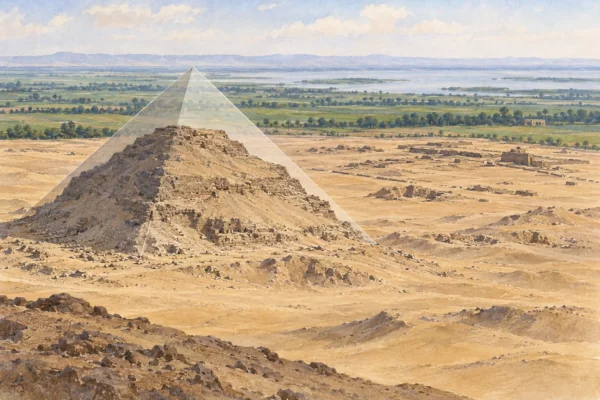
Read the articleAt Abu Rawash, north-west of Giza, King Djedefre, a son of Cheops, established his funerary complex in the 4th Dynasty. All that remains today is a very ruined core, set…
Read the articleChephren (Khafre), the son of Cheops, had the second great pyramid of the Giza plateau built c. 2558–2532 BC. Raised on higher ground than his father’s, it can look just…
Read the articleOn the Giza plateau, a figure with a royal head and a lion’s body looks towards the east. The Great Sphinx was carved from the natural limestone during the 4th…
Read the articleThe pyramid of Mycerinus (Menkaure) is the smallest of the three great pyramids of Giza. The king probably reigned c. 2532–2503 BC, at the end of the 4th Dynasty. His…
Read the articleIn the north of Saqqara, near the north-east corner of Djoser’s enclosure, lie the remains of the pyramid of Userkaf. This king opened the 5th Dynasty, after the great building…
Read the articleAt Abusir, south of Giza, Sahure had a funerary complex built during the 5th Dynasty. His pyramid is now badly ruined, but the remains of its temples and their decoration…
Read the articleAt Abusir, the pyramid of Neferirkare Kakai still dominates the central sector of the necropolis despite its ruined state. This king of the 5th Dynasty succeeded Sahure. His funerary complex…
Read the articleThe pyramid of Niuserre stands among the royal monuments of Abusir, built during the 5th Dynasty. The king had his own tomb built and took over a causeway previously planned…
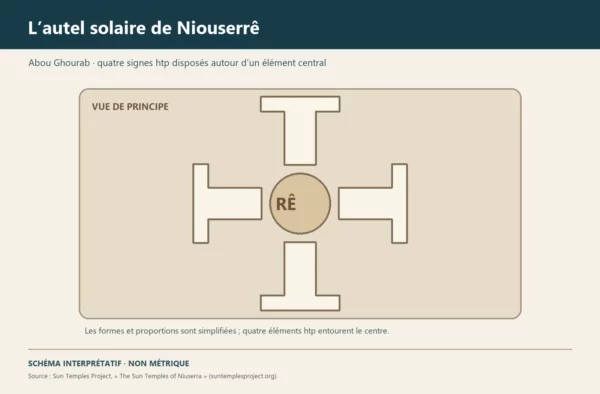
Read the articleNorth of Abusir, King Niuserre had a temple dedicated to the sun god Ra built at Abu Ghurab during the 5th Dynasty. It is not his funerary pyramid, which lies…
Read the articleIn 2025, an Egyptian mission announced the discovery at Saqqara of the tomb of Userefre, or Waser-If-Re, presented as a son of King Userkaf. The monument belongs to the beginning…
Read the articleSouth of the complex of Djoser at Saqqara, the pyramid of Unas is more modest than the giants of Giza. Unas, the last king of the 5th Dynasty, reigned according…
Read the articleTeti, the first king of the 6th Dynasty, had his pyramid built at Saqqara c. 2345–2323 BC. From the outside it now looks like a hill of stone. Yet its…
Read the articleAt Saqqara, north of the pyramid of Teti, the mastaba of Mereruka opens a window on the royal court and on images of daily life at the end of the…
Read the articleUserkare reigned at the beginning of the 6th Dynasty, between Teti and Pepi I. His name survived in the king lists and in the annals of South Saqqara, but his funerary…
Read the articleAt South Saqqara, King Pepi I had his pyramid built in the 6th Dynasty, around the middle of the 3rd millennium BC. His throne name was Meryra. The king’s complex became…
Read the articleThe tomb of Mehu belongs to Saqqara and to the 6th Dynasty. Discovered in 1940 by the Egyptian archaeologist Zaki Saad, it lies near the complex of Djoser. Mehu was…
Read the articleAround the pyramid of Pepi I, at South Saqqara, several queens and women of the royal family had their own monuments. The excavations of the French-Swiss Archaeological Mission have revealed a…
Read the articleThe pyramid of Ankhesenpepi II lies in the queens’ necropolis south-west of that of Pepi I, at South Saqqara. This queen was the wife of Pepi I and then of Merenre I, and the…
Read the articleMerenre I succeeded Pepi I during the 6th Dynasty. His pyramid lies at South Saqqara, near the other royal monuments of this period. Its exterior is now very ruined, but its funerary…
Read the articleThe pyramid of Pepi II stands at South Saqqara, at the heart of the funerary complex of King Neferkare, a ruler of the late 6th Dynasty. His reign was exceptionally long,…
Read the articleSouth of the Step Pyramid of Djoser, Tabbet al-Guesh is not an isolated tomb but a vast stretch of the Saqqara necropolis, between the unfinished complex of Sekhemkhet and the…
Read the articleAt the entrance to the funerary chapel, a profile carved in stone makes Pepior immediately present. At Tabbet al-Guesh, in the necropolis of South Saqqara, Vassil Dobrev’s team found not…
Read the articleIn February and March 2015, Vassil Dobrev’s mission opened two burial chambers at Tabbet al-Guesh in the names of Sabi and Ankhti, both lector priests under the reign of Pepi II.
Read the articleIn the north of the El-Lisht necropolis, on the edge of the desert and the Nile valley, rises the badly degraded pyramid of Amenemhat I. This ruler opened the 12th Dynasty…
Read the articleThe pyramid of Senusret I stands in the southern part of the El-Lisht necropolis. The king, also written Sesostris I or Senwosret I in publications, succeeded Amenemhat I at the beginning of the 12th…
Read the articleAt Dahshur, south of Saqqara, two kings of the 12th Dynasty had pyramids built in the Middle Kingdom: Amenemhat II, then Senusret III. They belong to distinct complexes, built several generations after…
Read the articleAt Dahshur, Amenemhat III undertook a pyramid during the 12th Dynasty. Its mudbrick core, now heavily eroded and dark, has earned it the modern name of ‘Black Pyramid’. The name does…
Read the articleBefore becoming the last king of the 18th Dynasty, Horemheb had a large tomb built at Saqqara, near the old capital Memphis. He was then a senior military and political…
Read the articleThe Bubasteion is a sector of the Saqqara cliff associated with Bastet and with deposits of mummified cats. The area also includes New Kingdom tombs reused much later. Their original…
Read the articleThe Serapeum of Saqqara was the necropolis of the Apis bulls linked to Ptah of Memphis. Its use began in the New Kingdom and continued until the Ptolemaic period. The…
Read the articleAt Matariya, in present-day Cairo, traces survive of ancient Heliopolis, a great centre of the cult of Ra-Atum. The obelisk of Senusret I is a visible landmark, but the sanctuary and…
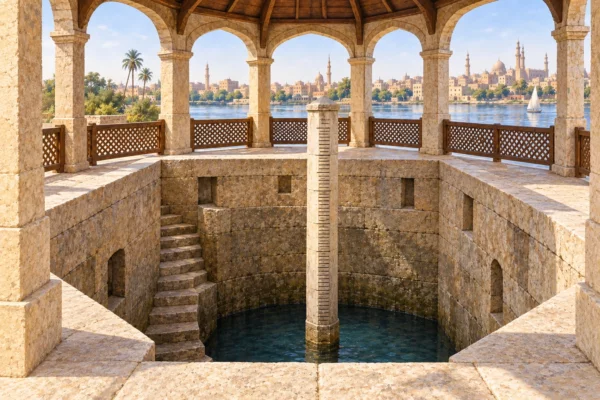
Read the articleThe Nilometer of Roda Island was built in AD 861 on the orders of the Abbasid caliph al-Mutawakkil. It made it possible to read the height of the Nile flood,…
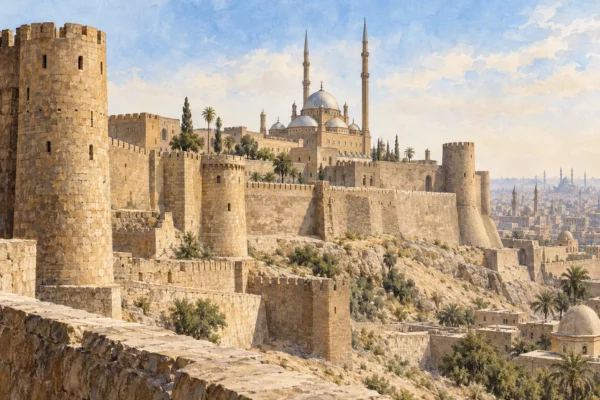
Read the articleIn 1176 Saladin ordered the construction of a citadel on the heights of the Muqattam, overlooking Cairo. The work was completed only in 1207, under the Ayyubid sultan al-Kamil, and…
Read the articleAt the entrance to the Faiyum, El-Lahun brings together the pyramid of Senusret II, a ruler of the 12th Dynasty, and the remains of a large Middle Kingdom town. The town…
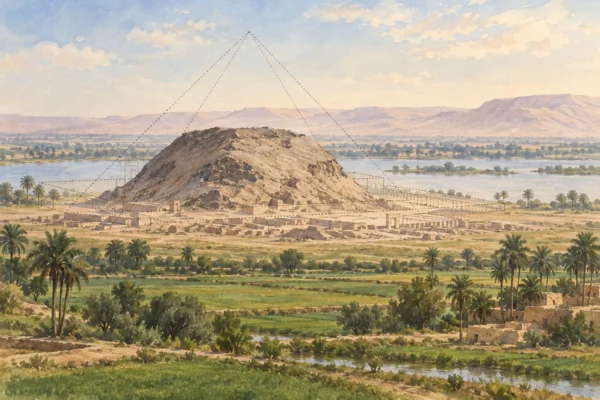
Read the articleAt Hawara, near the entrance to the Faiyum, Amenemhat III had a second pyramid built after a first project at Dahshur. Studies generally regard it as his burial place. Its mudbrick…
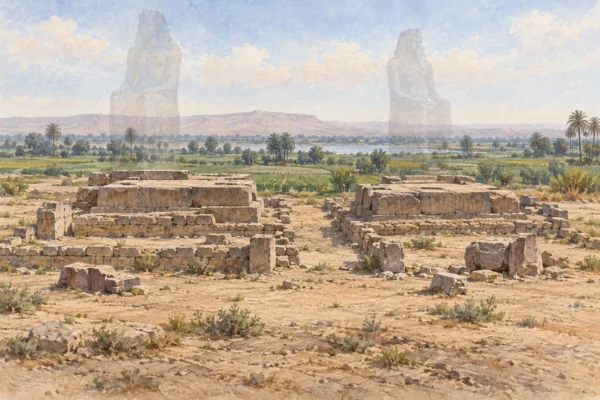
Read the articleIn the Faiyum, Biahmu preserves the bases of two colossal statues of Amenemhat III, a king of the 12th Dynasty. What attracts attention today is no longer the height of the…
Read the articleAt Medinet Madi, in the Faiyum, a small Middle Kingdom sanctuary was founded under Amenemhat III and continued under Amenemhat IV. It was dedicated to Renenutet, a goddess linked to the harvest,…
Read the articleTebtynis, in the south of the Faiyum, combines the temple of Soknebtynis, a local form of Sobek, with a village whose history goes back to the Middle Kingdom. This article…
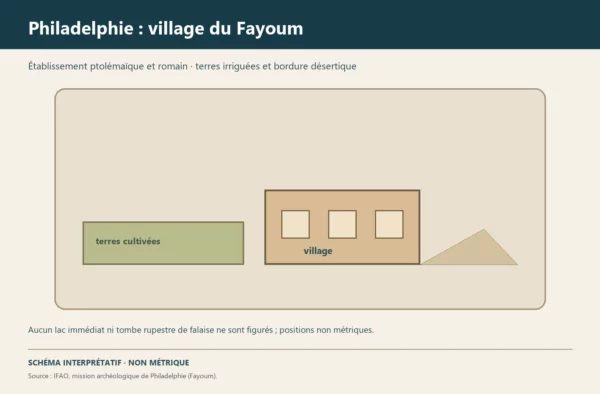
Read the articlePhiladelphia was one of the settlements created in the Faiyum under the first Ptolemies, along a developed irrigation network. Administered as a village, it stood on a route towards the…
Read the articleAt Medinet Madi, in the Faiyum, the sanctuary of Renenutet and Sobek was founded in the Middle Kingdom under Amenemhat III and continued under Amenemhat IV. The Ptolemies added a new set…
Read the articleKaranis, at Kom Aushim in the Faiyum, grew from the Ptolemaic period and flourished above all under Rome. Its surviving houses and objects give a rare glimpse of life in…
Read the articleQasr Qarun, ancient Dionysias, lies in the west of the Faiyum. Its large surviving temple dominates the remains of a Graeco-Roman town. Temple and town have a Ptolemaic and Roman…
Read the articleAt Gabal al-Tayr, in the governorate of Minya, an Egyptian archaeological mission announced in June 2026 the discovery of part of a Predynastic cemetery. The burials identified are attributed to…
Read the articleAt Meidum, in the governorate of Beni Suef, stands a monument of decisive importance in the history of pyramids. Begun as a step pyramid, the structure was enlarged and then…
Read the articleAt Beni Hasan, in the governorate of Minya, tombs were cut into the cliff overlooking the fertile Nile valley. The upper cemetery contains the monumental burials of officials of the…
Read the articleOn Gebel Asyut al-Gharbi, west of the town of Asyut in Middle Egypt, large rock-cut tombs were hollowed out for provincial governors. Several belong to the First Intermediate Period, others…
Read the articleAkhenaten founded Akhetaten, now Tell el-Amarna, as the royal centre of the cult of the Aten in the 14th century BC. The city occupied a broad strip between the Nile…
Read the articleOxyrhynchus, present-day el-Bahnasa in Middle Egypt, was an important town in the Ptolemaic period and then in Roman and Byzantine times. It is world-famous for its papyri, found mainly in…
Read the articleAntinoopolis, near present-day Sheikh Ibada on the east bank of the Nile, was founded by Hadrian after the death of Antinous in AD 130. Its name and its urban programme…
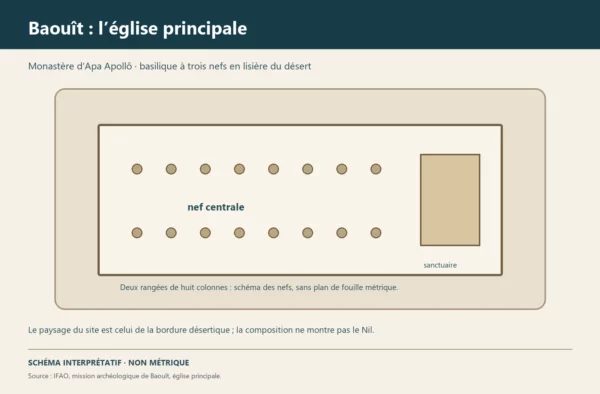
Read the articleBawit, north of Asyut, was home to the monastery of St Apollo, founded at the end of the 4th century. The complex grew in the 5th and 6th centuries and…
Read the articleNear Naqada, in Upper Egypt, several cemeteries have yielded thousands of tombs dug before the appearance of the first pharaohs. They have given their name to the Naqada period, which…
Read the articleIn the desert of Abydos, in Upper Egypt, Cemetery U at Umm el-Qaab tells several centuries of history before the first dynasties. Its roughly 650 known burials range from simple…
Read the articleIn the desert of Abydos, Umm el-Qaab holds the burials of rulers from the beginnings of pharaonic Egypt. After the Predynastic Cemetery U, covered in another article, the royal area…
Read the articleAt Abydos, a huge mudbrick enclosure still stands on the edge of the desert. Known today as Shunet el-Zebib, it was built around 2700 BC for Khasekhemwy, the last king…
Read the articleEl-Hawawish is the great rock-cut necropolis of Akhmim, in the Sohag region of Upper Egypt. Unlike the royal pyramids of Saqqara, its tombs were cut into the rocky slopes for…
Read the articleSouth of Abydos, a natural peak that the Egyptians associated with Anubis overlooks an underground royal necropolis. Senusret III had a very long tomb dug beneath this landscape in the Middle…
Read the articleAt Abydos, a major centre of the cult of Osiris, Seti I had a limestone temple built on an L-shaped plan, together with an underground monument called the Osireion. These two…
Read the articleRamses II had his own temple built at Abydos, separate from the great temple of his father Seti I. The two buildings bear witness to the continuity of the royal and Osirian…
Read the articleThe great temple of Hathor at Dendera dominates an Upper Egyptian sanctuary occupied since long before the Ptolemaic period. The present building was begun in 54 BC under Ptolemy XII and…
Read the articleAt Deir el-Bahri, on the west bank at Thebes, King Mentuhotep II had his mortuary temple built at the foot of a high limestone cliff. A ruler of the 11th Dynasty,…
Read the articleAt the heart of Karnak, near Luxor, the famous New Kingdom monuments cover an older history. In the ‘Middle Kingdom court’, the researchers of the CFEETK are studying the foundations…
Read the articleMedamud, north of Karnak, was a town of the god Montu. The temple whose ruins are visible today was mainly laid out in the Ptolemaic and Roman periods, on an…
Read the articleAt Tod, south of Thebes, Montu had an important sanctuary, built and transformed over many centuries. The oldest remains securely attributed to a temple go back to Mentuhotep II, at the…
Read the articleKarnak is not a building constructed in a single campaign. Around the sanctuary of Amun-Ra, already important in the Middle Kingdom, the kings of the New Kingdom added pylons, courts,…
Read the articleSouth of the great enclosure of Amun lies the domain of Mut, a major goddess of Theban theology. It is linked to the main sanctuary by a processional way. The…
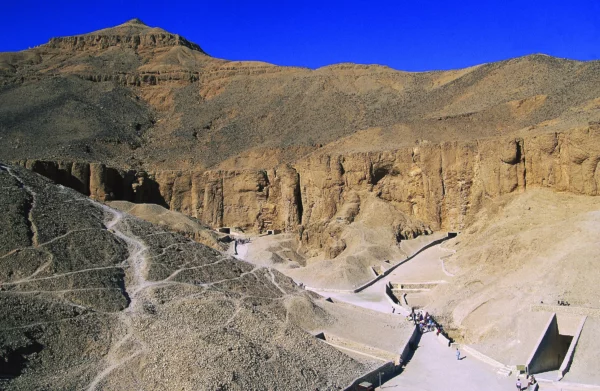
Read the articleOn the west bank at Thebes, the Valley of the Kings holds the burials of many New Kingdom rulers. The tombs are cut into the limestone, far from the great…
Read the articleOn the west bank at Thebes, the Valley of the Queens holds tombs cut for members of the court, then for wives and children of New Kingdom kings. Its modern…
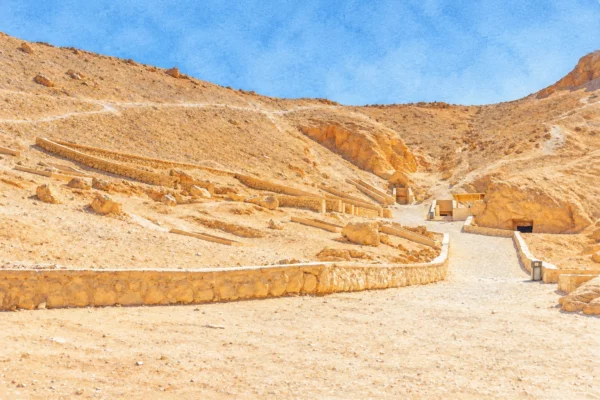
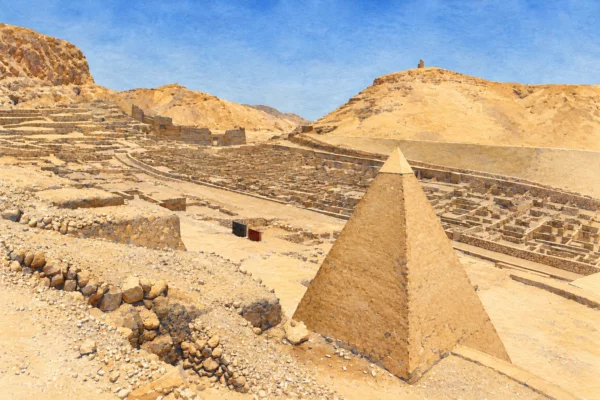
Read the articleDeir el-Medina was the village of the craftsmen who cut and decorated the royal tombs near Thebes. The site brings together their houses, family tombs and places of worship. It…
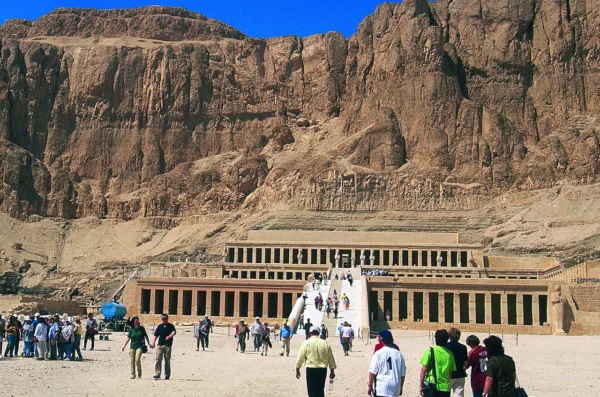
Read the articleOn the west bank at Thebes, the temple of Hatshepsut rises in front of the cliffs of Deir el-Bahri. The ruler had it built in the 15th century BC for…
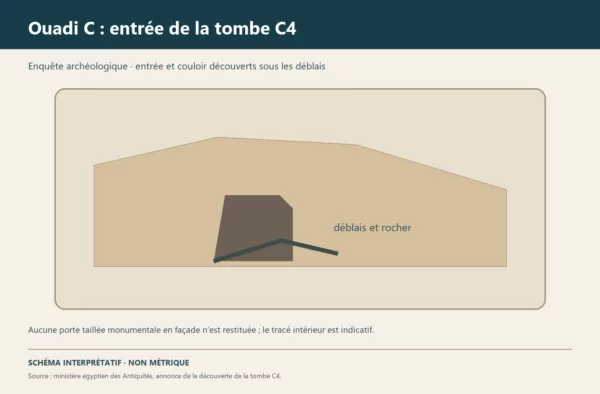
Read the articleTomb C4 is cut into Wadi C, west of the Valley of the Kings. Its entrance was discovered in 2022; the Egyptian ministry attributed it in 2025 to Thutmose II, a…
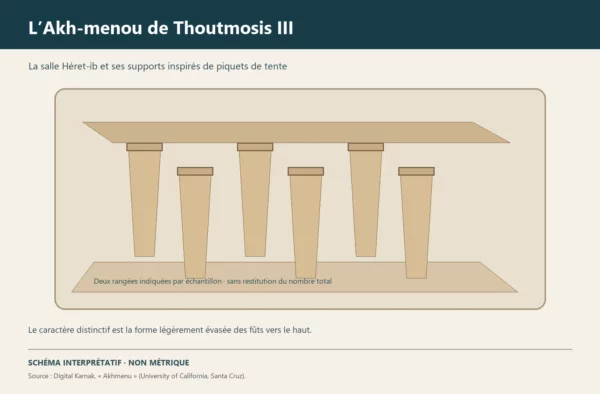
Read the articleEast of the domain of Amun-Ra at Karnak, Thutmose III had the Akhmenu built. It is often called the ‘festival hall’, although it comprises several halls and sanctuaries. This monument offers…
Read the articleLuxor Temple stands south of Karnak, to which a processional way linked it. Amenhotep III had its core built during the 18th Dynasty. Other kings later enlarged it. This article follows…
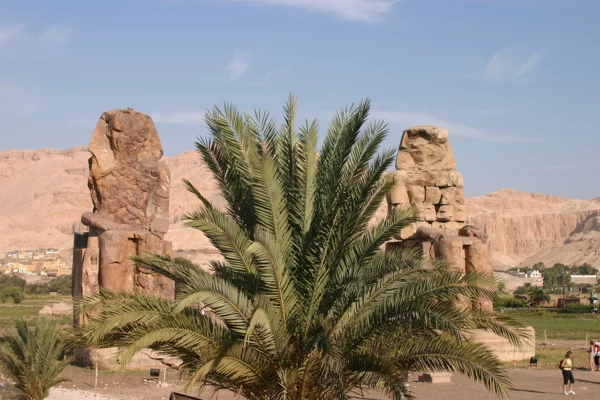
Read the articleOn the west bank at Thebes, two seated statues of Amenhotep III marked the entrance to his immense mortuary temple. They are known as the Colossi of Memnon. The temple of…
Read the articleMalkata is the palace and festival city that Amenhotep III had laid out on the west bank at Thebes. Its development is linked to the king’s jubilees, particularly from the thirtieth…
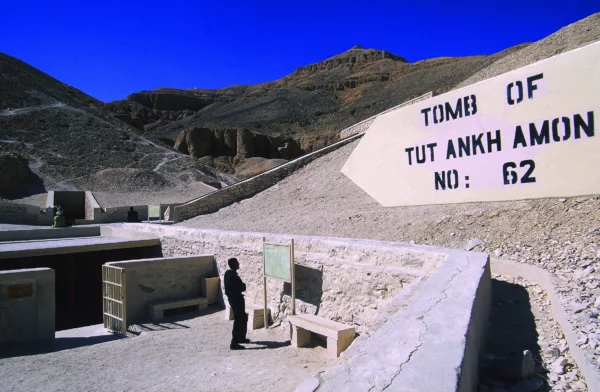
Read the articleKV62, the tomb of Tutankhamun in the Valley of the Kings, was discovered by Howard Carter in 1922. Its relatively well-preserved funerary equipment made the young king famous. The tomb…
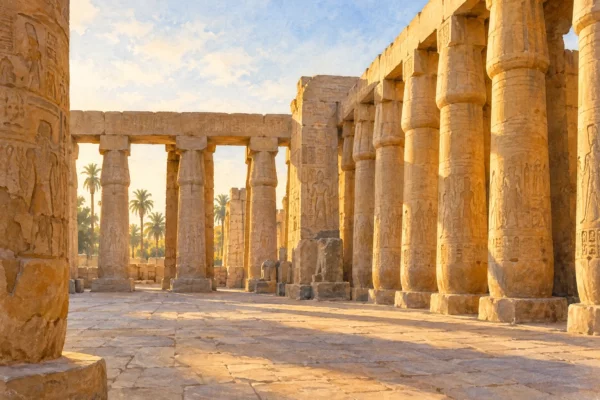
Read the articleThe great hypostyle hall of Karnak is one of the most striking spaces in the domain of Amun-Ra. It lies between the Second and Third Pylons and has 134 columns.…
Read the articleOn the west bank at Thebes, Seti I had a temple of millions of years built at Qurna. This place of royal cult must be distinguished from his tomb KV17, cut…
Read the articleKV17 is the tomb of Seti I in the Valley of the Kings. It is among the longest and most richly decorated in the royal necropolis. This underground funerary monument belongs…
Read the articleThe Ramesseum is the mortuary temple of Ramses II on the west bank at Thebes. It served the cult of the king after his death and that of Amun, in a…
Read the articleRamses II enlarged Luxor Temple in front of the core of Amenhotep III. He had a great pylon, a columned court, colossal statues and two obelisks erected. These Ramesside additions form the…
Read the articleTomb QV66 of Nefertari, wife of Ramses II, lies in the Valley of the Queens. Discovered by Ernesto Schiaparelli in 1904, it is famous for its funerary paintings. It belongs to…
Read the articleRamses III had a great mortuary temple built at Medinet Habu, on the west bank at Thebes. The monument served his cult after death and that of Amun. Its brick enclosure,…
Read the articleThe temple of Khonsu lies south-west of the great domain of Amun at Karnak. Khonsu, a lunar god, formed the Theban triad with Amun and Mut. The visible monument was…
Read the articleAround the vast domain of Amun at Karnak stand several chapels dedicated to Osiris, notably in the northern sector and near the enclosures. They belong to separate building projects of…
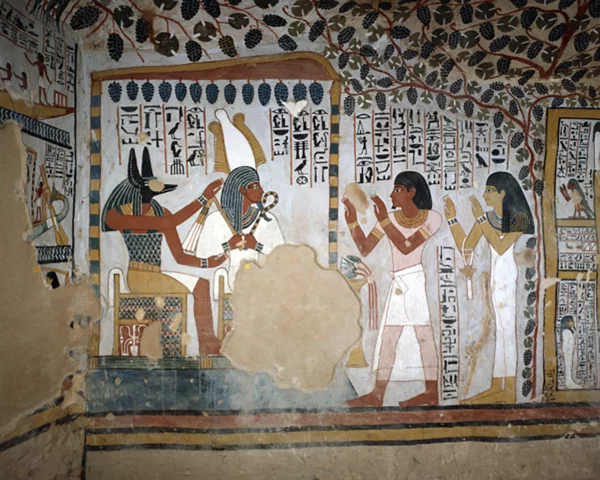
Read the articleDiscover the tomb of Sennefer (TT96), mayor of Thebes: the vine ceiling, the chapel, the painted scenes and their conservation at Sheikh Abd el-Qurna.
Read the articleKarnak as seen by Clémence, aged 11: the gods Amun, Mut and Montu, 2,000 years of pharaonic building work, then the rediscovery by Bonaparte and Champollion.
Read the articleNear Edfu, in Upper Egypt, Hierakonpolis preserves the traces of an extensive occupation predating the first dynasties. Archaeologists study both the mound of the ancient town, in the plain, and…
Read the articleAt Gebel el-Silsila, the Nile passes between two sandstone banks long worked as quarries. Blocks that left from here were used to build temples. But the place also preserves chapels,…
Read the articleEl-Kab, ancient Nekheb on the east bank of the Nile, was a centre of the cult of the vulture goddess Nekhbet. Its monuments cover a long span of time, but…
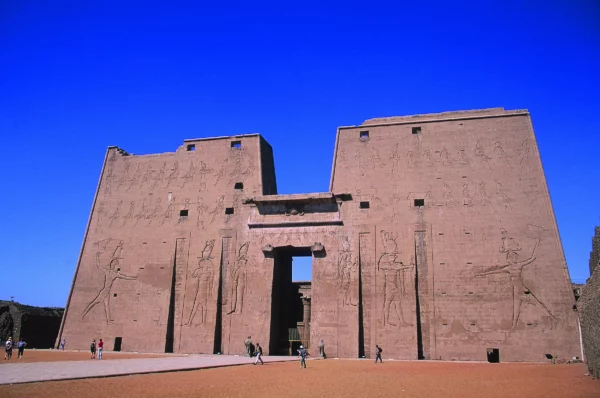
Read the articleThe temple of Horus at Edfu is one of the best-preserved Egyptian temples. Work began in 237 BC under Ptolemy III and was completed in 57 under Ptolemy XII. These two dates…
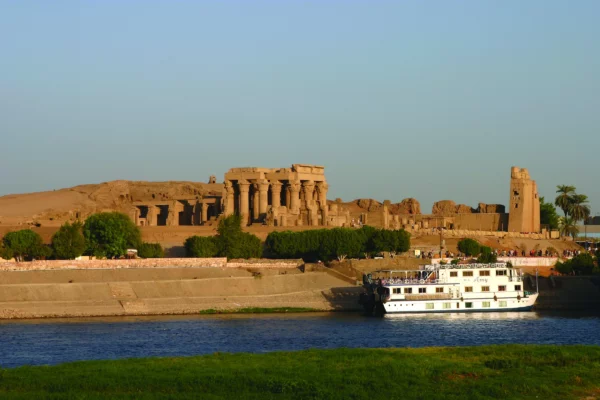
Read the articleThe temple of Kom Ombo, on the bank of the Nile, is dedicated to Sobek and to Haroeris, Horus the Elder. The present monument is mainly Graeco-Roman; an older sanctuary…
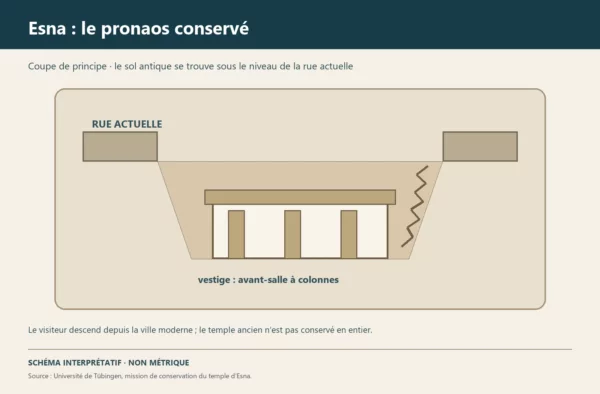
Read the articleAt Esna, the temple was dedicated to Khnum, a creator deity associated with the Nile. The great surviving pronaos bears mainly Roman inscriptions, while the history of the sanctuary goes…
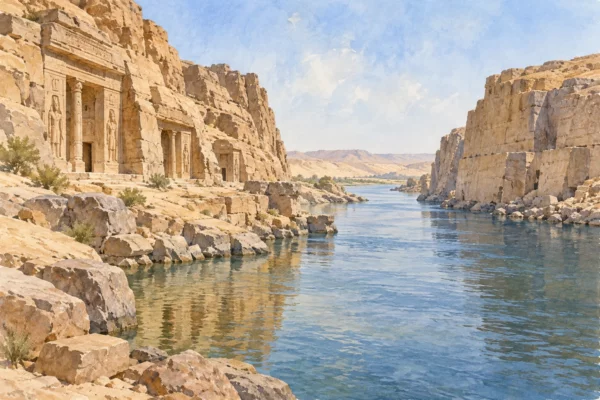
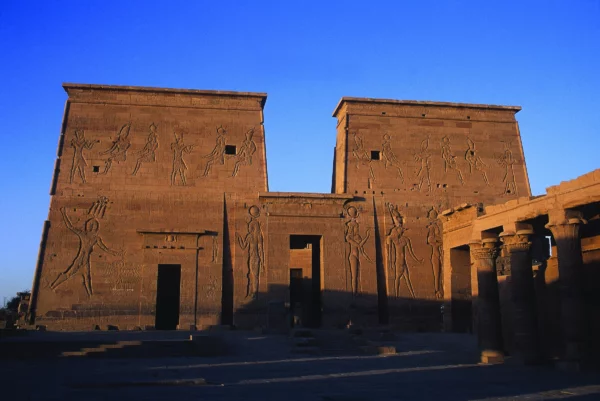
Read the articleAt Philae, the temples of Isis and Hathor, kiosks and the gate of Hadrian tell of a sanctuary between Egypt and Nubia, saved from the waters and rebuilt on Agilkia.
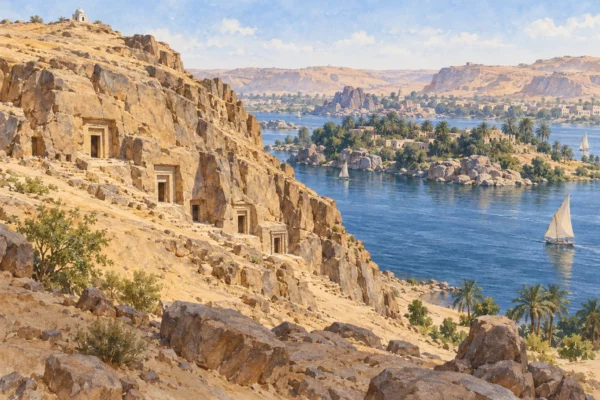
Read the articleOn the west bank of the Nile, opposite the northern tip of Elephantine Island, the cliffs of Qubbet el-Hawa hold a necropolis of rock-cut tombs. Several belong to governors and…
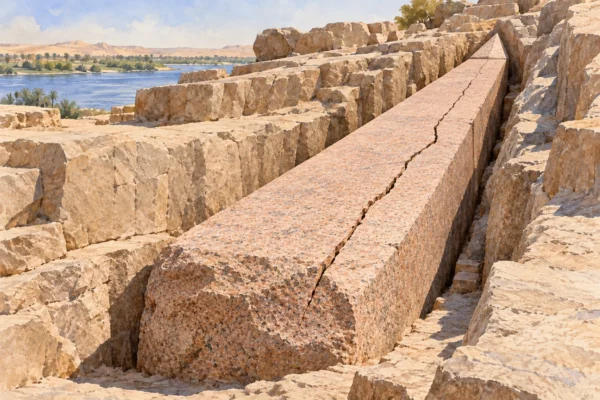
Read the articleThe quarries of Aswan supplied granite for Egyptian monuments of many periods. Their best-known witness is the unfinished obelisk, still attached to the bedrock. A crack probably interrupted the project.…
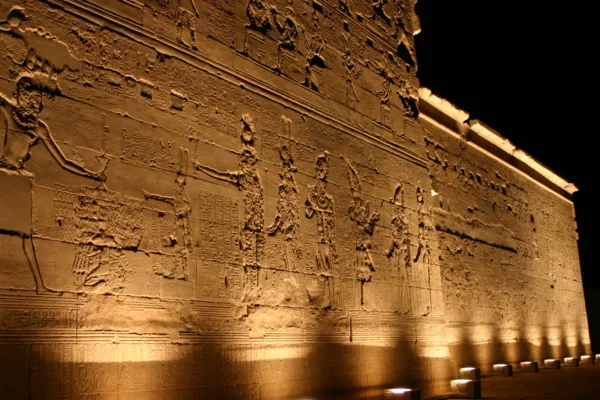
Read the articleThe great sanctuary of Isis originally stood on the island of Philae, near Aswan. Its main surviving structures date from the Ptolemies, with Roman additions. The monuments were moved to…
Read the articleOn the east bank of Philae, the kiosk of Trajan preserves its columns and two offering scenes. Its unfinished decoration sheds light on a Roman-period work site.
Read the articleWest of the temple of Isis, the gate of Hadrian opens the route to Biggeh and the Abaton of Osiris. Its reliefs and inscriptions shed light on the late cults…
Read the articleThe temple of Amada was built in Nubia in the New Kingdom for Amun-Ra and Ra-Horakhty. Its first rooms date from Thutmose III and Amenhotep II; Thutmose IV enlarged it. Threatened by the…
Read the articleThe great temple of Abu Simbel was cut into the Nubian cliff under Ramses II. Its façade bears four colossal seated statues of the sovereign. The building honours Amun-Ra, Ra-Horakhty, Ptah…
Read the articleThe small temple of Abu Simbel was built by Ramses II for Hathor and for Nefertari, his royal wife. Its monumental façade combines the figures of the king and the queen.…
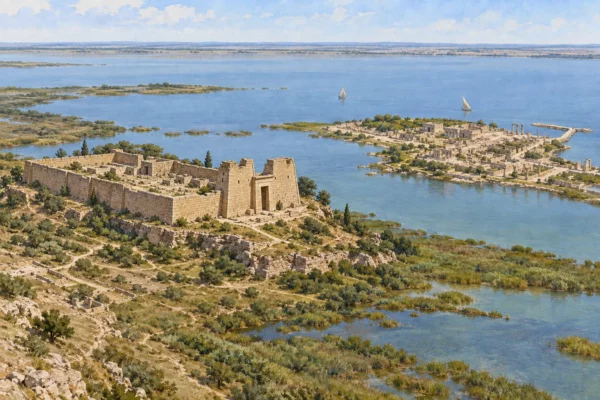
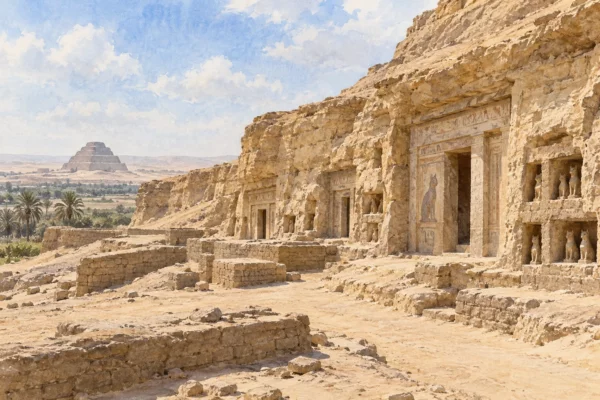
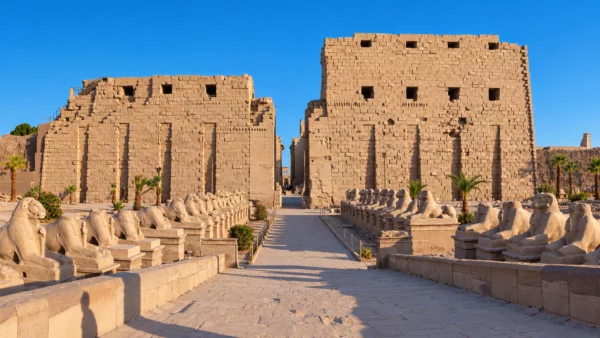
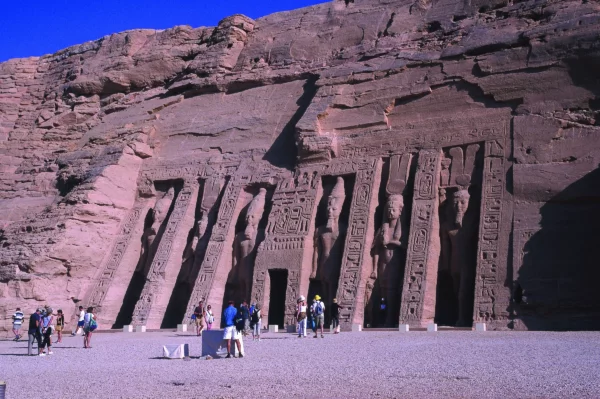
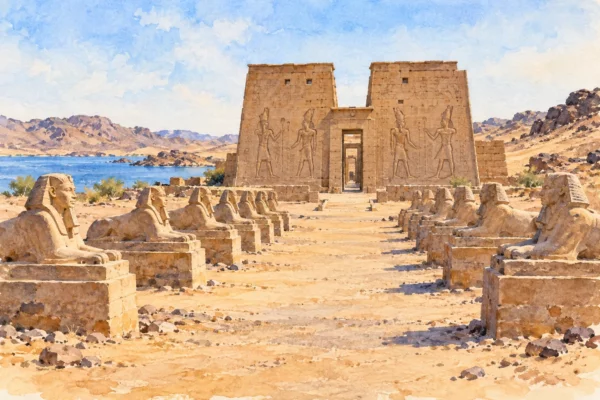
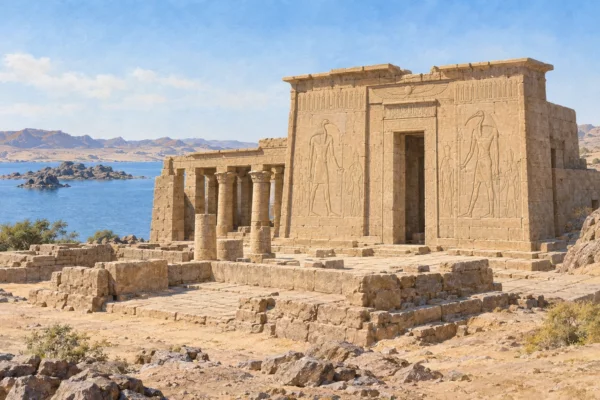
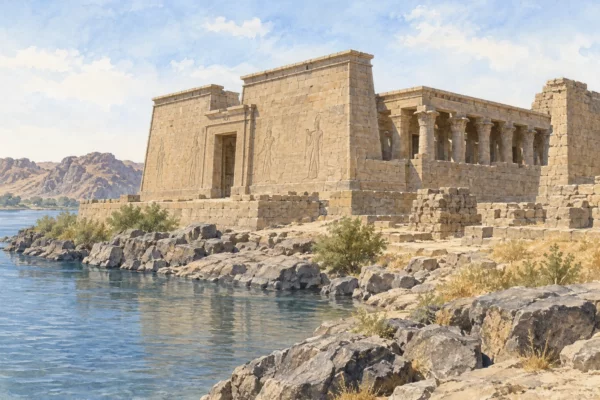
Read the articleAt Wadi es-Sebua, Ramses II had a Nubian temple laid out, preceded by an avenue of sphinxes. The place honours in particular Amun-Ra and Ra-Horakhty. The monument visible today stands at…
Read the articleBeit el-Wali is a small rock-cut sanctuary of Ramses II in Nubia. Its military and religious reliefs were carefully recorded before its transfer near Kalabsha. The modesty of the monument contrasts…
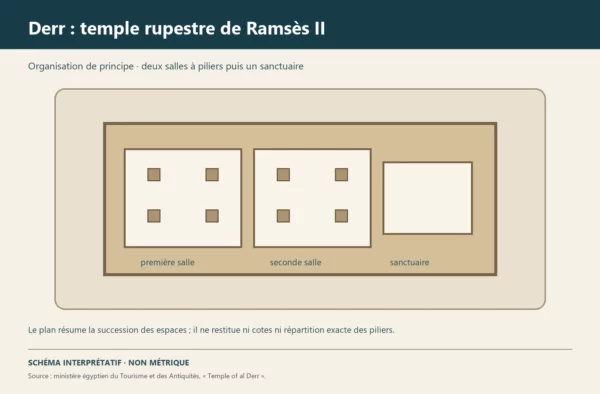
Read the articleThe temple of el-Derr, commissioned by Ramses II, was cut into a cliff in Nubia. It now stands near the temple of Amada at New Amada, after its transfer in 1964.…
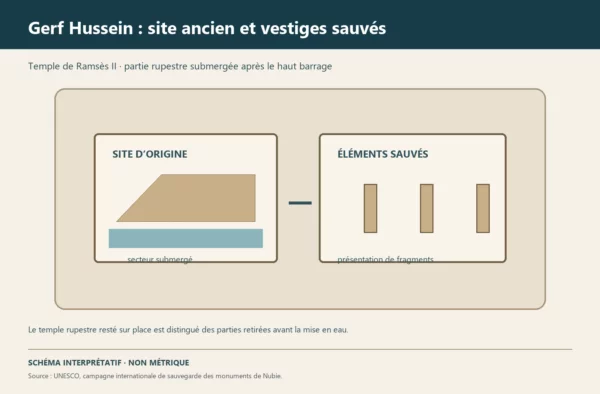
Read the articleGerf Hussein was a temple of Ramses II in Nubia, made up of a built part in front of a part cut into the rock. The original monument was threatened by…
Read the articleThe temple of Dakka was dedicated to Thoth in ancient Nubia. Its early core is linked to the Meroitic king Arqamani; the monument was developed under the Ptolemies, notably Ptolemy IV,…
Read the articleThe temple of Kalabsha, in Lower Nubia, was built mainly under Augustus for the Nubian god Mandulis. Isis and Osiris were also worshipped there. A small Ptolemaic sanctuary nearby recalls…
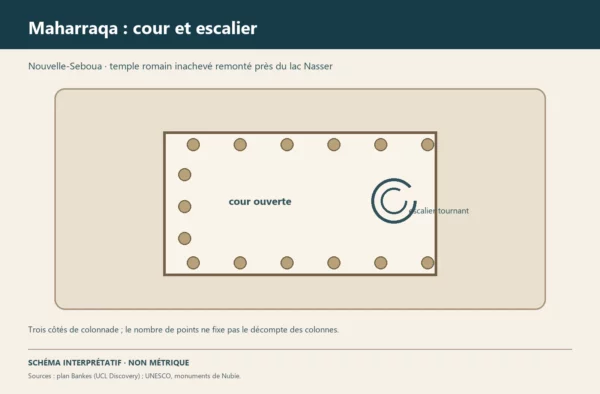
Read the articleEl-Maharraqa is a small temple in Lower Nubia dating from the Roman period. Its unfinished state is an essential feature: pylon, decoration or sanctuary should not be silently completed as…
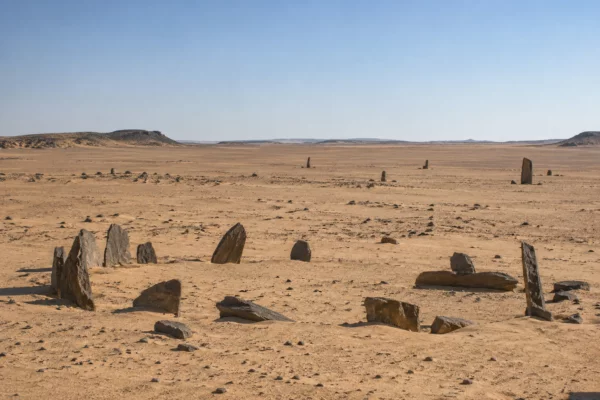
Read the articleIn the Western Desert, in the south of Egypt, Nabta Playa was once a basin where water collected after the rains. Human groups lived there at different times in the…
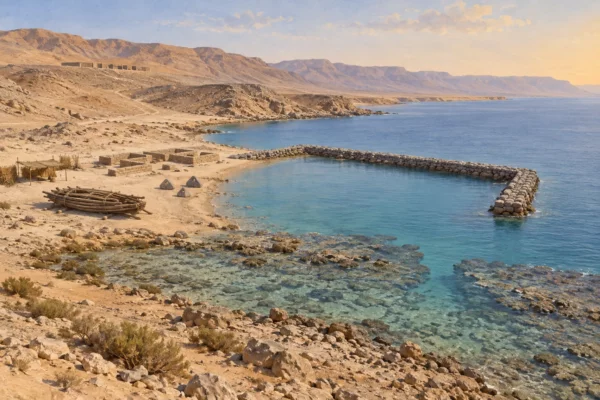
Read the articleOn the Egyptian shore of the Gulf of Suez, Wadi al-Jarf preserves a port of the beginning of the 4th Dynasty. It was used under Sneferu and then under Cheops…
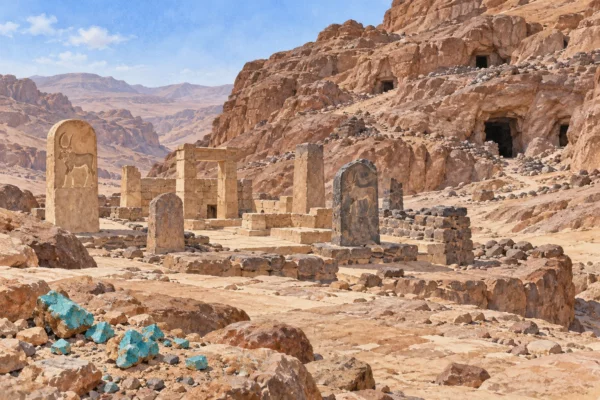
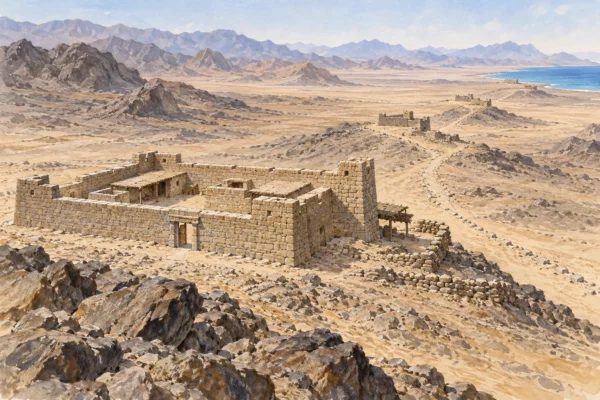
Read the articleOn a rocky plateau in south-western Sinai, Serabit el-Khadim combines mines and a sanctuary of Hathor, called mistress of turquoise. The place was particularly active in the Middle Kingdom and…
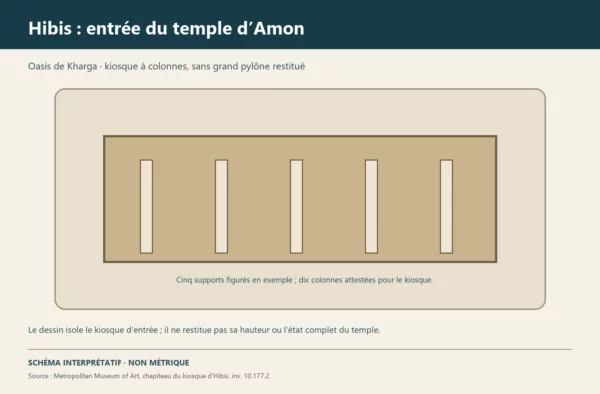
Read the articleThe temple of Hibis stands in the Kharga Oasis, away from the Nile Valley. Dedicated mainly to Amun of Hibis, it is one of the great surviving monuments of the…
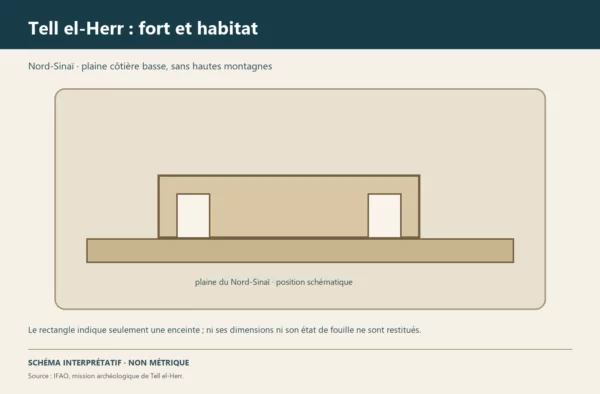
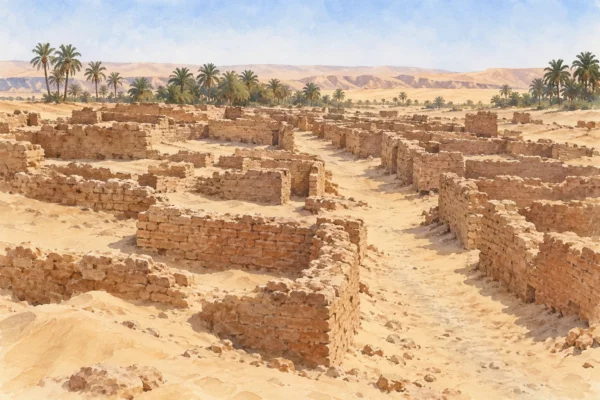
Read the articleTell el-Herr lies in northern Sinai, on the routes linking the Delta to the Levant. Excavations there have identified a fortress of the first Persian domination and a later occupation.…
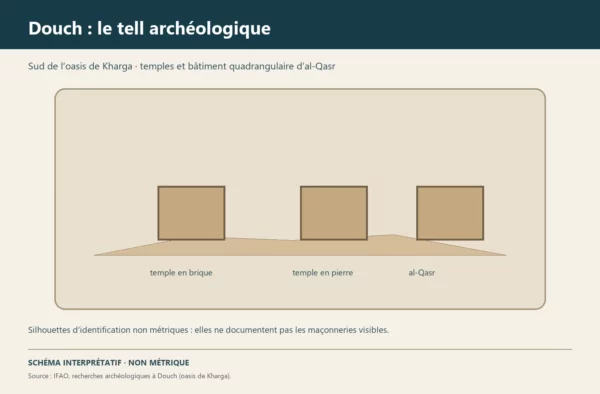
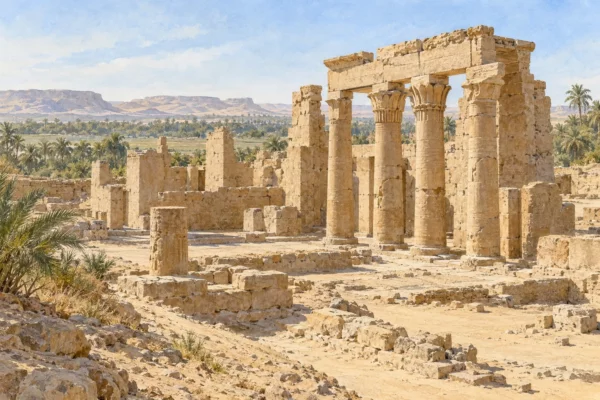
Read the articleDush, ancient Kysis, occupies the south of the Kharga Oasis. The Roman site combines a stone temple dedicated to a local form of Osiris, a fortified building called al-Qasr and…
Read the articleDeir el-Hagar is a stone temple in the Dakhla Oasis built from the reign of Nero. It is dedicated to Amun and the other members of the Theban triad, within…
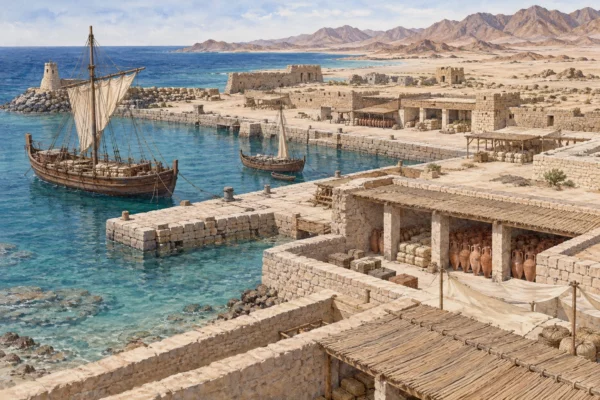
Read the articleBerenike, on the Egyptian coast of the Red Sea, was founded in the Ptolemaic period and grew strongly under Rome. This port linked the Nile Valley with voyages to Arabia,…
Read the articleRoman fortified posts, the praesidia, punctuated the tracks between the Nile Valley and the Red Sea. Some supported the Berenike road, others the routes to quarries or to other ports.…
Read the articleThe Dakhla Oasis preserves several Roman sites: farming settlements, temples and necropolises. The tombs of Ezbet Bashendi and Bir el-Shaghala illustrate different architectures. This feature brings together an archaeological landscape,…
Read the articleAin al-Sabil lies in the Dakhla Oasis. An Egyptian mission of the Supreme Council of Antiquities uncovered there in 2026 a vast residential area of late Antiquity, in particular of…
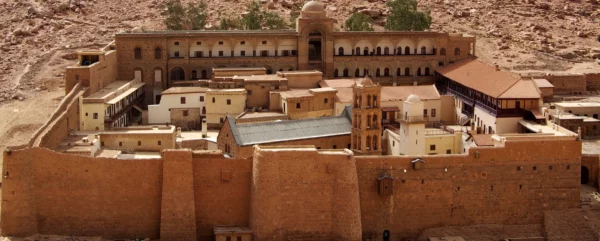
Read the articleSaint Catherine’s Monastery stands at the foot of Mount Sinai. The fortified complex was built on the orders of Justinian I in the 6th century, on a site where monks were…
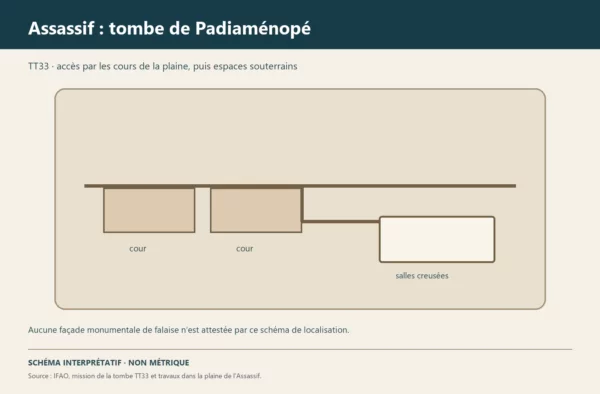
Read the articleTT 33, in the Theban Asasif, is the vast tomb of Padiamenope, a dignitary of the 26th Dynasty. Its scale and the richness of its texts sometimes earn it the…
Read the article