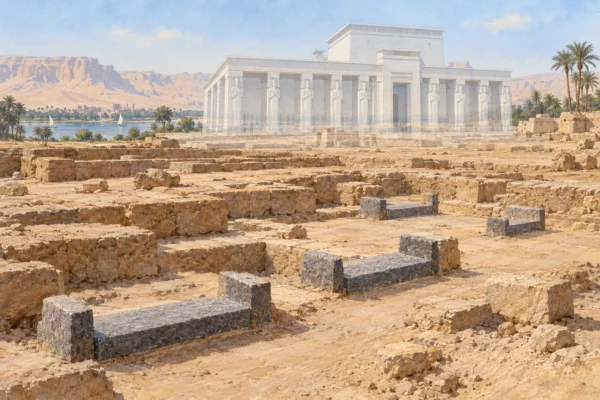
Malkata, the palace of Amenhotep III
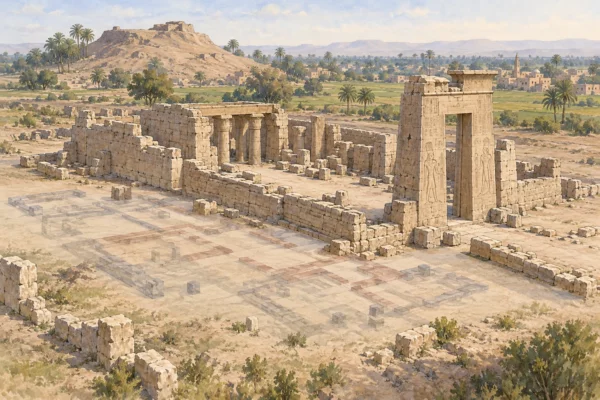
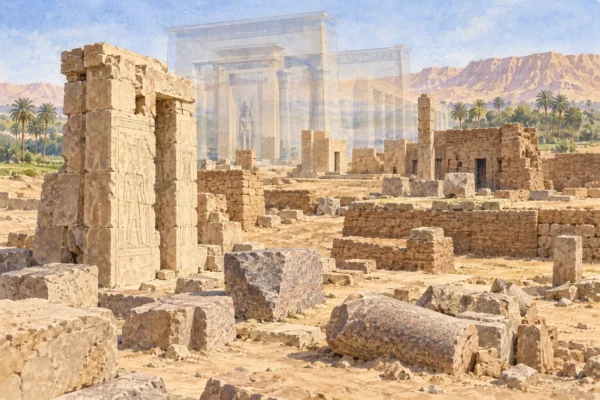
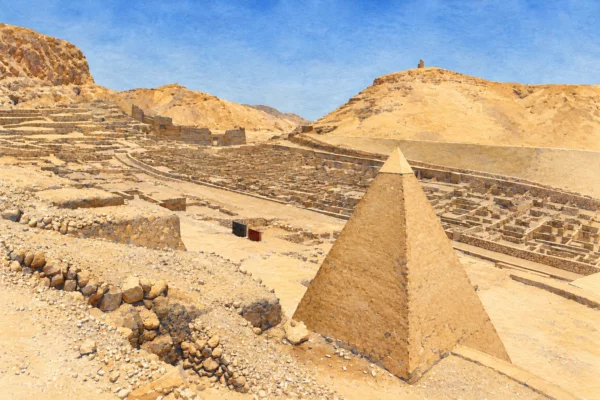
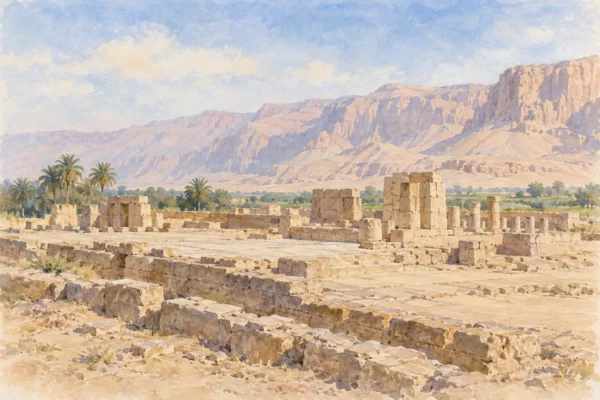
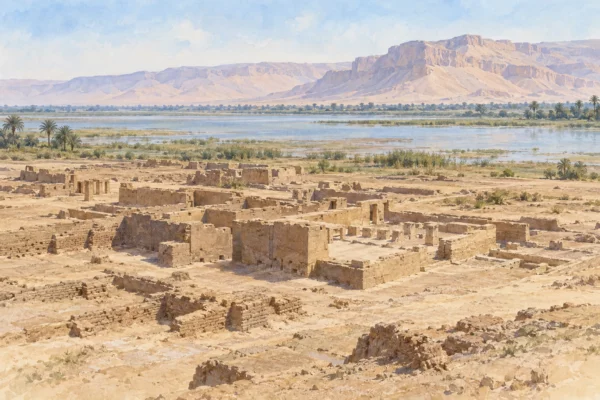
Malkata is the palace and festival city that Amenhotep III had laid out on the west bank at Thebes. Its development is linked to the king’s jubilees, particularly from the thirtieth…
Read the articleArchaeological sites of Thebes, present-day Luxor: the temples of Karnak and Luxor on the east bank, the Valley of the Kings, the Valley of the Queens and the mortuary temples on the west bank.
Malkata is the palace and festival city that Amenhotep III had laid out on the west bank at Thebes. Its development is linked to the king’s jubilees, particularly from the thirtieth…
Read the articleAt the heart of Karnak, near Luxor, the famous New Kingdom monuments cover an older history. In the ‘Middle Kingdom court’, the researchers of the CFEETK are studying the foundations…
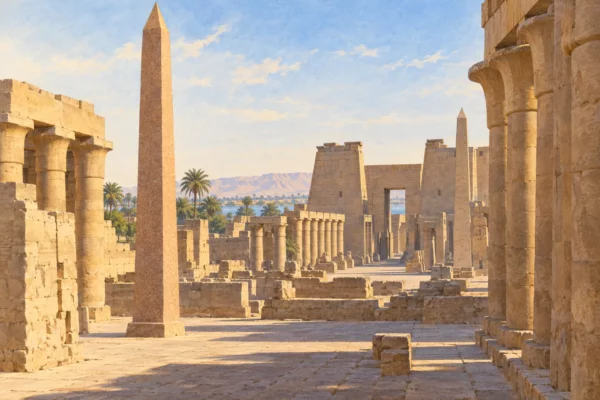
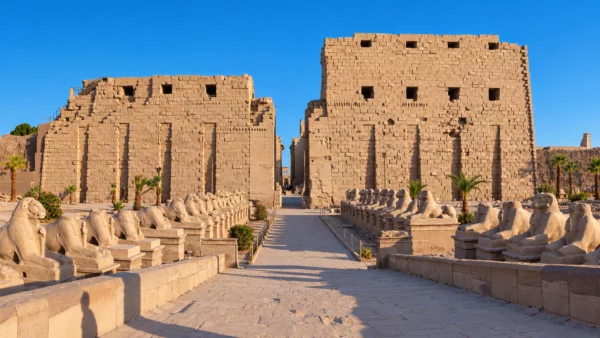
Read the articleKarnak is not a building constructed in a single campaign. Around the sanctuary of Amun-Ra, already important in the Middle Kingdom, the kings of the New Kingdom added pylons, courts,…
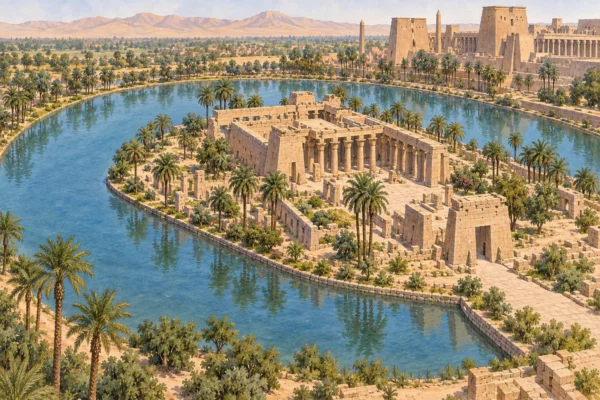
Read the articleSouth of the great enclosure of Amun lies the domain of Mut, a major goddess of Theban theology. It is linked to the main sanctuary by a processional way. The…
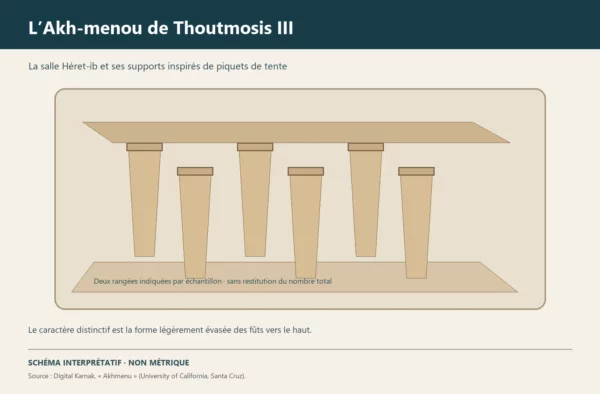
Read the articleEast of the domain of Amun-Ra at Karnak, Thutmose III had the Akhmenu built. It is often called the ‘festival hall’, although it comprises several halls and sanctuaries. This monument offers…
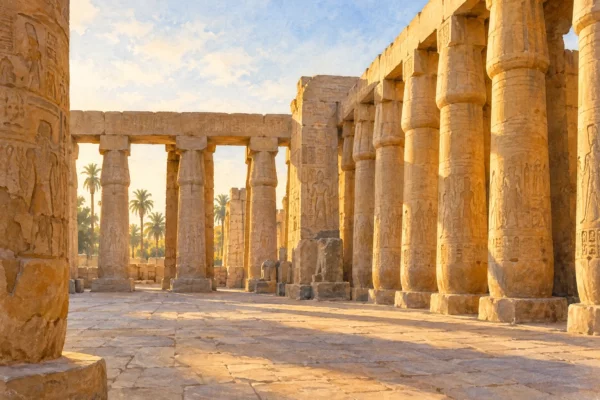
Read the articleThe great hypostyle hall of Karnak is one of the most striking spaces in the domain of Amun-Ra. It lies between the Second and Third Pylons and has 134 columns.…
Read the articleThe temple of Khonsu lies south-west of the great domain of Amun at Karnak. Khonsu, a lunar god, formed the Theban triad with Amun and Mut. The visible monument was…
Read the articleAround the vast domain of Amun at Karnak stand several chapels dedicated to Osiris, notably in the northern sector and near the enclosures. They belong to separate building projects of…
Read the articleKarnak as seen by Clémence, aged 11: the gods Amun, Mut and Montu, 2,000 years of pharaonic building work, then the rediscovery by Bonaparte and Champollion.
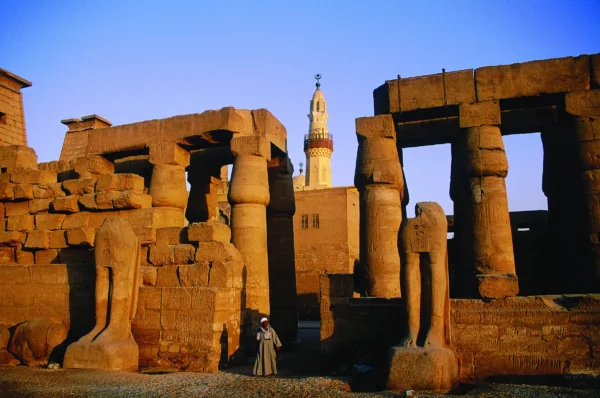
Read the articleLuxor Temple stands south of Karnak, to which a processional way linked it. Amenhotep III had its core built during the 18th Dynasty. Other kings later enlarged it. This article follows…
Read the articleRamses II enlarged Luxor Temple in front of the core of Amenhotep III. He had a great pylon, a columned court, colossal statues and two obelisks erected. These Ramesside additions form the…
Read the articleMedamud, north of Karnak, was a town of the god Montu. The temple whose ruins are visible today was mainly laid out in the Ptolemaic and Roman periods, on an…
Read the articleAt Tod, south of Thebes, Montu had an important sanctuary, built and transformed over many centuries. The oldest remains securely attributed to a temple go back to Mentuhotep II, at the…
Read the articleAt Deir el-Bahri, on the west bank at Thebes, King Mentuhotep II had his mortuary temple built at the foot of a high limestone cliff. A ruler of the 11th Dynasty,…
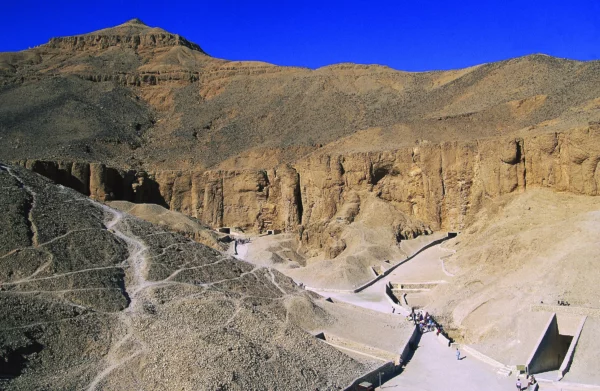
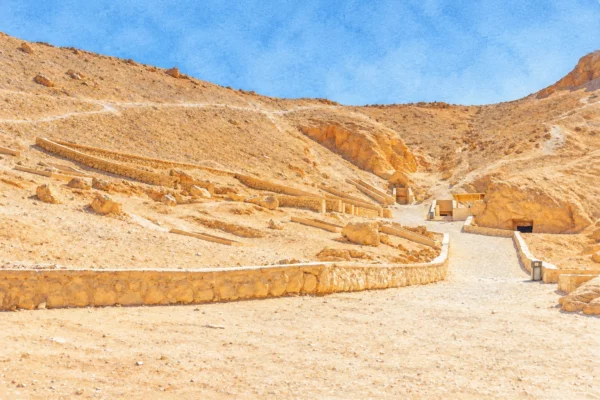
Read the articleOn the west bank at Thebes, the Valley of the Kings holds the burials of many New Kingdom rulers. The tombs are cut into the limestone, far from the great…
Read the articleOn the west bank at Thebes, the Valley of the Queens holds tombs cut for members of the court, then for wives and children of New Kingdom kings. Its modern…
Read the articleDeir el-Medina was the village of the craftsmen who cut and decorated the royal tombs near Thebes. The site brings together their houses, family tombs and places of worship. It…
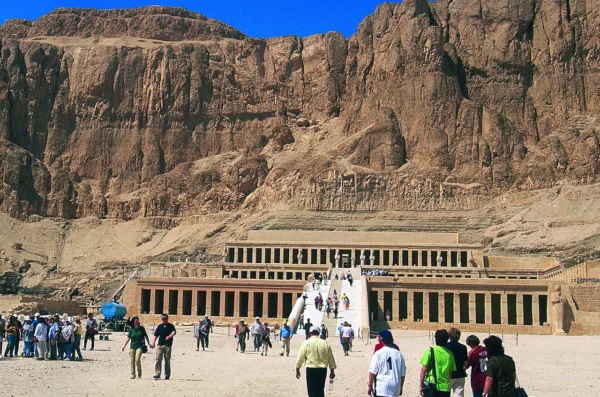
Read the articleOn the west bank at Thebes, the temple of Hatshepsut rises in front of the cliffs of Deir el-Bahri. The ruler had it built in the 15th century BC for…
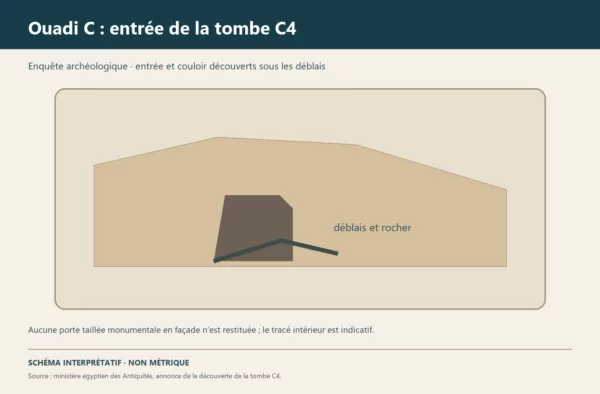
Read the articleTomb C4 is cut into Wadi C, west of the Valley of the Kings. Its entrance was discovered in 2022; the Egyptian ministry attributed it in 2025 to Thutmose II, a…
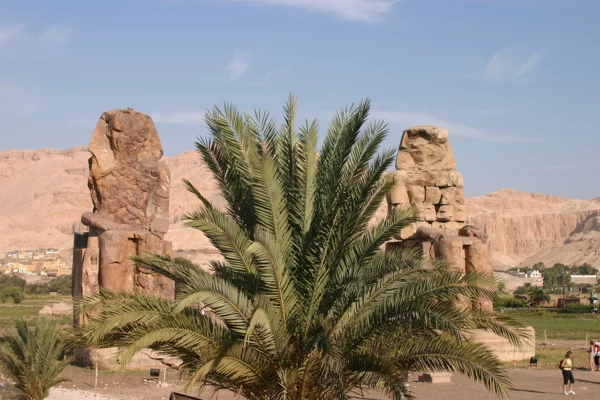
Read the articleOn the west bank at Thebes, two seated statues of Amenhotep III marked the entrance to his immense mortuary temple. They are known as the Colossi of Memnon. The temple of…
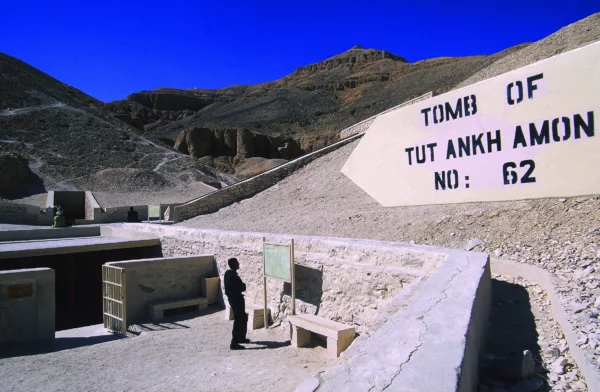
Read the articleKV62, the tomb of Tutankhamun in the Valley of the Kings, was discovered by Howard Carter in 1922. Its relatively well-preserved funerary equipment made the young king famous. The tomb…
Read the articleOn the west bank at Thebes, Seti I had a temple of millions of years built at Qurna. This place of royal cult must be distinguished from his tomb KV17, cut…
Read the articleKV17 is the tomb of Seti I in the Valley of the Kings. It is among the longest and most richly decorated in the royal necropolis. This underground funerary monument belongs…
Read the articleThe Ramesseum is the mortuary temple of Ramses II on the west bank at Thebes. It served the cult of the king after his death and that of Amun, in a…
Read the articleTomb QV66 of Nefertari, wife of Ramses II, lies in the Valley of the Queens. Discovered by Ernesto Schiaparelli in 1904, it is famous for its funerary paintings. It belongs to…
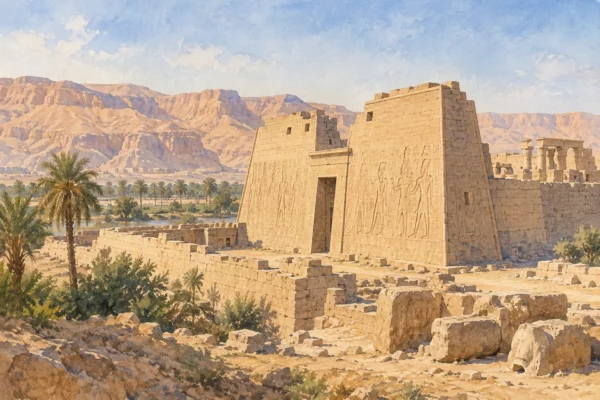
Read the articleRamses III had a great mortuary temple built at Medinet Habu, on the west bank at Thebes. The monument served his cult after death and that of Amun. Its brick enclosure,…
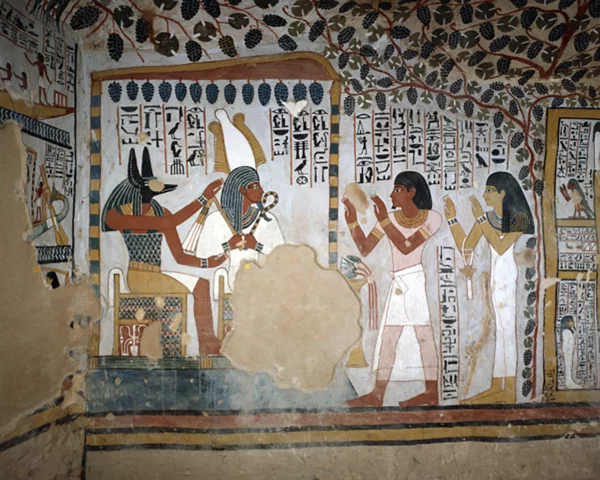
Read the articleDiscover the tomb of Sennefer (TT96), mayor of Thebes: the vine ceiling, the chapel, the painted scenes and their conservation at Sheikh Abd el-Qurna.
Read the article