In brief
In the desert of Abydos, Umm el-Qaab holds the burials of rulers from the beginnings of pharaonic Egypt. After the Predynastic Cemetery U, covered in another article, the royal area includes the tombs of rulers of the end of the Predynastic period, of the 1st Dynasty and of two kings of the late 2nd Dynasty. Around 3100–2700 BC, these underground mudbrick structures made the desert edge a major place of royal memory.
What you discover
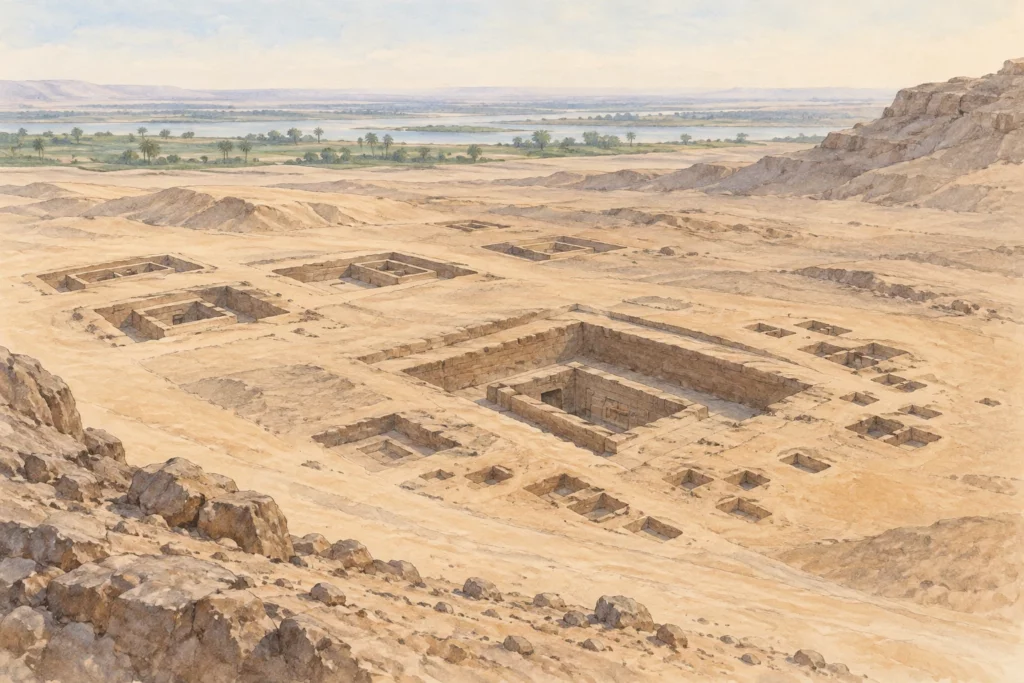
The landscape offers no row of pyramids. The tombs appear mainly as pits and underground chambers outlined in brick, often surrounded by small subsidiary burials. The monuments once had upper parts that have now disappeared or been greatly reduced. The names of Narmer, Hor-Aha, Djer, Den, Merneith and other figures of the 1st Dynasty are associated with different complexes. The last kings of the 2nd Dynasty, Peribsen and Khasekhemwy, were also buried in this necropolis. Some complexes had a second ceremonial element, an enclosure located closer to the cultivated land: tomb and enclosure are not the same thing.
Its history
The excavations have shown that these burials change in scale and plan from generation to generation. Central chambers housed the dead ruler and his goods; the subsidiary tombs added to some complexes raise questions about court personnel and funerary practices. Their exact meaning must be studied for each reign. Archaeologists compare the walls, floor levels, pottery and remaining objects. The tombs have undergone looting, alterations and later ritual deposits: what can be seen today does not correspond to their state at the time of the funerals.
Why this place matters
Umm el-Qaab gives an exceptional view of the construction of Egyptian kingship and of its ways of commemorating the dead. The development of the tombs reveals growing resources and renewed architectural choices. Much later, the tomb of Djer was associated with Osiris and attracted pilgrimages; this late identification was not the intention of the builders of the 1st Dynasty. Understanding the site therefore requires distinguishing the royal construction, the original funerary uses and the later religious memories.