In brief
At Saqqara, north of the pyramid of Teti, the mastaba of Mereruka opens a window on the royal court and on images of daily life at the end of the Old Kingdom. Mereruka was vizier under Teti, the first king of the 6th Dynasty, and married a daughter of the king. His tomb is a vast family complex: it contains more than thirty rooms, including sections intended for his wife and his son Meryteti.
What you discover
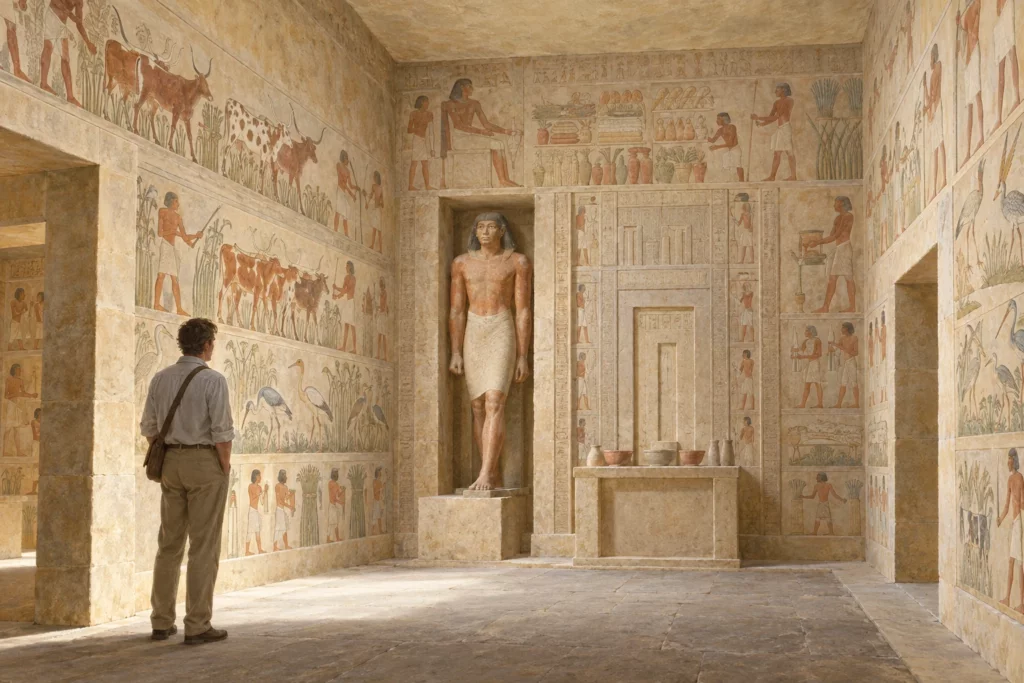
A mastaba is a monumental tomb with a low superstructure. Here, the accessible chapels were covered with reliefs. They show in particular herds, a hippopotamus hunt, marsh birds and a rare scene of hyenas being fed. These images are not an instant report on rural life: they formed part of the dignitary’s funerary programme. In the offering space, a false door was an essential focus of the cult. A life-size statue of Mereruka steps forward as if to receive the offerings placed before it.
Its history
The proximity of the pyramid of Teti recalls Mereruka’s high rank. His office as vizier and his family alliance with the royal house explain the exceptional scale of the monument. The rooms attributed to his wife and son show that the tomb was not conceived as a simple individual space. The reliefs link human activities, animals and the rhythm of the seasons to the ritual survival of the dead. Reading them calls for a distinction between the practices depicted and the symbolic choices of funerary art.
Why this place matters
The mastaba makes it possible to observe how architecture, images and offerings worked together in the tomb of a senior official. The false door and the statue gave the cult a focus; the scenes of production and nature built a lasting world around the dead. The exact plan is more complex than a summary illustration can show.