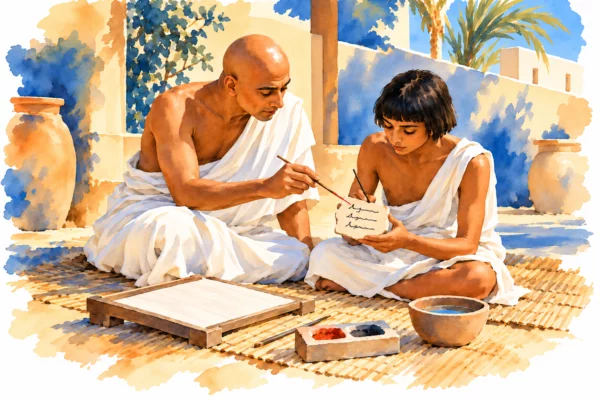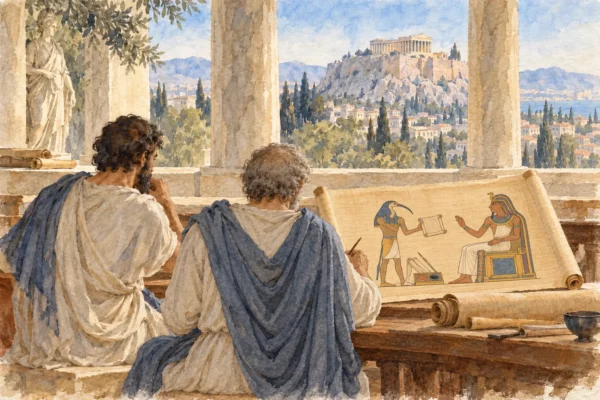
The Word and the reed pen
Ptah creates the world by naming it, Thoth fixes these words in signs, Seshat sets them in order: the account Egypt gave itself of its own writing.
Read the articleDiscover what works of art, scripts and techniques reveal about the societies of the Nile.
A statue, a papyrus fragment or a tool tells a story only if we know its material, its find spot, its date and its possible use. This section always distinguishes what is observed from what is interpreted.
Five areas invite you to look at works and knowledge from complementary angles: architecture and the builders’ skills; painting, sculpture and their colours; writing, from the first signs to digital tools; the journey of objects, from the field to the collections; and finally the museums, universities, libraries and digital resources that preserve and pass on this knowledge.
Ptah creates the world by naming it, Thoth fixes these words in signs, Seshat sets them in order: the account Egypt gave itself of its own writing.
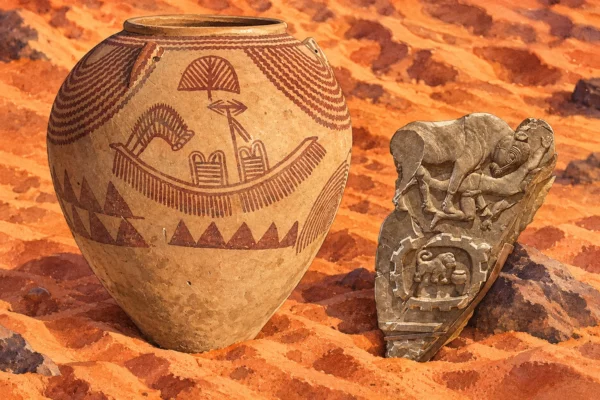
Read the articleOn Naqada vases, boats, emblems and gestures recur: a repertoire of coded images from which writing would emerge.
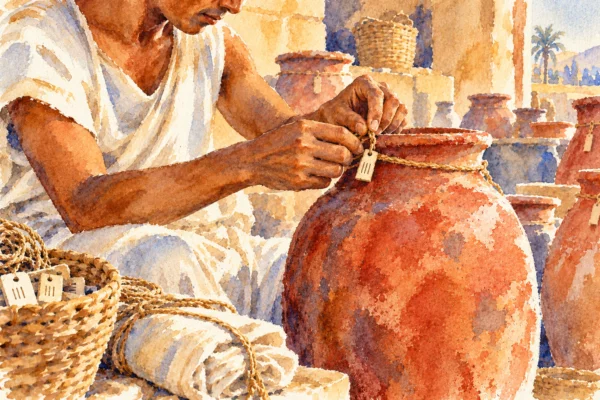
Read the articleFrom the labels of tomb U-j to the Narmer Palette: Egyptian writing was born to count, to attribute and to name.
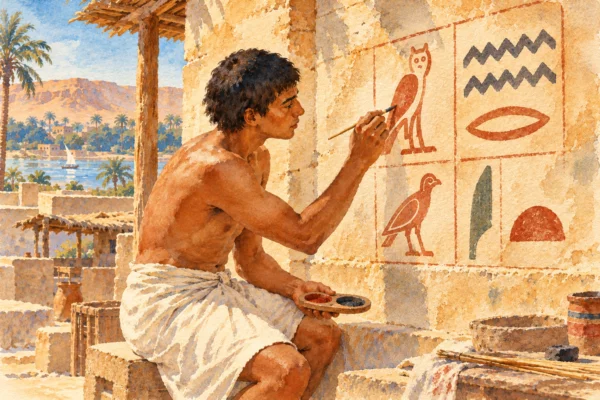
Read the articlePhonograms, phonetic complements, ideograms, determinatives: the four families of signs in a script that records both sound and meaning.
Read the articleHieratic, abnormal hieratic, Demotic: the scribes’ cursive scripts, from Cheops to the last graffito at Philae.
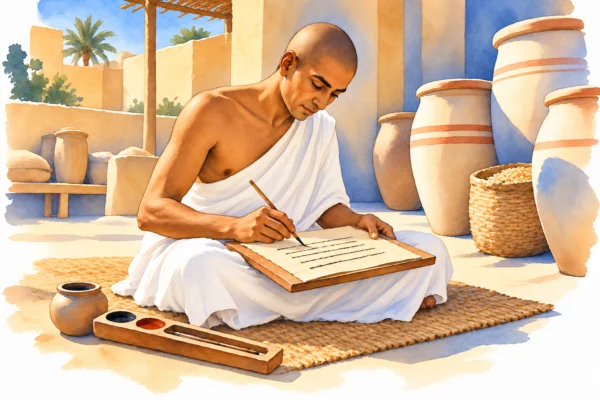
Read the articleWho learnt to write, where, with which textbooks, and how many Egyptians could read? The world of the scribes, from school to the House of Life.
Read the article