In brief
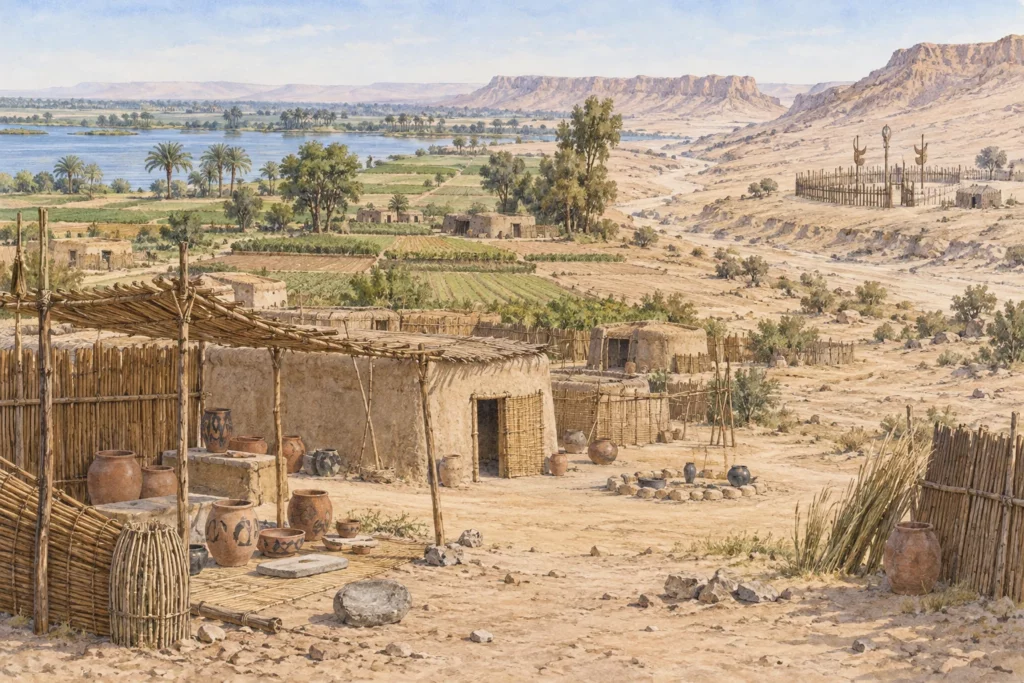
Near Edfu, in Upper Egypt, Hierakonpolis preserves the traces of an extensive occupation predating the first dynasties. Archaeologists study both the mound of the ancient town, in the plain, and many sectors of the low desert. Around 3700–3500 BC, the settlement extended well beyond the edge of the cultivation. This landscape, lived in, worked and visited for gatherings, sheds light on the formation of the first urban communities of the Nile Valley.
What you discover
On the ground, do not look for an intact stone temple. The Predynastic sectors can be read mainly through the remains of mud walls, postholes, hearths, pits and thousands of sherds. At locality HK11, domestic spaces lie alongside installations linked to pottery and brewing. Closer to the desert edge, HK29A includes the remains of a large oval court surrounded by a wall. Massive wooden posts marked its entrance. The waste deposited nearby, in particular animal bones and pottery, helps us to understand the activities that took place there.
Its history
The excavations show a long and changing history. Early occupations precede the peak of the 4th millennium; the centre at HK29A was used and remodelled over several centuries, up to the beginning of the Dynastic period. The post-built entrance was once drawn as a small shrine: the 2009 excavations led to that reconstruction being abandoned. The famous Narmer Palette comes from a deposit found in the area of the later town and temple. It should not be artificially placed in the middle of the HK29A court.
Why this place matters
Hierakonpolis makes it possible to observe how a community combined dwellings, production, gatherings and ceremonial practices before the pharaonic state. Plant and animal remains provide information on diet and environment; pottery and work installations shed light on crafts. The site is also a reminder that a spectacular find does not sum up a place: here, most of the history is read in discreet traces spread over several kilometres. The exact forms of the buildings and the course of the ceremonies are still partly debated.