In brief
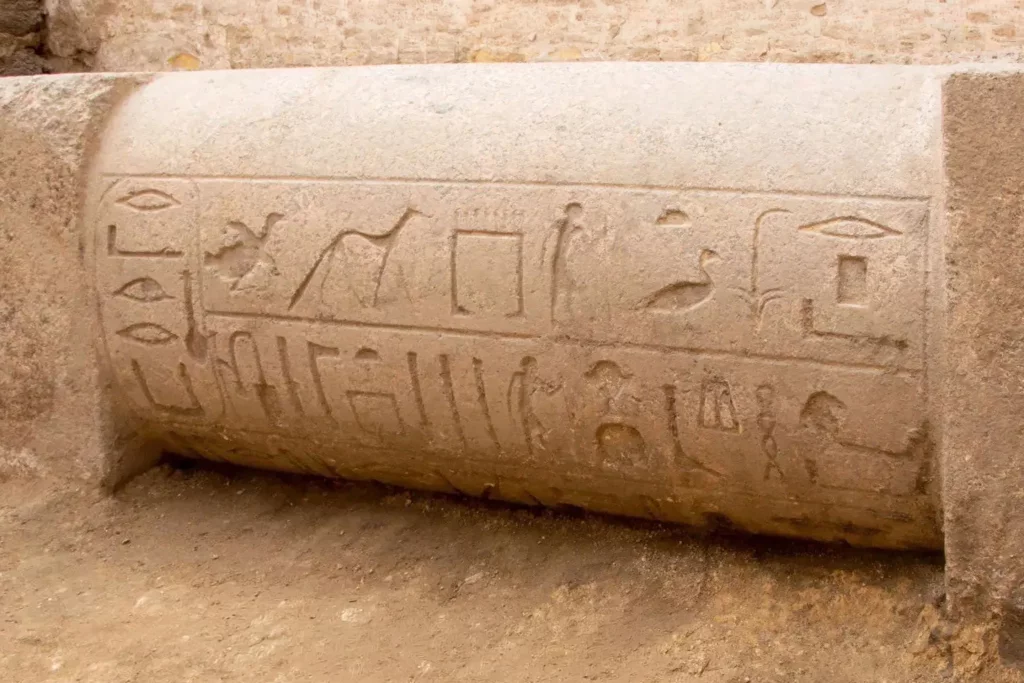
In 2025, an Egyptian mission announced the discovery at Saqqara of the tomb of Userefre, or Waser-If-Re, presented as a son of King Userkaf. The monument belongs to the beginning of the 5th Dynasty, but it has also yielded objects from later periods. A very large false door of pink granite, bearing the owner’s name and titles, is the most remarkable feature described in the official announcement.
What you discover
The false door is about 4.5 metres high and 1.15 metres wide. In an Egyptian tomb, this type of carved door symbolically marked the passage of the deceased to the place of offerings; it did not open like an ordinary door. The excavators also reported a red granite offering table, another entrance to the east with pink granite jambs and a group of thirteen seated statues. The inscriptions mention several prestigious offices held by Userefre. The complete layout of the monument has not yet been published in the form of a detailed excavation plan.
Its history
The Egyptian ministry’s press release distinguishes the elements of the tomb from finds that may result from reuse. A group depicting Djoser and his family is thought to have been moved from near the Step Pyramid at a late date, according to a preliminary study; this provenance remains to be examined. A statue showing features of the 26th Dynasty also suggests reuse of the place. The cartouche of Neferirkare on the eastern entrance sheds light on the chronological context, without justifying a single date for every object. The mission has announced that its work will continue.
Why this place matters
This tomb provides new evidence about the figures close to the first kings of the 5th Dynasty. Its inscriptions give precise titles, while the objects found in the same spaces tell a longer story than the original burial. Discovery, hypotheses of displacement and still-provisional dates must be kept apart: the press releases of 2025 represent a first stage of research, not a definitive archaeological publication.