In more detail
AlexandriaAncient Alexandria, founded by Alexander the Great: the catacombs of Kom el-Shuqafa, the so-called Pompey’s Pillar, the odeon of Kom el-Dikka and the… 6 sites.Aboukir Bay, the sunken citiesThe sunken cities of Aboukir Bay: Heracleion-Thonis and Canopus, ports and sanctuaries of Late Period Egypt found beneath the sea by underwater archae… 2 sites.The shores of Lake MareotisArchaeological sites on the shores of Lake Mareotis, west of Alexandria: Taposiris Magna and Plinthine, and Abu Mena, a great Christian pilgrimage san… 2 sites.Western DeltaArchaeological sites of the western Nile Delta: Buto, one of the oldest settlements in the Delta, and Naucratis, Greek trading post of the Saite perio… 2 sites.Eastern DeltaArchaeological sites of the eastern Nile Delta: Avaris, capital of the Hyksos, Pi-Ramses, capital of Ramses II, Tanis and its royal necropolis, Bubast… 4 sites. The sites
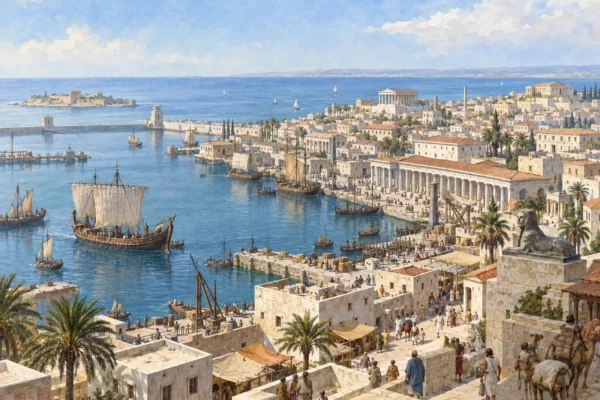
Alexander founded Alexandria in 331 BC on the Mediterranean coast, near the older nucleus of Rhakotis. The city became the capital of the Ptolemies, then a Roman and Byzantine metropolis.…
Read the article ↗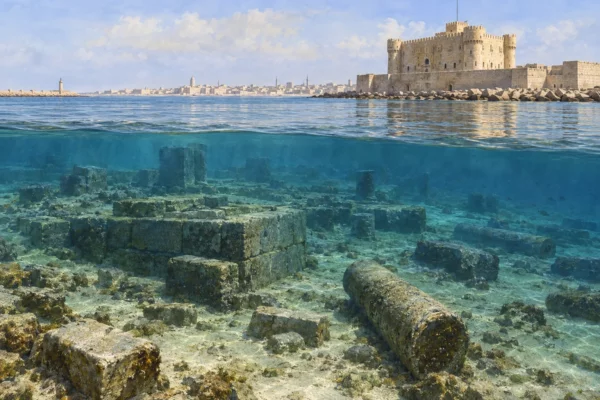
The Pharos lighthouse was built at the entrance to the harbour of Alexandria under the first Ptolemies, probably completed under Ptolemy II. The building no longer stands. The present Qaitbay area…
Read the article ↗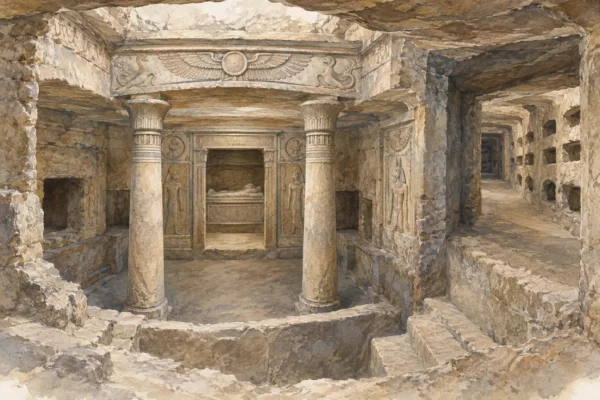
The catacombs of Kom el-Shuqafa are a Roman underground necropolis in Alexandria. They combine funerary spaces, meeting rooms and decoration blending Egyptian traditions with Graeco-Roman forms. They are neither a…
Read the article ↗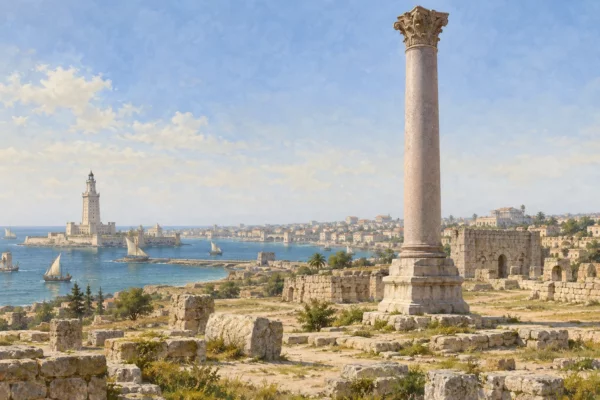
The great column of Alexandria is a monument erected at the end of the 3rd century AD in honour of Diocletian. Its traditional name of Pompey’s Pillar is mistaken: Pompey…
Read the article ↗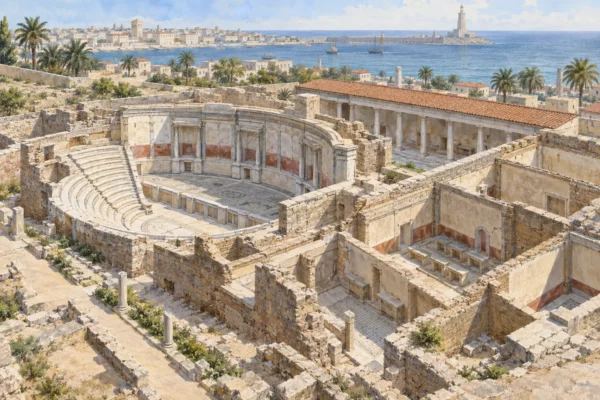
Kom el-Dikka is an excavated area in the heart of Alexandria. It preserves a small theatre or odeon, auditoria, baths and houses of Roman and Byzantine phases. The classification ‘2nd–6th…
Read the article ↗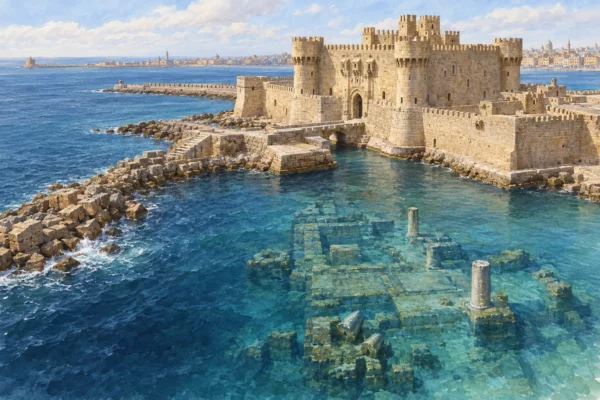
The Mamluk sultan Qaitbay had the fort of Alexandria built between 1477 and 1479 at the tip of the former island of Pharos. The place coincides with that of the…
Read the article ↗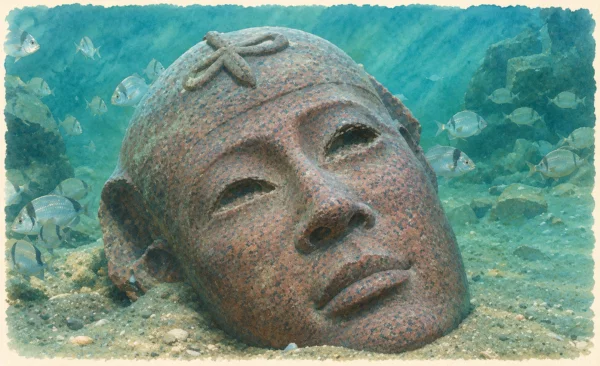
Thonis-Heracleion occupied the Canopic mouth of the Nile, in Aboukir Bay. The city controlled trade long before the foundation of Alexandria and remained active in the Ptolemaic period. The two…
Read the article ↗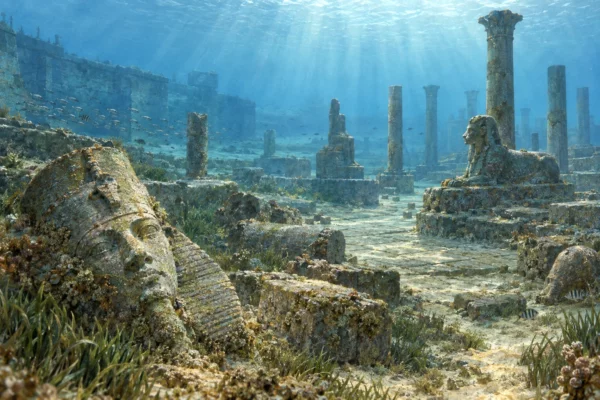
Canopus, west of Thonis-Heracleion in the Canopic region, was a religious and urban centre on the Alexandrian coast. Part of its remains now lies beneath Aboukir Bay. It must be…
Read the article ↗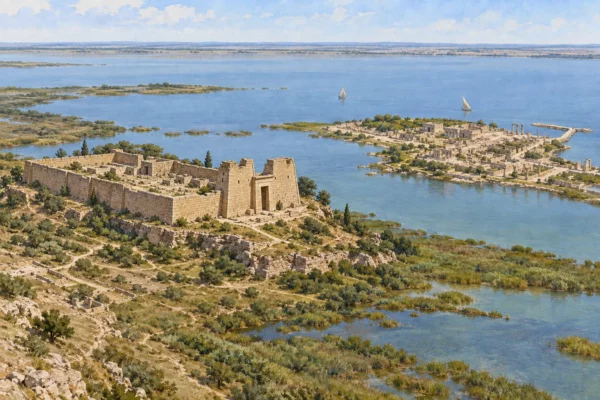
Taposiris Magna and Plinthine lie on the northern shore of ancient Lake Mareotis, west of Alexandria. These two neighbouring sites, about 2.2 kilometres apart, did not form a single town.…
Read the article ↗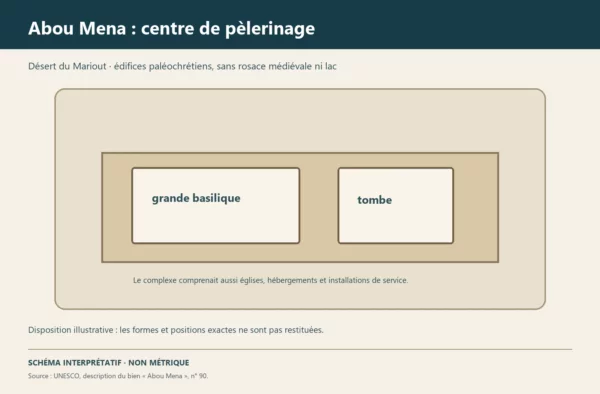
Abu Mena, south-west of Alexandria, grew up around the tomb of St Menas from late Antiquity. The pilgrimage centre combined a sanctuary, buildings for receiving visitors and housing. It should…
Read the article ↗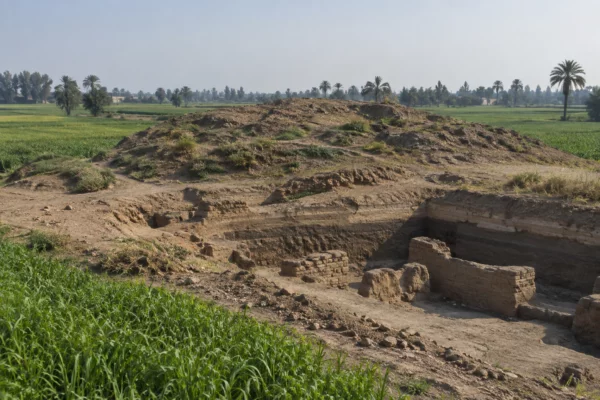
Buto, today Tell el-Fara’in, lies in the north-west of the Nile Delta. Beneath its earth mounds lie the traces of many successive occupations. The oldest known go back to the…
Read the article ↗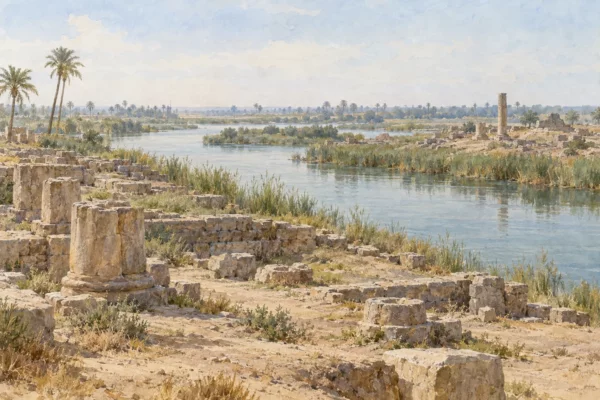
Naucratis, in the western Delta, was an active trading port from the 7th century BC. The label of Greek trading post recalls an essential role, but the research of the…
Read the article ↗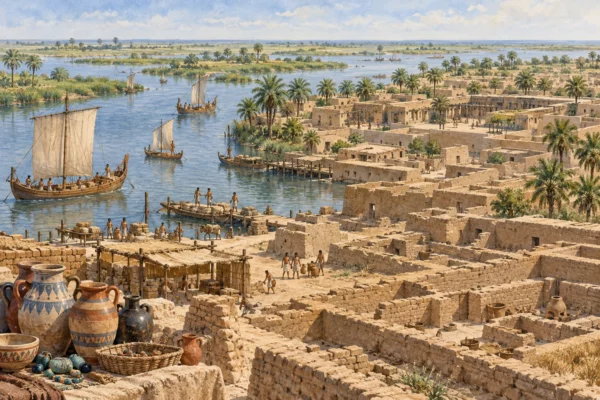
In the eastern Delta, Tell el-Dab‘a covers ancient Avaris, capital of the Hyksos rulers of the 15th Dynasty. This identification is firmly established by the excavations of the Austrian Archaeological…
Read the article ↗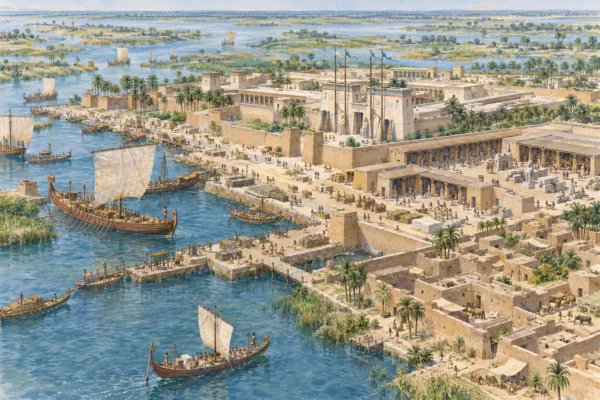
Pi-Ramses was the great residence of the eastern Delta under Ramses II and his successors. Its main area is identified around Qantir, while Tell el-Dab‘a/Avaris further south belongs to an earlier…
Read the article ↗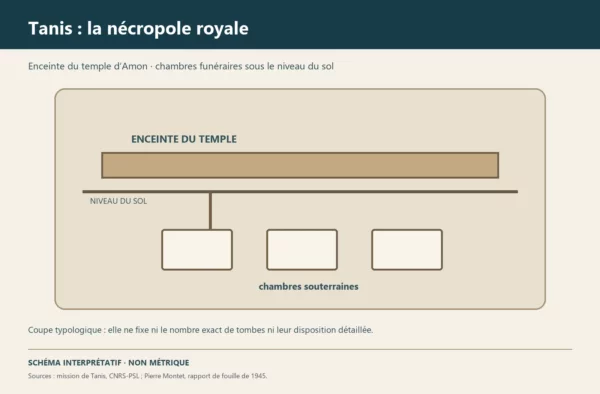
Tanis, Tell San el-Hagar in the eastern Delta, became a great political and religious centre of the Third Intermediate Period. Its temples of Amun, Mut and Khonsu and its royal…
Read the article ↗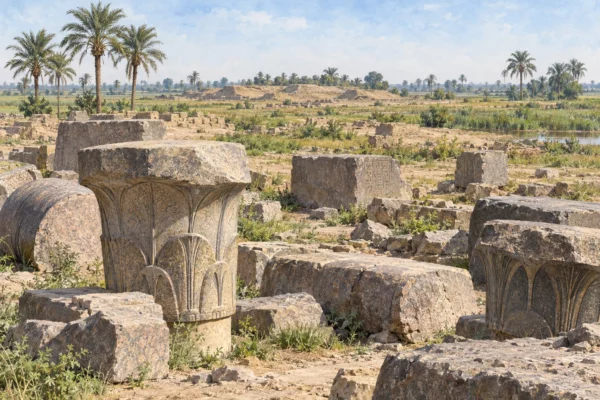
Tell Basta, ancient Per-Bastet, was the centre of the cult of Bastet in the eastern Delta. The main temple is the result of centuries of work: the presence of Old…
Read the article ↗More articles in French ↗