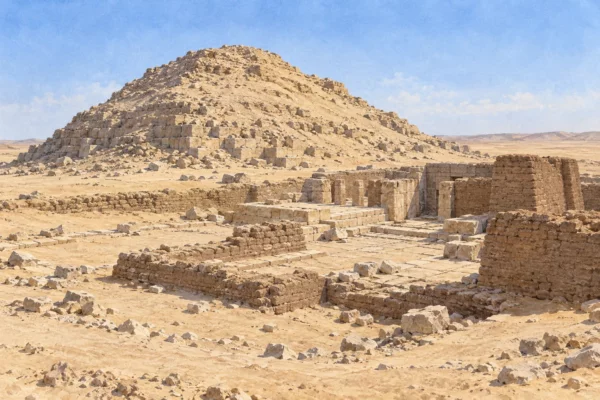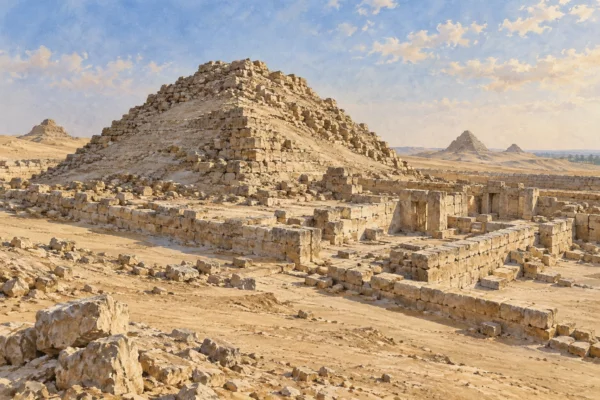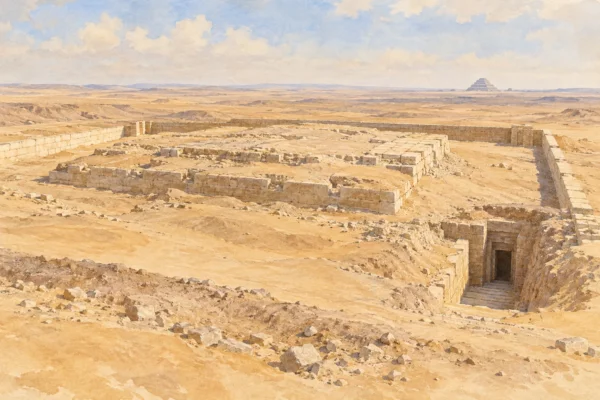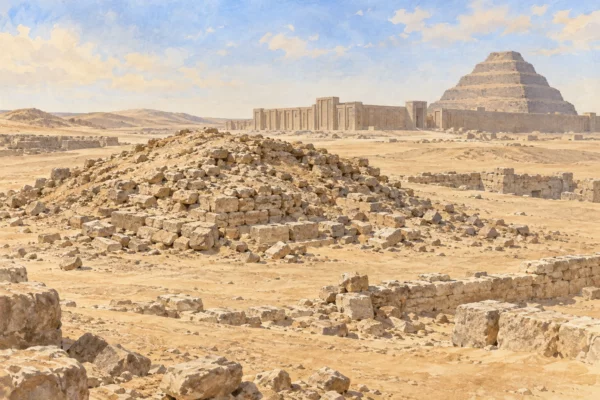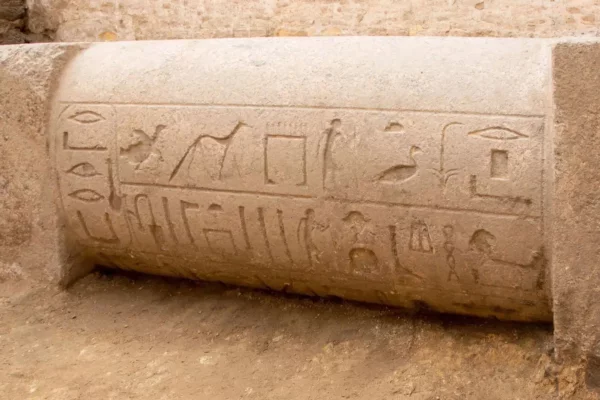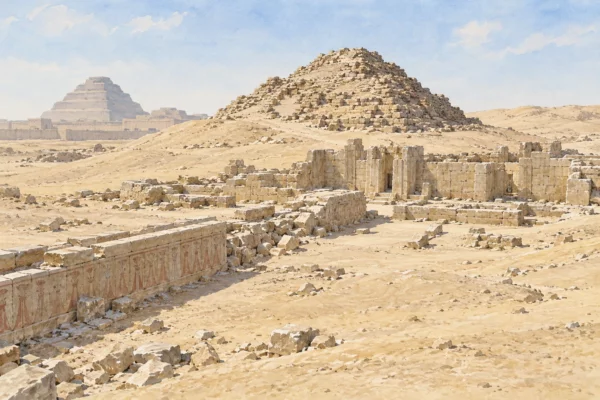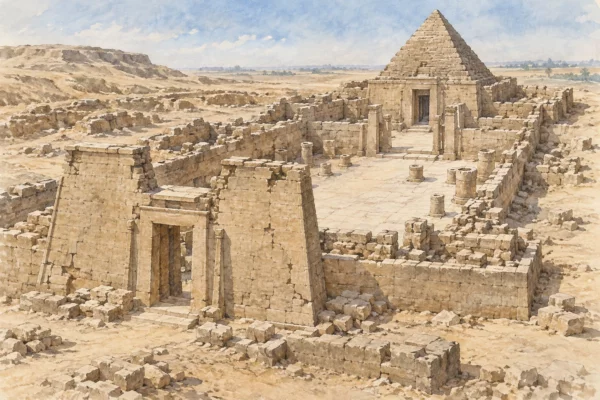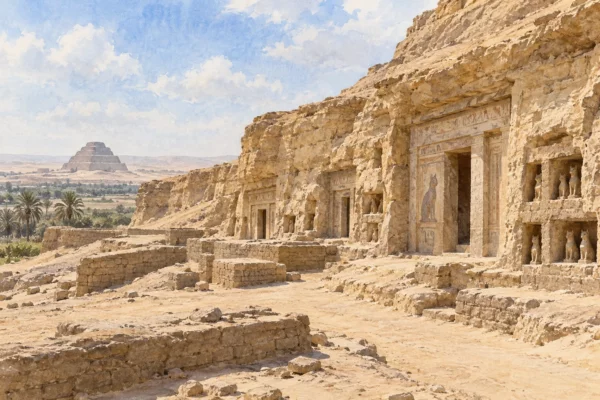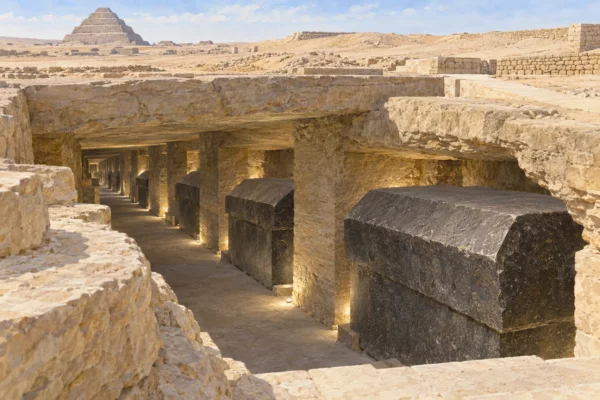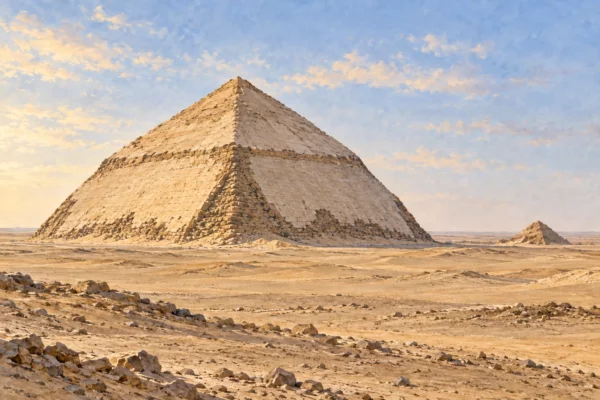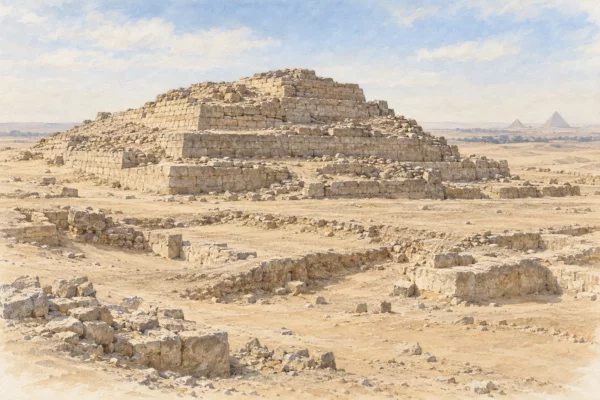
The Layer Pyramid of Zawyet el-Aryan
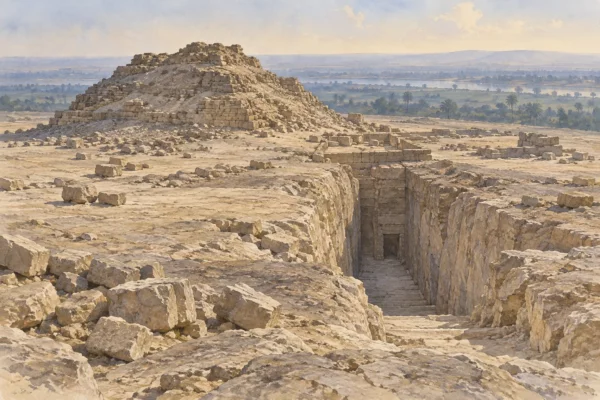
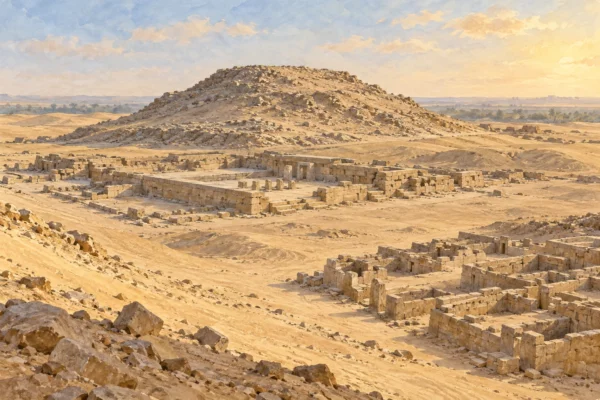
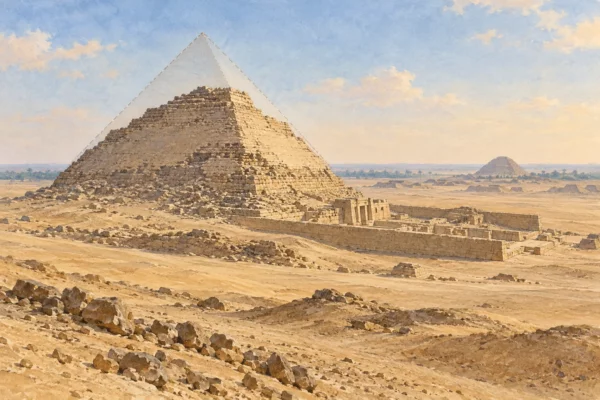
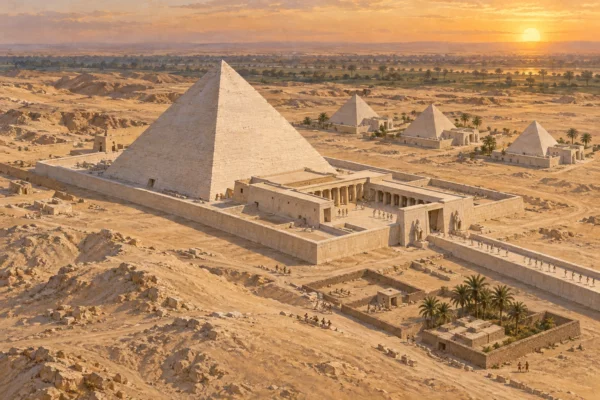
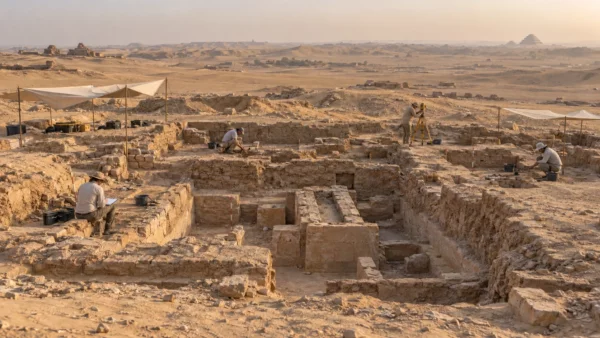
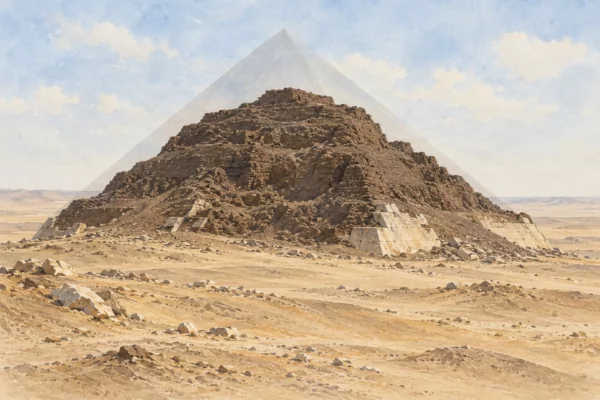
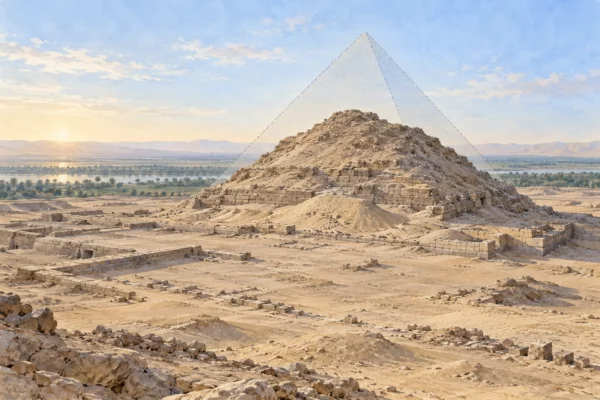
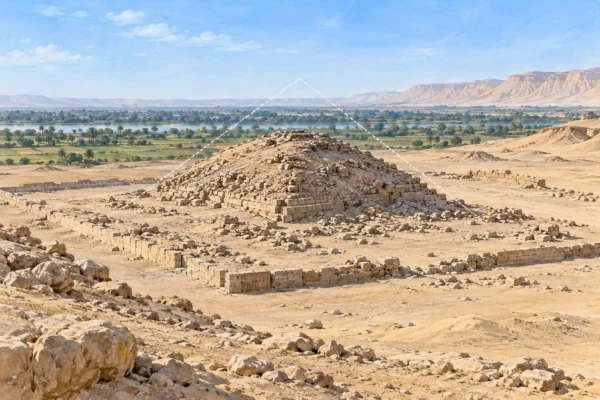
At Zawyet el-Aryan, between Giza and Saqqara, an unfinished pyramid recalls the architectural experiments of the 3rd Dynasty, at the beginning of the Old Kingdom. It is called the ‘Layer…
Read the articleArchaeological sites of Cairo and the Memphis region: Giza, Saqqara, Dahshur, Abusir, el-Lisht and Heliopolis.
At Zawyet el-Aryan, between Giza and Saqqara, an unfinished pyramid recalls the architectural experiments of the 3rd Dynasty, at the beginning of the Old Kingdom. It is called the ‘Layer…
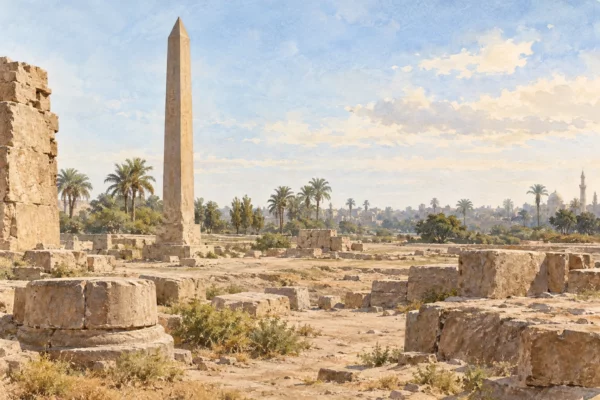
Read the articleAt Matariya, in present-day Cairo, traces survive of ancient Heliopolis, a great centre of the cult of Ra-Atum. The obelisk of Senusret I is a visible landmark, but the sanctuary and…
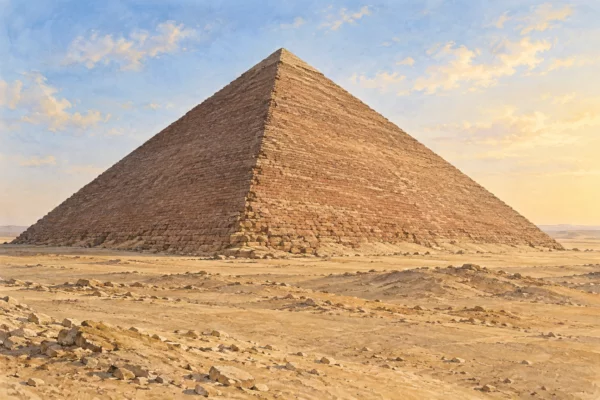
Read the articleOn the Giza plateau, the Great Pyramid was built for Cheops (Khufu), a king of the 4th Dynasty, c. 2589–2566 BC according to the chronology used here. It originally stood…
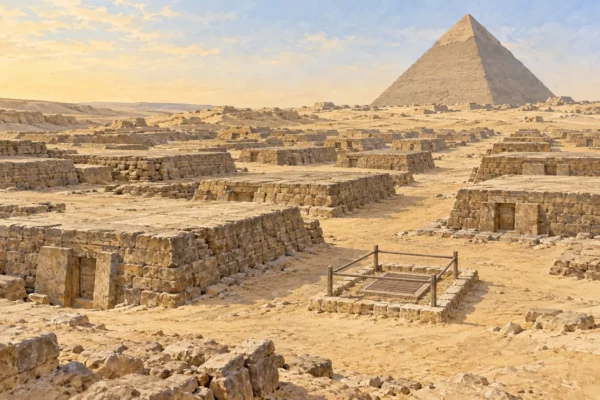
Read the articleThe Great Pyramid of Cheops was surrounded by the tombs of his family and of high-ranking figures. To the east, a necropolis of mastabas forms rows of rectangular monuments. A…
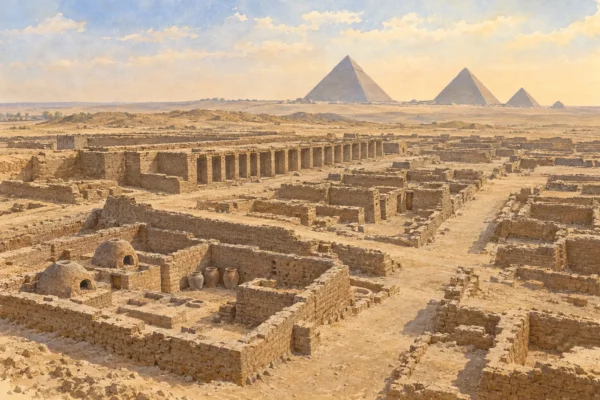
Read the articleSouth-east of the Giza plateau, Heit el-Ghurab preserves the traces of a vast settlement linked to the pyramid building sites. The best-known levels relate mainly to Chephren and Mycerinus, in…
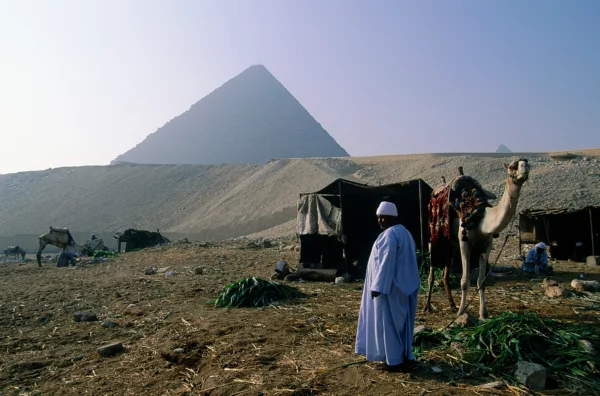
Read the articleChephren (Khafre), the son of Cheops, had the second great pyramid of the Giza plateau built c. 2558–2532 BC. Raised on higher ground than his father’s, it can look just…
Read the articleOn the Giza plateau, a figure with a royal head and a lion’s body looks towards the east. The Great Sphinx was carved from the natural limestone during the 4th…
Read the articleThe pyramid of Mycerinus (Menkaure) is the smallest of the three great pyramids of Giza. The king probably reigned c. 2532–2503 BC, at the end of the 4th Dynasty. His…
Read the articleNorth-west of Giza, Abu Rawash is often associated with the pyramid of King Djedefre. Cemetery M, however, belongs to a much earlier time: the middle of the 1st Dynasty, around…
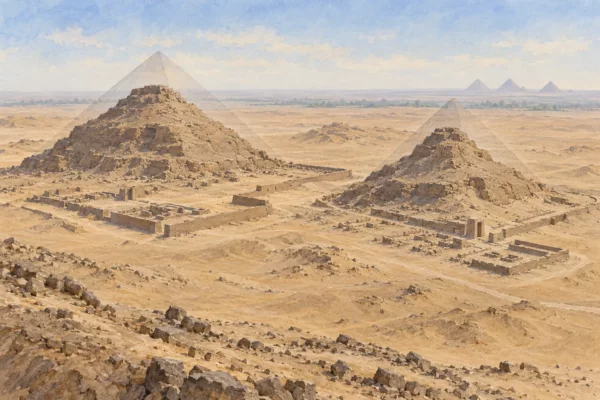
Read the articleAt Abu Rawash, north-west of Giza, King Djedefre, a son of Cheops, established his funerary complex in the 4th Dynasty. All that remains today is a very ruined core, set…
Read the articleAt Abusir, south of Giza, Sahure had a funerary complex built during the 5th Dynasty. His pyramid is now badly ruined, but the remains of its temples and their decoration…
Read the articleAt Abusir, the pyramid of Neferirkare Kakai still dominates the central sector of the necropolis despite its ruined state. This king of the 5th Dynasty succeeded Sahure. His funerary complex…
Read the articleThe pyramid of Niuserre stands among the royal monuments of Abusir, built during the 5th Dynasty. The king had his own tomb built and took over a causeway previously planned…
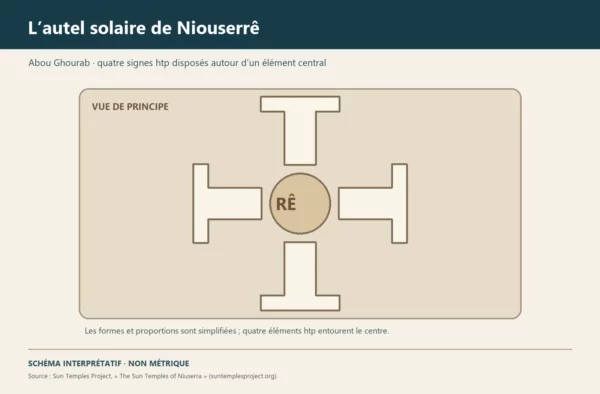
Read the articleNorth of Abusir, King Niuserre had a temple dedicated to the sun god Ra built at Abu Ghurab during the 5th Dynasty. It is not his funerary pyramid, which lies…
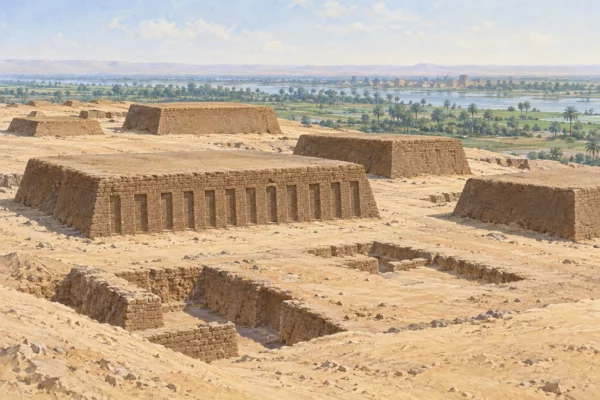
Read the articleIn the north of the Saqqara plateau, near ancient Memphis, large mudbrick tombs were built for the elites of the first dynasties, c. 3100–2700 BC. Their visible part took the…
Read the articleAt the beginning of the 3rd Dynasty, c. 2667–2648 BC according to the chronology of the Egyptian ministry, King Netjerikhet had an unprecedented funerary complex built at Saqqara. Today he…
Read the articleSouth of the complex of Djoser, on the Saqqara plateau, lies the interrupted building site of another pyramid of the 3rd Dynasty. It is attributed to King Sekhemkhet, whose royal…
Read the articleIn the north of Saqqara, near the north-east corner of Djoser’s enclosure, lie the remains of the pyramid of Userkaf. This king opened the 5th Dynasty, after the great building…
Read the articleIn 2025, an Egyptian mission announced the discovery at Saqqara of the tomb of Userefre, or Waser-If-Re, presented as a son of King Userkaf. The monument belongs to the beginning…
Read the articleSouth of the complex of Djoser at Saqqara, the pyramid of Unas is more modest than the giants of Giza. Unas, the last king of the 5th Dynasty, reigned according…
Read the articleTeti, the first king of the 6th Dynasty, had his pyramid built at Saqqara c. 2345–2323 BC. From the outside it now looks like a hill of stone. Yet its…
Read the articleAt Saqqara, north of the pyramid of Teti, the mastaba of Mereruka opens a window on the royal court and on images of daily life at the end of the…
Read the articleUserkare reigned at the beginning of the 6th Dynasty, between Teti and Pepi I. His name survived in the king lists and in the annals of South Saqqara, but his funerary…
Read the articleAt South Saqqara, King Pepi I had his pyramid built in the 6th Dynasty, around the middle of the 3rd millennium BC. His throne name was Meryra. The king’s complex became…
Read the articleThe tomb of Mehu belongs to Saqqara and to the 6th Dynasty. Discovered in 1940 by the Egyptian archaeologist Zaki Saad, it lies near the complex of Djoser. Mehu was…
Read the articleAround the pyramid of Pepi I, at South Saqqara, several queens and women of the royal family had their own monuments. The excavations of the French-Swiss Archaeological Mission have revealed a…
Read the articleThe pyramid of Ankhesenpepi II lies in the queens’ necropolis south-west of that of Pepi I, at South Saqqara. This queen was the wife of Pepi I and then of Merenre I, and the…
Read the articleMerenre I succeeded Pepi I during the 6th Dynasty. His pyramid lies at South Saqqara, near the other royal monuments of this period. Its exterior is now very ruined, but its funerary…
Read the articleThe pyramid of Pepi II stands at South Saqqara, at the heart of the funerary complex of King Neferkare, a ruler of the late 6th Dynasty. His reign was exceptionally long,…
Read the articleSouth of the Step Pyramid of Djoser, Tabbet al-Guesh is not an isolated tomb but a vast stretch of the Saqqara necropolis, between the unfinished complex of Sekhemkhet and the…
Read the articleAt the entrance to the funerary chapel, a profile carved in stone makes Pepior immediately present. At Tabbet al-Guesh, in the necropolis of South Saqqara, Vassil Dobrev’s team found not…
Read the articleIn February and March 2015, Vassil Dobrev’s mission opened two burial chambers at Tabbet al-Guesh in the names of Sabi and Ankhti, both lector priests under the reign of Pepi II.
Read the articleBefore becoming the last king of the 18th Dynasty, Horemheb had a large tomb built at Saqqara, near the old capital Memphis. He was then a senior military and political…
Read the articleThe Bubasteion is a sector of the Saqqara cliff associated with Bastet and with deposits of mummified cats. The area also includes New Kingdom tombs reused much later. Their original…
Read the articleThe Serapeum of Saqqara was the necropolis of the Apis bulls linked to Ptah of Memphis. Its use began in the New Kingdom and continued until the Ptolemaic period. The…
Read the articleSouth of Saqqara, the Bent Pyramid of Dahshur is one of the great monuments of Sneferu, the first king of the 4th Dynasty. Its faces change slope sharply halfway up:…
Read the articleAt Dahshur, the Red Pyramid is the tallest on the site. It was built for Sneferu, the first king of the 4th Dynasty, after the Bent Pyramid further south. Its…
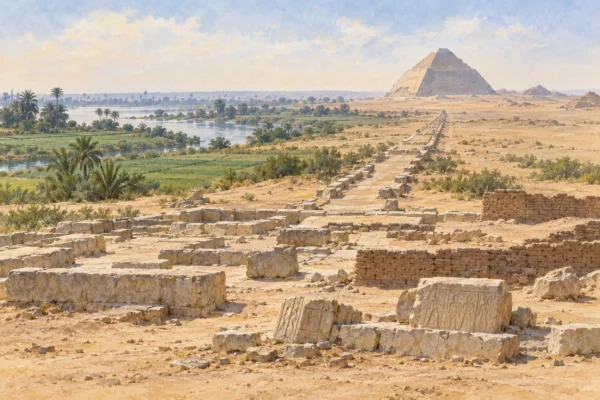
Read the articleAt Dahshur, the pyramids of Sneferu were part of much larger landscapes. East of the Bent Pyramid, a causeway linked the monument to a temple near the cultivated valley. Traces…
Read the articleAt Dahshur, south of Saqqara, two kings of the 12th Dynasty had pyramids built in the Middle Kingdom: Amenemhat II, then Senusret III. They belong to distinct complexes, built several generations after…
Read the articleAt Dahshur, Amenemhat III undertook a pyramid during the 12th Dynasty. Its mudbrick core, now heavily eroded and dark, has earned it the modern name of ‘Black Pyramid’. The name does…
Read the articleIn the north of the El-Lisht necropolis, on the edge of the desert and the Nile valley, rises the badly degraded pyramid of Amenemhat I. This ruler opened the 12th Dynasty…
Read the articleThe pyramid of Senusret I stands in the southern part of the El-Lisht necropolis. The king, also written Sesostris I or Senwosret I in publications, succeeded Amenemhat I at the beginning of the 12th…
Read the articleThe Nilometer of Roda Island was built in AD 861 on the orders of the Abbasid caliph al-Mutawakkil. It made it possible to read the height of the Nile flood,…
Read the articleIn 1176 Saladin ordered the construction of a citadel on the heights of the Muqattam, overlooking Cairo. The work was completed only in 1207, under the Ayyubid sultan al-Kamil, and…
Read the article