In brief
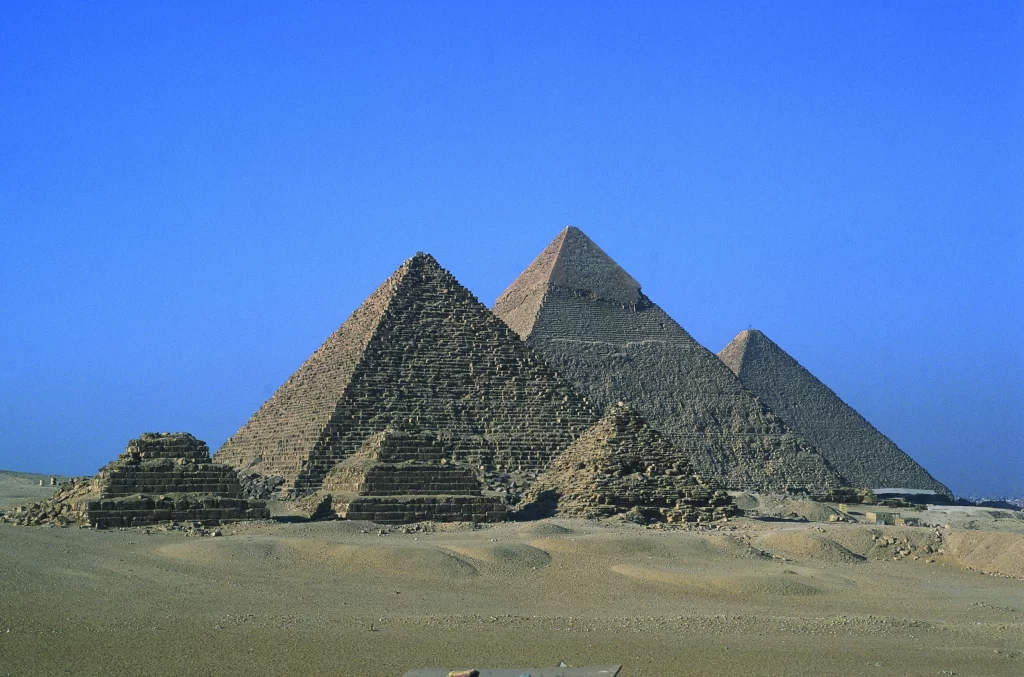
The pyramid of Mycerinus (Menkaure) is the smallest of the three great pyramids of Giza. The king probably reigned c. 2532–2503 BC, at the end of the 4th Dynasty. His pyramid stands out for the blocks of red granite that faced its lower part. Around it stand three small pyramids and the remains of temples linked to the cult of the dead sovereign.
What you discover
The pyramid was originally about 65 metres high. Aswan granite covered the lower quarter of its casing; limestone faced the rest. Several granite blocks are still visible, some with their surface left rough. Beside it stand three smaller pyramids in a row, generally associated with queens. On the east side, the ruins of the mortuary temple mark the start of a causeway that ran down to a valley temple. These spaces are less complete than the Great Pyramid, but they show that a royal complex brought together a tomb, cult buildings and a ceremonial route.
Its history
Mycerinus died before his funerary complex was finished. The builders changed the project: in the temples, whitewashed mudbrick partly replaced the large stone blocks and the granite facing that had been planned. The pyramid thus bears the traces of a building site that was interrupted and resumed. Yet the king’s funerary cult continued for several centuries. At the beginning of the 20th century, George Andrew Reisner’s excavations in the temples uncovered many royal sculptures; their records and plans are kept notably in Harvard’s Digital Giza archive.
Why this place matters
The more modest size of the pyramid does not by itself reflect a loss of skill or power. The choice of a hard granite from far away, and the importance of the temples, point to other priorities and to the constraints of the building site. Looking at the pyramid together with the small neighbouring monuments and the temples, you understand that Giza is not just a succession of monumental silhouettes: it is also a group of places intended for lasting rituals.