In brief
In the desert of Abydos, in Upper Egypt, Cemetery U at Umm el-Qaab tells several centuries of history before the first dynasties. Its roughly 650 known burials range from simple pits in the sand to large compartmented tombs. Tomb U-j, dated to around 3250 BC, marks a remarkable stage in this development. The objects it contained provide information on the elites, on exchange and on the beginnings of writing in Egypt.
What you discover
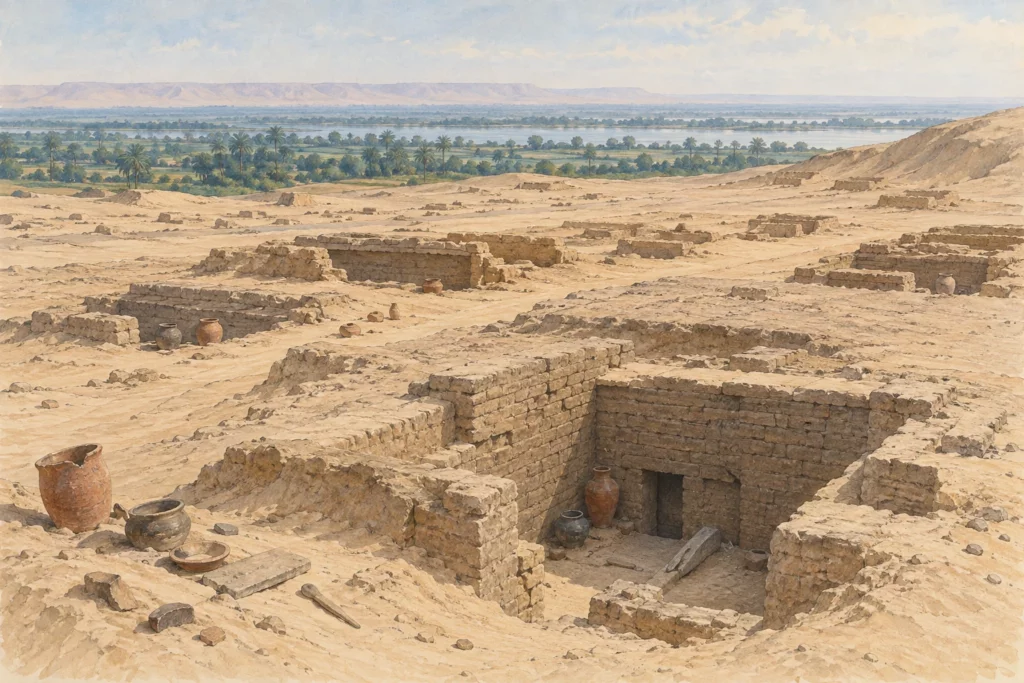
Today visitors see a desert landscape of hollows, low walls and potsherds; this is not a temple still standing. The oldest tombs of Cemetery U were simple pits. In the following phases, the burials became larger, sometimes lined with mudbrick and divided into chambers. U-j had more than twelve compartments. The excavations found there many vessels, including wine jars imported from the Levant, as well as small labels of bone and ivory. These bear signs that are among the earliest evidence of Egyptian hieroglyphic writing.
Its history
The development of the cemetery did not happen all at once. It was used from the beginning of the 4th millennium until around 3200 BC. The differences in size and grave goods between the tombs show a growing social hierarchy. The wealth of U-j suggests the burial of a ruler, but his identity and exact title have not been established. The marks on the labels are studied as information linked to the goods deposited; their detailed reading is under discussion. A few generations later, the tombs of the rulers of Dynasties 0 and I developed in the neighbouring Cemetery B.
Why this place matters
Abydos helps us to understand how power, exchange networks and administrative practices took shape at the end of Egyptian prehistory. The jars from the Levant bear witness to distant relations; the local vessels show the scale of the funerary provisions. The first inscriptions cannot on their own tell the story of the birth of writing, but they provide early traces of it in a dated context. The cult of Osiris, which would make Umm el-Qaab famous much later, should not be projected onto the Predynastic tombs.