In brief
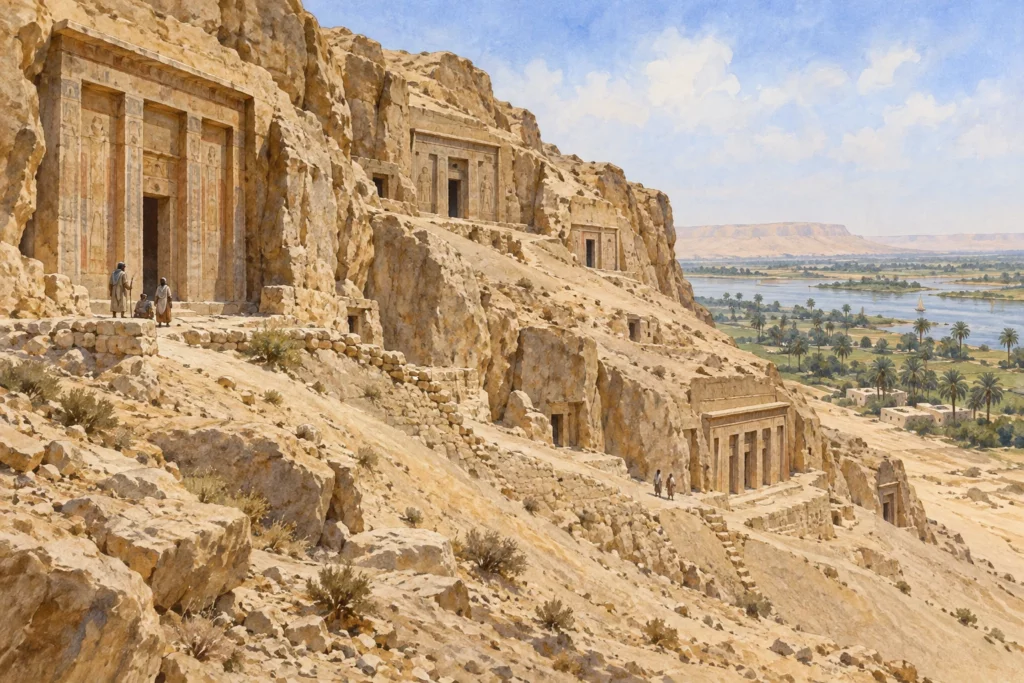
On Gebel Asyut al-Gharbi, west of the town of Asyut in Middle Egypt, large rock-cut tombs were hollowed out for provincial governors. Several belong to the First Intermediate Period, others to the Middle Kingdom. Their inscriptions give a voice to the local elites at a time of conflict between regional powers, before the reunification of Egypt. These texts are precious, but they express the point of view of the tomb owners.
What you discover
The Asyut Project proposes this chronological order for tombs V, III and IV, belonging respectively to Khety I, Iti-ibi and Khety II; these three monuments document the end of the First Intermediate Period in particular. One of the inscriptions in tomb III gives an account of the fighting around Asyut that is hostile to Thebes. The excavations have also changed the understanding of this tomb’s plan: a second row of pillars, two additional rooms and a fourth burial shaft have been identified. An old plan, long cited, therefore did not account for the whole monument.
Its history
In tomb III, the team observed that an autobiographical inscription was covered with plaster before it was finished, then painted with a politically more neutral decoration. This layering is material proof of a change of programme, but the precise reasons for the decision remain open to interpretation. The Asyut Project has recorded many other monuments on the mountain, which was used and remembered for centuries. The necropolis is not the record of a single war or of a single generation.
Why this place matters
Asyut shows how archaeology, architecture and inscriptions correct one another. Accounts of victories are not impartial chronicles; the revisions of the plans are a reminder that a tomb can still yield new data.