I leave the royal tombs still frustrated. In the tombs of the nobles, the scenes of daily life comfort me. Then the temples pile up, until the moment when I ask my guide for a little space.
The banquet of the nobles
At Sheikh Abd el-Qurna, my mood changes. The tombs of the nobles are easier to reach, and their paintings open up a world that the royal rituals had left in the background. Musicians, dancers, guests; further on, ploughing, harvest, hunting and fishing in the marshes. I go from one scene to the next. The dead man’s family, his work and his pleasures suddenly make these centuries less remote. I no longer need to understand a crowd of gods to linger in front of a wall.
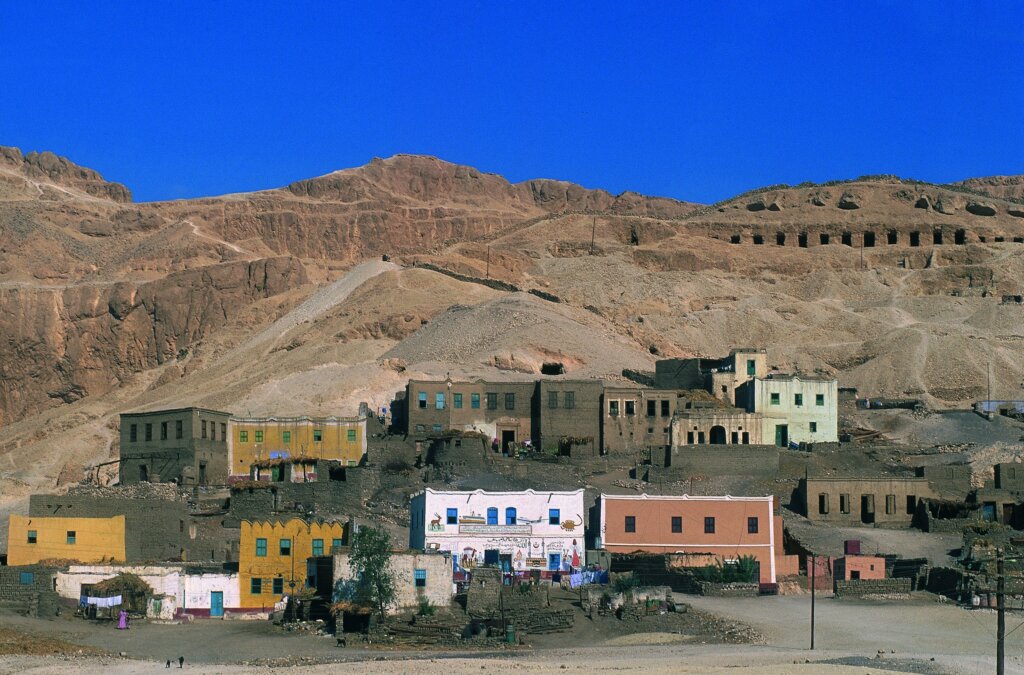
In the neighbouring villages, el-Asasif and el-Khokha, which are said to have grown out of the houses of the tomb workers, the children make dolls. In the past, they sold antiquities ‘found’ in the sand. Life goes on around the necropolis, and I see this bank differently, having approached it thinking only of the dead.
Today: most of the houses of Qurna, built above the tombs, were demolished from 2006 onwards and their inhabitants rehoused outside the necropolis.
The fallen colossus
At the Ramesseum, I face another exercise of imagination: setting the broken colossus of Ramses II (Ramesses II) back on its feet. Nearly eighteen metres high, almost a thousand tonnes, a single block of granite. I try to relate these figures to the fragments lying in the courtyard. Even in ruins, the temple of millions of years is impressive. On the walls, Ramses goes off to war again: Qadesh, then Dapur, in Syria, and the king in his chariot cutting down his enemies. I have barely found my way back to the life of the fields when I am brought back to the victories of the pharaoh.
Medinet Habu, the colours intact
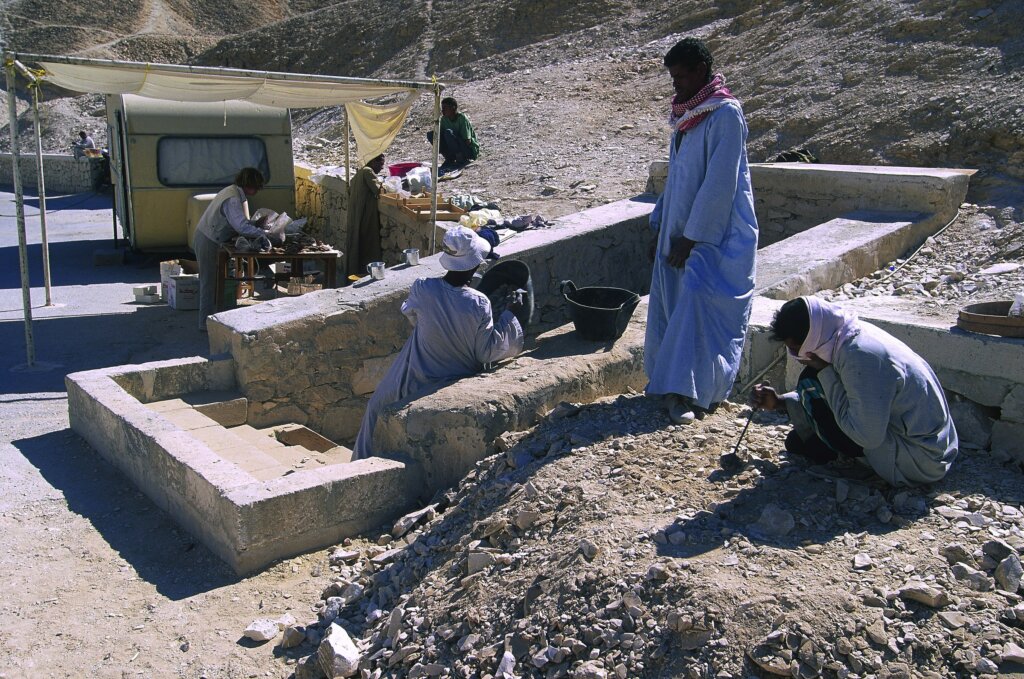
At Medinet Habu, Ramses III takes up the ambition of the Ramesseum. I cross the courts, the hypostyle halls and the sanctuaries, and it is the colours that hold me. They survive even in the most luxuriant decoration: religious scenes, daily life, victorious battles, successful hunts. An Egyptologist is deciphering the hieroglyphs. His assistant holds a reflector and moves the sunlight across the stone. I watch this patient work for a while; after so many scenes covered too quickly, it reminds me how much remains to be read.
Above Deir el-Bahri
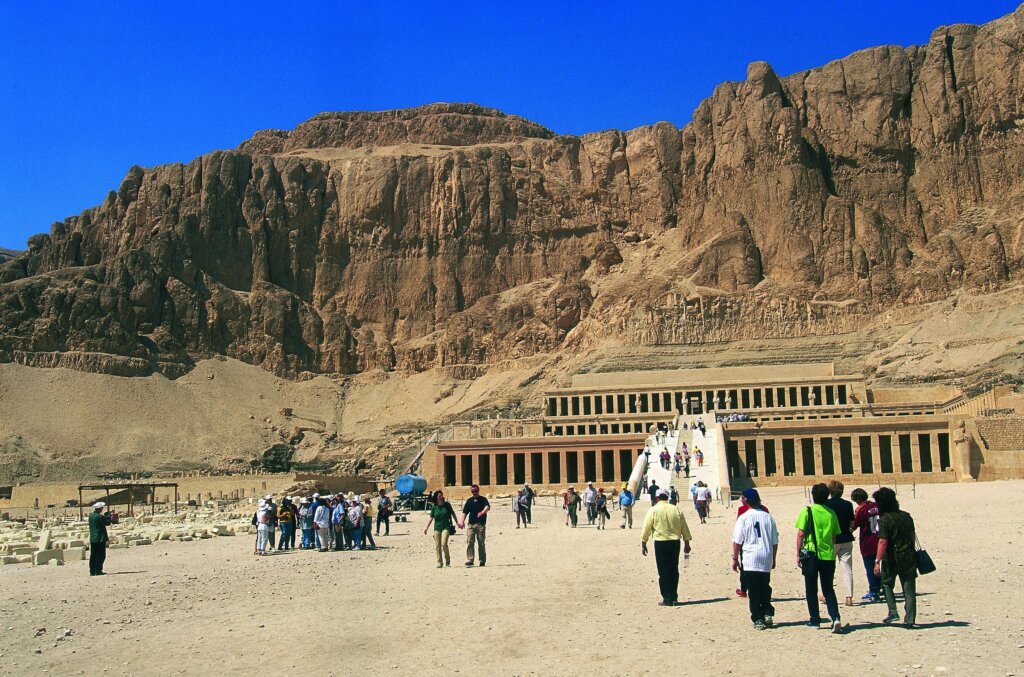
But my head is full. I need simple lines and space. My guide smiles and takes me towards the lands of Hatshepsut. At the side of the road, we take a steep path, slippery with loose stones. Under the sun, the climb soon becomes hard. Half an hour, perhaps. The guide is already far ahead; he waits for me, sitting on a rock. When I join him, I understand why he brought me here.
The temple stretches out below us, at the foot of the cliff. The visitors are the size of ants; they climb the ramps, cross the terraces and disappear behind the colonnades. At last I can look at the whole without moving straight on to the next monument. In the distance are the Nile, the green of the banks and Luxor. The desert encircles this thin inhabited landscape. Above, el-Qurn forms a natural pyramid in which the pharaohs, it is said, may have recognised a sign for their burials.
I stay there. The climb has tired me, but I no longer feel the weariness of visits piled one on another. Today, I do not need to go down into the temple: looking at it from here is enough.
To go further: Tombs of the nobles · Ramesseum · Medinet Habu · Deir el-Bahri · Hatshepsut · Ramses III