In the footsteps of Giovanni Battista Belzoni · 1817. A story adapted from the traveller’s account.
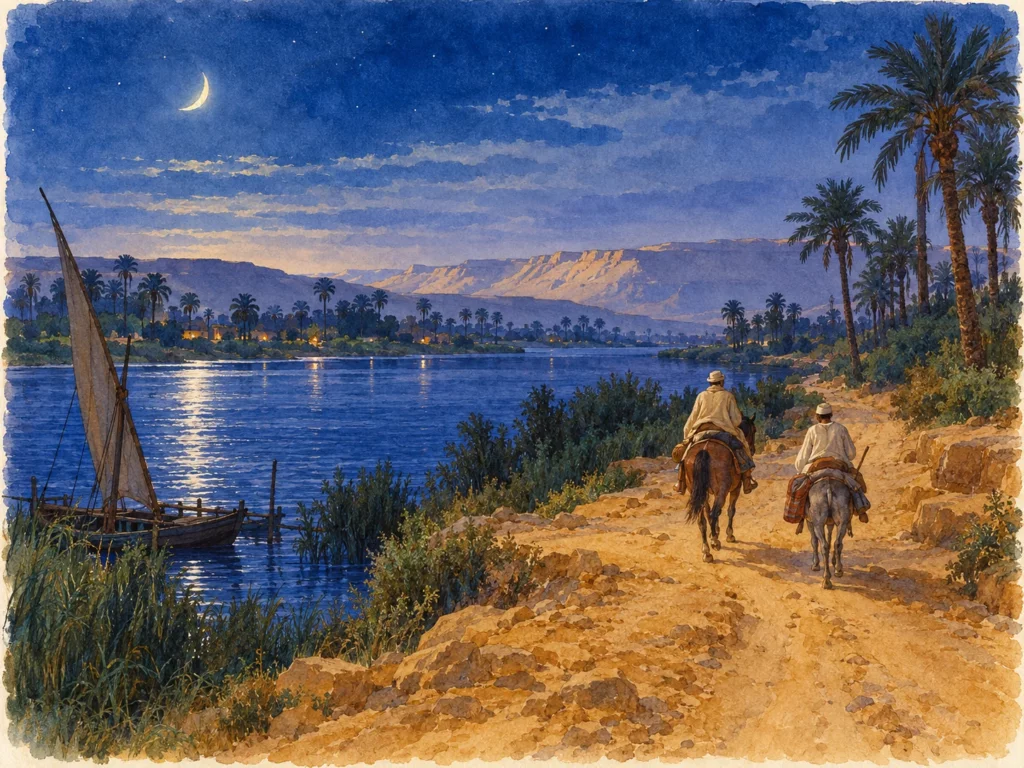
The boat was supposed to carry us peacefully to Thebes. It makes so little progress that I end up leaving it to Beechey. I hire a horse and a donkey, and set off near midnight with my servant. I no longer want to wait for the wind.
A well-fitted boat
We left Bulaq on 20 February. Beechey had a small cabin fitted out on board: mats for a roof, canvas at the sides, a curtain at the entrance. We had thought of the sun, of the dust, even of possible rain. We should have given more thought to the south wind.
After four days, we are still close enough to Cairo for me to draw a landscape showing the city and several groups of pyramids. The view is fine. Our slowness is beginning to be less so.
By the beginning of March, we have only reached Minya. Further up, at Mr Brine’s, near Hermopolis, I learn that Drovetti’s agents are heading for Thebes by forced marches. They are after the same antiquities as we are. I fear they will take possession of the ground where I would like to resume my excavations.
The overland route
Beechey keeps the boat and will follow me at his own pace. With my companion, I reach Manfalut, then Asyut before dawn. The names of the villages become stages where we can find a mount, something to eat, a few hours stolen from sleep.
At Tahta, we rest for four hours. We set off again by moonlight. At Farshut, we have to wait once more for fresh animals. Horses, donkeys, camels: I ride whatever is available. The monks of the convents help us to obtain food and mounts; elsewhere, we find shelter with the village headmen.
The ground is good enough for sleeping. A mat would already be a luxury. One night, I lie down on sugar canes that have just been through the press. They give me a fairly cool rest. They are also served to me after the bread and onions; their juice is pleasant at first, then ends up wearying me. The local people seem able to eat them without tiring of them.
Arriving before the others
We pass through Qena without lingering, continue by way of Qus and at last reach Luxor at noon. Five and a half days on the road. I have slept eleven hours.
I might think the matter won. But another man is already directing excavations on the spot I wanted to return to. A recommendation that should have been sent was not; my rivals have looked after their connections better.
I have arrived quickly. To take up the work again, I shall now have to start the visits and the approaches all over again. My legs can rest at last; the rest will have to wait.