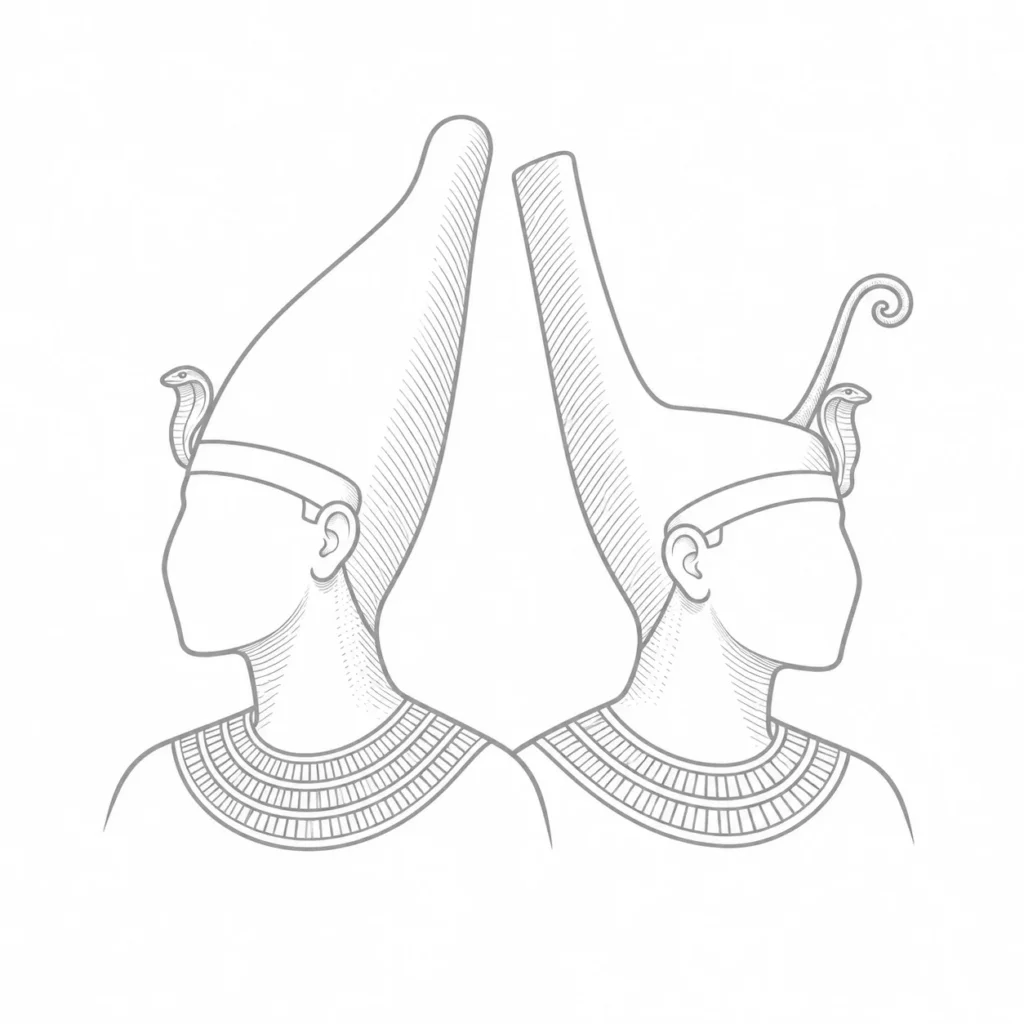
Power in a divided Egypt
Intef II, also known as Antef II and by the Horus name Wahankh, belongs to the 11th Dynasty. He reigned before the reunification achieved under Mentuhotep II, in an Egypt where the kings of Herakleopolis controlled part of the north. His exact chronology is debated, but the monuments and inscriptions make it possible to place his role in the assertion of Theban power. A stela in the Metropolitan Museum shows him offering goods to Ra and Hathor. His reign should not be described as that of a ruler already master of the whole country. Rather, it marks an important stage in the territorial expansion and construction of a southern monarchy. In the chronology of Ian Shaw (Oxford, 2000), his reign falls c. 2112–2063 BC.
The clashes with Herakleopolis
The sources place Intef II in a period of conflict with the rival kings of Herakleopolis. The Metropolitan Museum states that he gradually secured Theban control over a large part of Upper Egypt, from Abydos to Aswan. The individual military episodes are not all precisely dated, and royal inscriptions tend to present successes in an idealised form. Reading them therefore requires comparing the places attested and the testimony of local officials. The progress of the Theban kingdom prepared the conditions for the later reunification, without yet fully achieving it. Intef II emerges as a builder of regional power, rather than as the sole author of a change accomplished at a single stroke.
The stela and the image of the king
The stela of Intef II in New York probably comes from the courtyard of his Theban tomb. The king is shown presenting offerings to deities, in a scene accompanied by prayers for his protection at night and his funerary memory. The relief, carefully worked, shows that the southern court was developing a royal art able to rival the older monumental traditions. This kind of object does more than illustrate a face or a costume. It took part in a lasting ritual in which image, writing and offering ensured the presence of the dead ruler. Its provenance and function help us understand how the dynasty asserted its legitimacy at Thebes.
The tomb at El-Tarif
The burial of Intef II lay in the Theban area of El-Tarif, among the large saff-type monuments associated with the first kings of the 11th Dynasty. These complexes do not follow the model of the Memphite pyramids. They exploit the local terrain, with courts and monumental façades, to create another expression of funerary kingship. Destruction and later alterations make it difficult to reconstruct each stage. The location of the tomb is a reminder that Thebes had now become a major political and ritual centre. The choice of a local tomb does not show that the kingdom was isolated: the inscriptions show, on the contrary, a power that extended its relations well beyond the Theban valley alone.
The dog stela and the later memory
Another stela associated with the tomb showed the king with his dogs, whose names were inscribed. Part of it is kept in Cairo. The monument is also known from a necropolis inspection report written about a thousand years later, at the end of the 20th Dynasty. This twofold transmission is remarkable: it allows an ancient object to be compared with the way Egyptian inspectors were still describing the tomb. The dogs give the record an unusual dimension, but their image should not become an anecdote detached from its funerary context. Rather, it shows the variety of objects placed or set up around a king’s memory.
A presence in the sanctuaries
Work at the temple of Satet on Elephantine is attributed to the reign of Intef II. This attestation, at the southern end of the Egyptian valley, complements the Theban monuments and is consistent with the extension of 11th Dynasty power towards Aswan. A religious building project expresses a political relationship, but it does not on its own give the details of local administration. A distinction must be drawn between claimed authority, works actually attested and day-to-day control. The temple nevertheless provides an important material anchor, where accounts of war are sometimes phrased in general terms. Theban kingship expressed itself both through arms and through the restoration of sacred places.
An essential forerunner of reunification
The historical role of Intef II lies in the consolidation of a Theban kingdom before Mentuhotep II. His stelae, his tomb at El-Tarif and the traces of work on Elephantine show a regional monarchy endowed with artistic and religious means. The conflicts with Herakleopolis give this construction a territorial dimension, even if the exact stages of the war remain uncertain. It would be excessive to credit him already with the unity of Egypt; it would be equally reductive to treat him as a mere local chief without a royal programme. His reign sheds light on the slow transformation that led from competition between courts to a new unified monarchy.
Main sources
- UCL Digital Egypt, Antef II
- Metropolitan Museum of Art, stela of Intef II Wahankh
- UCL Digital Egypt, general chronology
- Crowns drawn from the statue of Senusret I and the relief of Ahmose, Metropolitan Museum of Art.
Reference works
- Ian Shaw (ed.), The Oxford History of Ancient Egypt, Oxford, Oxford University Press, 2000, chronology pp. 479–483
- Aidan Dodson and Dyan Hilton, The Complete Royal Families of Ancient Egypt, London, Thames & Hudson, 2004