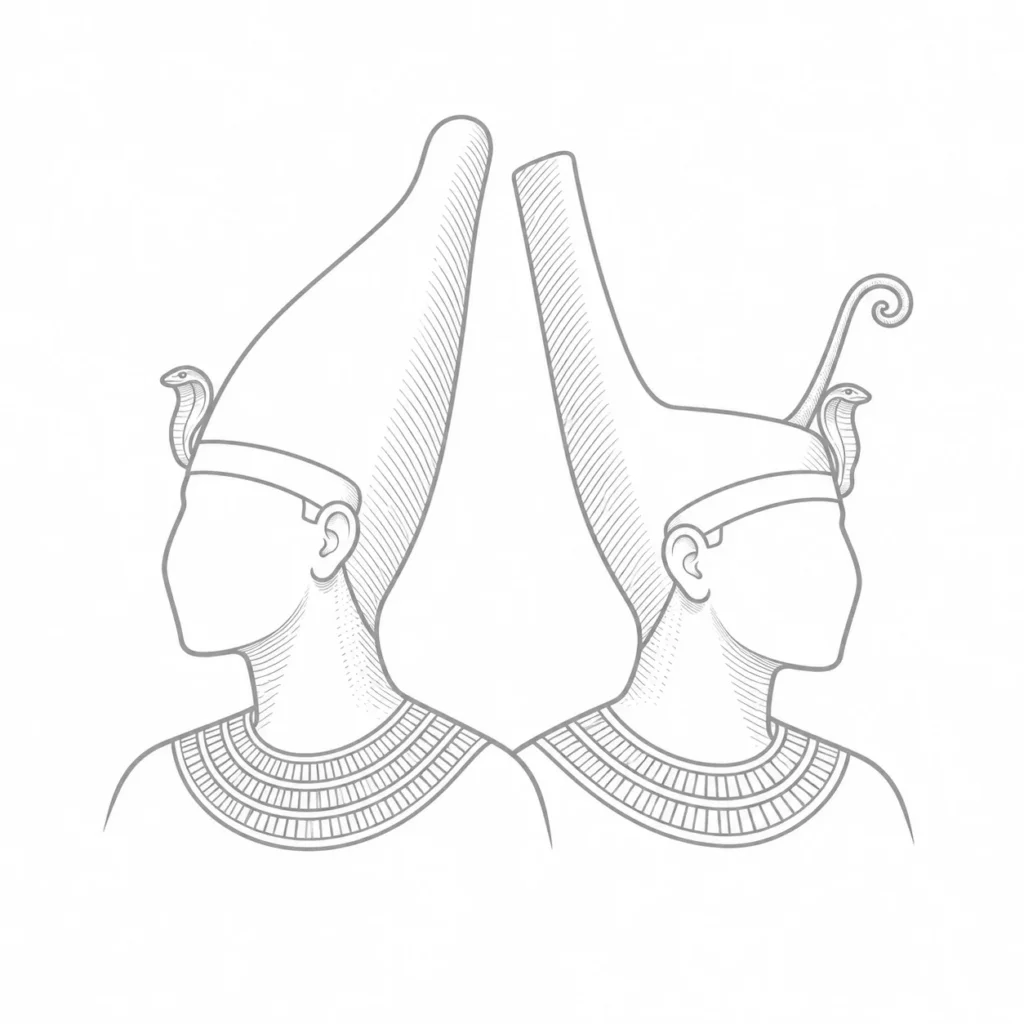
A king of the 29th Dynasty
Hakor, or Achoris, bore the throne name Khnemmaatre. UCL Digital Egypt places his reign between 392 and 380 BC, in the 29th Dynasty. Egypt had regained its independence after more than a century of Achaemenid rule, but the Persian empire remained a threat. The court had to maintain alliances, armed forces and sanctuaries across several regions. The texts that recount his diplomatic choices are less abundant than the monuments bearing his name. The general geopolitical framework must therefore be distinguished from his personally attested decisions. The building projects at Karnak, on Elephantine (in French), at El-Kab and in other towns nevertheless give the measure of an active reign, relatively long for this dynasty.
Independence, a daily task
After the success of Amyrtaeus against Persian rule, the kings of the 29th Dynasty had to defend a sovereignty that was still exposed. Hakor inherited this situation. Egypt had considerable resources, but the Delta and the sea routes made the frontier mobile. Alliances with Greek powers are mentioned in reconstructions of 4th-century policy; their details must be checked against the classical sources and the Egyptian inscriptions. An external coalition does not replace the ability to raise troops and organise supplies. The reign of Hakor invites us to understand independence as a continuous military, fiscal and diplomatic effort, rather than as a state definitively acquired in 404.
A chapel at Karnak
UCL records a chapel of Hakor at Karnak. In the great sanctuary of Amun (in French), a royal intervention asserted the ruler’s legitimacy before the Theban elites and the gods. Small-scale architecture could carry strong political weight, especially after a period of foreign rule. The blocks and decoration must be precisely dated to distinguish Hakor’s initiative from his successors’ alterations. The chapel shows the continuity of pharaonic rites in the 4th century BC. It is also a reminder that the Late Period was a time of architectural creation, despite the modern tendency to favour the older monuments of Karnak.
Works from Elephantine to El-Kab
The name of Hakor is linked to a temple on Elephantine and to works at El-Kab. Relief fragments are known at Tod, blocks at Letopolis and naoi at Herakleopolis. This distribution indicates royal representation in both the south and the north of the valley. It does not mean that all these monuments were of the same scale. A naos, a temple and a reused block serve different functions. Archaeologists compare inscriptions, materials and find contexts to reconstruct each project. The programme nevertheless shows that the independent monarchy sought to be visible in the regional sanctuaries and to maintain relations with their personnel.
A style rooted in tradition
The art of the 29th and 30th Dynasties frequently draws on the forms of the 26th Dynasty and on even older models. Hakor governed within this visual culture of deliberate return to the past. Copying an old form does not mean a lack of ideas: a ruler chooses what, in the history of Egypt, can support his present legitimacy. The reliefs and naoi of his reign must be studied for their workshop peculiarities, not only as the last echoes of a ‘classical age’. The context of independence gives these choices particular weight. The sanctuaries became places where political continuity was made visible despite external threats.
The tomb and the succession
A burial at Saqqara has been proposed for Hakor, but the attribution is not certain. This uncertainty is common for the kings of the Late Period, whose monuments in the Delta and at Memphis have suffered badly. On his death, the 29th Dynasty entered a transition that would lead to the 30th under Nectanebo I. The detailed circumstances of this succession are difficult to establish from Hakor’s remains alone. The end of a reign attested by the chronologies must be distinguished from the history of each local institution. The temples of Karnak and Elephantine continued to be used, even when the royal names changed. This too is a form of continuity of power.
A reign made visible by its building works
For Hakor, the monuments partly make up for the silence of the political narratives. The chapel at Karnak, the temple on Elephantine and the attestations in several towns show a ruler present in the cults of the country. The Persian context and the Greek alliances provide the international dimension, to be set out cautiously according to the quality of the sources. The probable tomb and the succession remain open. An independent monarchy of the 4th century thus made itself visible, maintained its networks and prepared defences. Hakor is therefore not a mere prelude to the great building works of Nectanebo I.
Main sources
- UCL Digital Egypt, Hakor and his monuments
- UCL Digital Egypt, the period of the last independent dynasties
- UCL Digital Egypt, kings of the 28th to 30th Dynasties
- Crowns drawn from the statue of Senusret I and the relief of Ahmose, Metropolitan Museum of Art.
Reference works
- Ian Shaw (ed.), The Oxford History of Ancient Egypt, Oxford, Oxford University Press, 2000, chronology pp. 479–483
- Aidan Dodson and Dyan Hilton, The Complete Royal Families of Ancient Egypt, London, Thames & Hudson, 2004