A long reign at the close of the 20th Dynasty
Ramses XI, Menmaatre Setepenptah, was the last ruler of the 20th Dynasty. UCL Digital Egypt places his reign approximately between 1103 or 1099 and 1070 or 1069 BC. The dates vary, but the relative length of the rule is long. The documents of this period describe a kingdom whose political centres no longer functioned as they had under Ramses II. Thebes, the Delta and Nubia followed different paths. The reign is particularly important for understanding the transition to the Third Intermediate Period. It should not be imagined as a fall that happened in a single day: the papyri show reorganisations, rivalries and continuities over several decades.
The troubles at Thebes
The Theban sources refer to tensions around the high priest of Amun (in French) Amenhotep and to interventions by military officials. The precise chronology of the episodes remains debated. The documents do not provide a continuous narrative, but acts, letters and allusions to crises. They show the growing place of the local authorities of the sanctuary of Amun in the administration of the south. We should avoid simply contrasting a ‘powerless pharaoh’ with ‘all-powerful priests’. The titles, appointments and communications between Thebes and the north bear witness to a more complex relationship. The court retained royal legitimacy, while the effective management of resources and men was being redistributed.
The tomb robberies continue
Judicial papyri dated to the end of the 20th Dynasty still document robberies in the Theban necropolises and the investigations that responded to them. Some files are associated with the reign of Ramses XI. They tell us about the circuits of metals, the vulnerability of burials and the skills of officials. The repetition of cases does not mean that the whole Valley of the Kings was emptied at the same time. Each document concerns specific places and people. The written archives also show that the administration continued to record accusations, testimonies and decisions. They allow us to follow a society in which the value of funerary objects came into tension with the protection of the royal dead.
The ‘Renaissance’ or Wehem-mesut
A new administrative era called the Wehem-mesut, often translated as ‘Renaissance’, was used at the end of the reign of Ramses XI. It changed the way certain documents were dated without necessarily abolishing the king’s name. This device shows the will to display a political new beginning in a time of reorganisation. Its exact meaning and the real sharing of power between the king, the high priests and the military leaders have been debated. The papyri of this phase are essential because they give dates and the names of agents. They must nevertheless be read at the scale of their uses: a new way of dating does not on its own tell the story of all the institutional transformations.
Herihor, Piankh and the south
Herihor and Piankh are major figures of Theban power at the end of the 20th Dynasty. Their functions combined military and religious dimensions in a shifting political landscape. The precise relationships between them and Ramses XI, and their chronological order, require a close reading of the texts. They should not simply be described as the king’s replacements from the moment they appear. Their titles and actions show rather a plurality of centres of authority. At Karnak and in private documents, the hold of the cult of Amun becomes particularly visible. This development prepares the configuration of the early Third Intermediate Period, when north and south no longer always had the same dynasty of reference.
The transition to Tanis
After Ramses XI, the 21st Dynasty is associated with Tanis in the Delta, while the high priesthood of Amun played a major role at Thebes. The king lists give a succession of names, but practices of government did not change everywhere at the same moment. Administrative and religious networks endured in new forms. The study of the final reign of Ramses XI helps to understand this transition without contrasting a fully united New Kingdom with a Third Intermediate Period supposedly in complete disarray. The documentation points rather to a redistribution of power, resources and royal representation. The last Ramesside stands at the centre of this passage, even if his personal biography remains little known.
A king for understanding a transformation
The long reign of Ramses XI allows a transition to be studied through working documents, and not only through dynastic lists. The investigations into the tombs, the changes in dating and the careers of Herihor or Piankh give a livelier picture than the phrase ‘end of the New Kingdom’. They also show the limits of the evidence: the years do not always line up easily and titles do not necessarily reflect the power exercised from day to day. By separating regions and types of source, we can explain how a monarchy several centuries old changed its form. The continuity of cults and offices is as important as the breaks in the succession.
Main sources
- UCL Digital Egypt, Ramses XI and the chronology of the New Kingdom
- UCL Digital Egypt, the following intermediate period
- British Museum, legal papyrus on tomb robberies
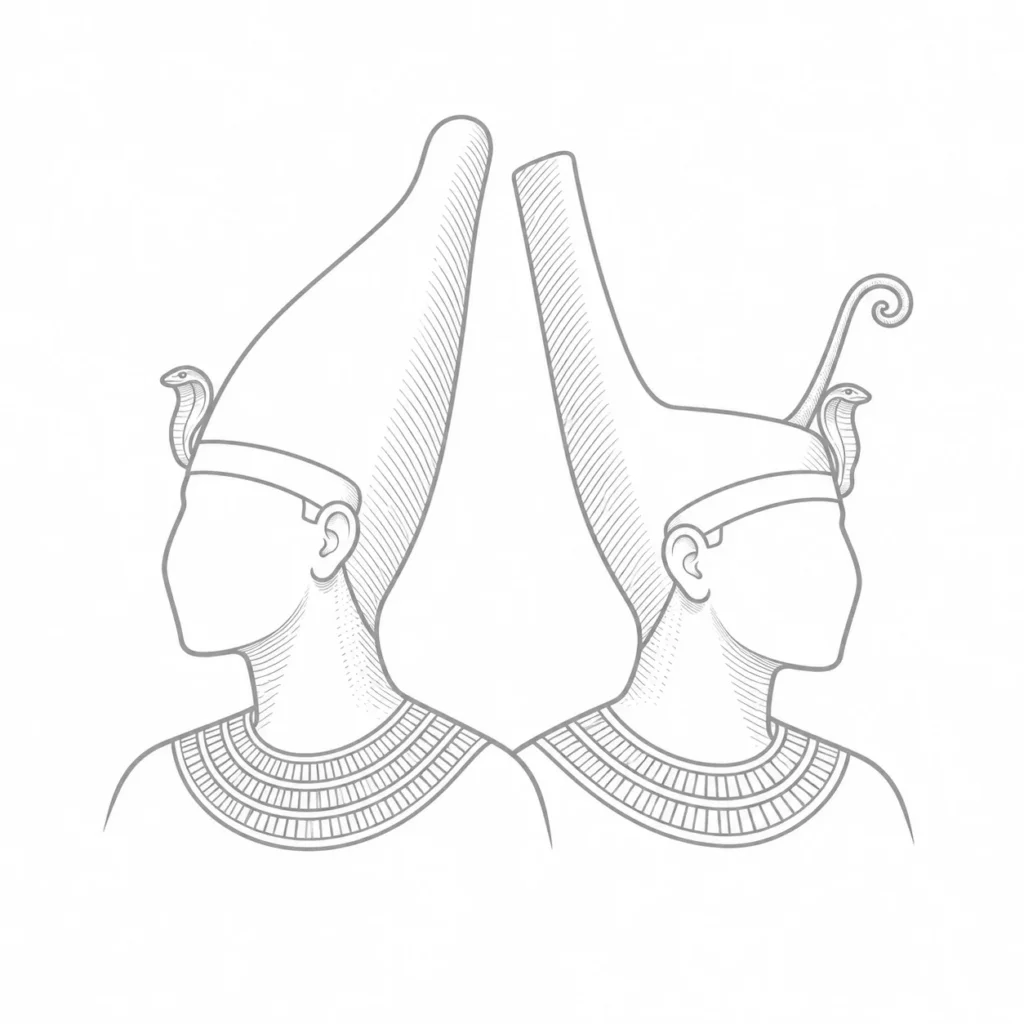
- Crowns drawn from the statue of Senusret I and the relief of Ahmose, Metropolitan Museum of Art.
Reference works
- Ian Shaw (ed.), The Oxford History of Ancient Egypt, Oxford, Oxford University Press, 2000, chronology pp. 479–483
- Aidan Dodson and Dyan Hilton, The Complete Royal Families of Ancient Egypt, London, Thames & Hudson, 2004