Beneath the porthole, Lake Nasser seems endless. I am off to see a temple saved from the waters, without yet understanding what it means to move a mountain.
A lake beneath the porthole
Through the porthole, I look at Lake Nasser. The plane is quickly bringing us closer to Abu Simbel, some three hundred kilometres from Aswan, but the expanse of water holds my attention. Beneath it, villages and temples have disappeared; tens of thousands of Nubians had to leave their lands. In the 1960s, an international campaign saved more than twenty monuments. I am about to discover the most famous of them.
Sixty-five metres higher
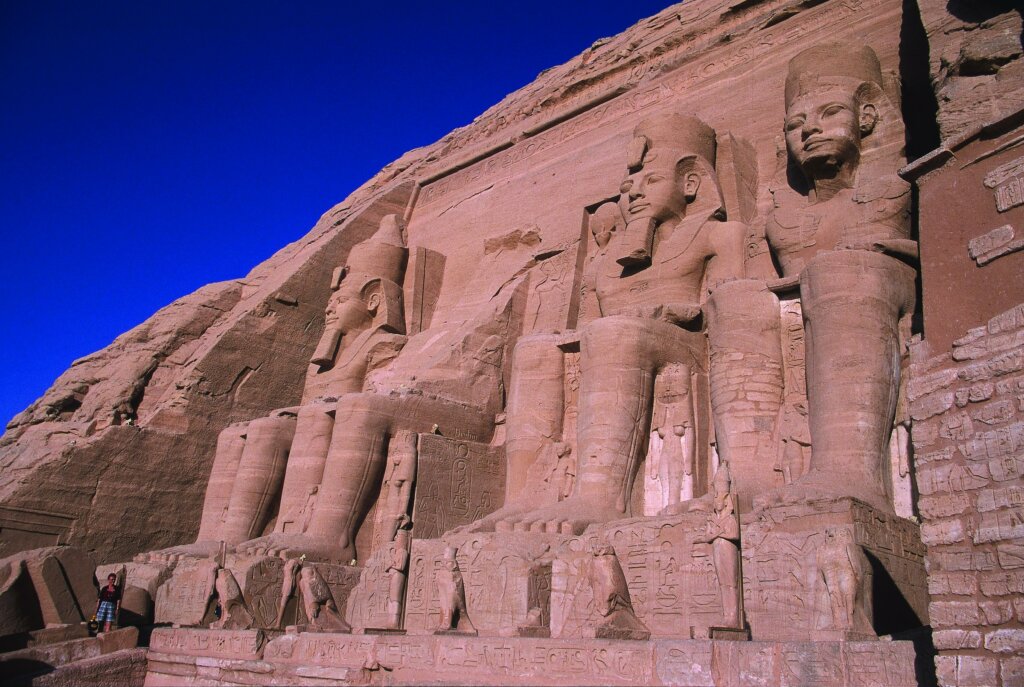
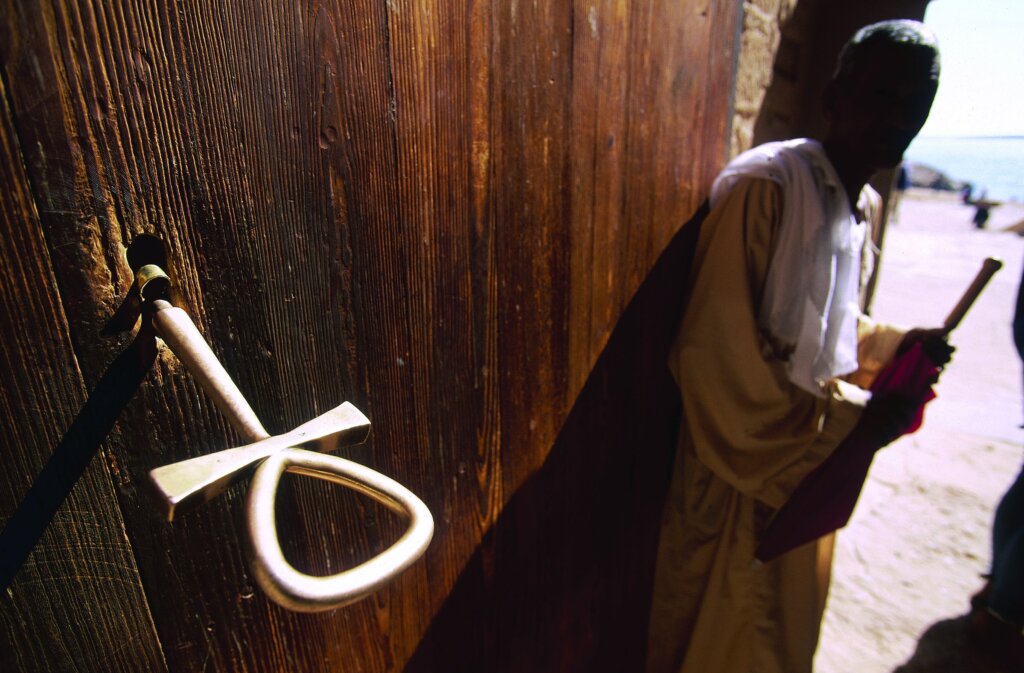
In front of the great temple, I cannot make what I know match what I see. The colossi seem to have stood here for ever, facing the desert, far from Thebes. Yet their original site lies under the water, sixty-five metres lower down. These figures of Ramses, some twenty metres high, were cut into blocks and then reassembled between 1964 and 1968. In my mind, I look for the pieces in these motionless silhouettes. The builder would surely not have disowned the undertaking. And now the door is opened with a key in the shape of an ankh, the sign of life: the detail seems made for him.
Facing the desert
I come back to the faces of the king. False beard, nemes headcloth, double crown: Ramses II gazes at the rising sun with a serenity that the size of the statues makes almost intimidating. Beside his legs, his mother Tuya, Nefertari and his children give the scale. One only has to look down at them to measure the giants.
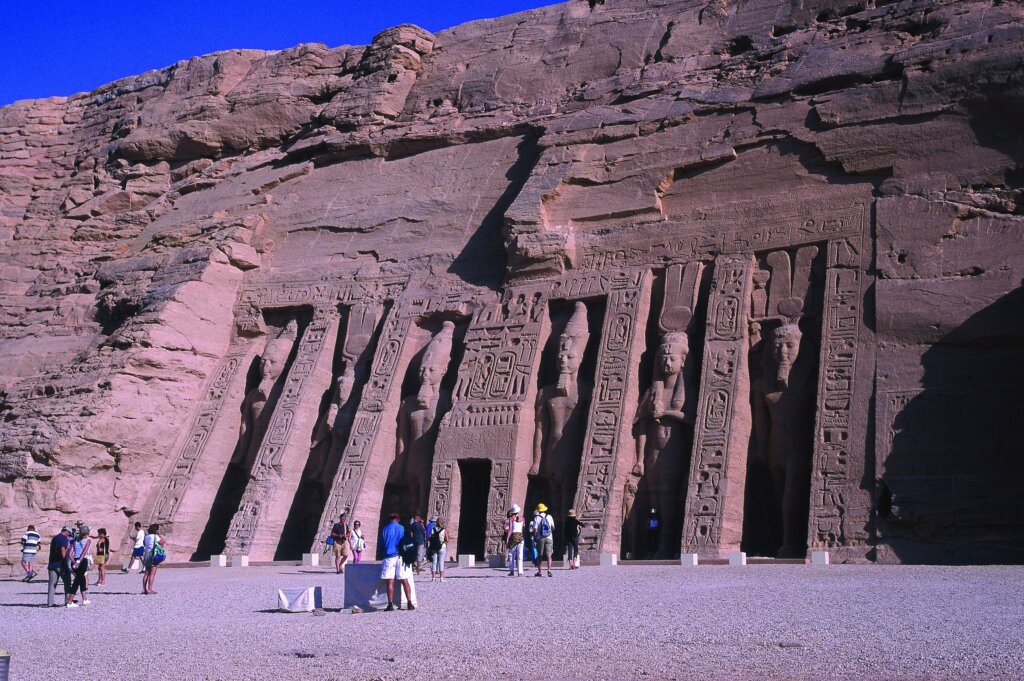
The small temple next to it, dedicated to Hathor and Nefertari, extends this royal presence to the edges of the kingdom. In front of the two façades, I imagine the effect they could have had on the caravans coming from the South. Inside the great temple, Ramses goes on telling of his power: the battle of Kadesh unfolds on the walls, much embellished to his advantage. The stone leaves little room for contradiction.
The ray and the shadow
In the sanctuary, I think of the ray of light that I have not come to see today. Twice a year, around 22 February and 22 October, the sun crosses more than sixty metres of the temple and lights up Amun-Ra, the deified Ramses and Ra-Horakhty. Ptah, god of Memphis linked to the underworld, remains in the shadow. Tradition links these dates to the king’s coronation, though this cannot be proved. What holds me is the path of the light: after the colossi and the battles, this way of reaching the king deep inside the mountain.
Outside, the lake takes up all its space again. I had looked at it from the plane thinking of what it had swallowed. I look at it now knowing what had to be taken away from it. Ramses wanted to last. More than three millennia after him, people were still working to prove him right.
To go further (in French): Abu Simbel, the mountain that was moved · Great temple of Ramses II · Small temple of Nefertari · Ramses II · Ptah · Hathor · The Nubian campaign