I promised a felucca trip. But Philae draws me there first thing in the morning, before the visitors arrive. The boatman will have to wait until the evening.
A deal sealed with a slap of the hands
My boatman does not find me very funny. ‘Listen, I’m sorry, but I’m going to Philae first. I promise, this evening I’ll come with you.’ A smile, a great slap of the hands: we have a deal. I can go. At this hour, the temple of Isis is still deserted, and I fully intend to make the most of the morning light.
The temple saved from the waters
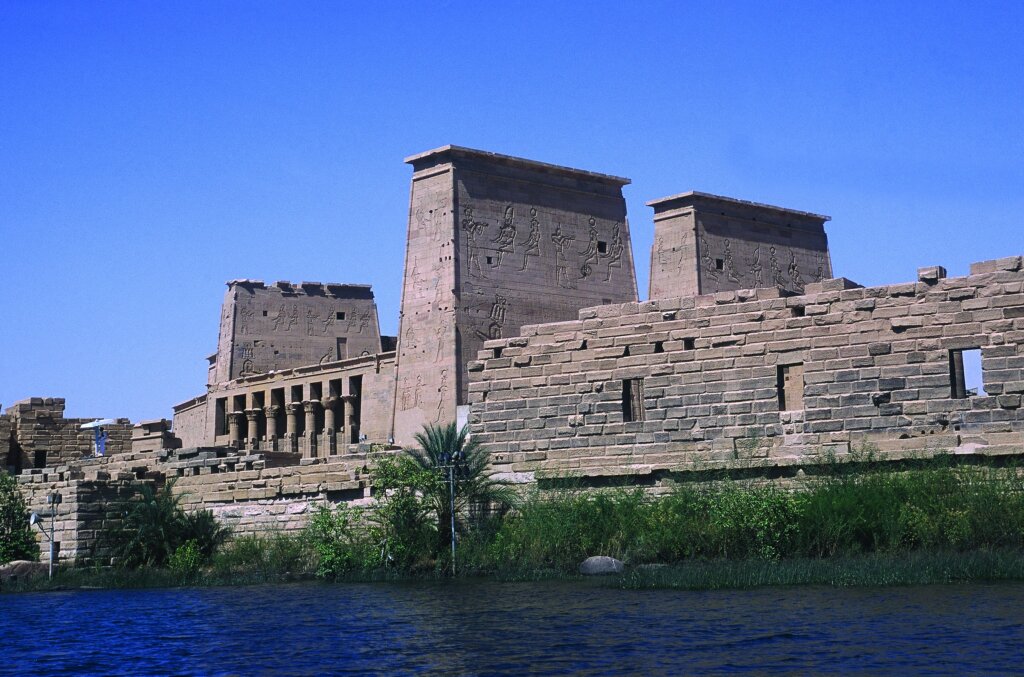
From the water, the two pylons look like the funnels of an ocean liner. I approach Philae with the feeling of going aboard. Yet this ship of stone has already made a voyage I can hardly imagine: between 1972 and 1980, under the aegis of UNESCO, it was dismantled and carried stone by stone to the neighbouring island of Agilkia, reshaped to resemble the original island.
After the first Aswan dam, built in 1902, the temple was flooded for much of the year; the High Dam would have made its disappearance final. This morning, I can follow the columns of the mammisi, the birth house of the god, like gangways, then go deep into the dark corridors and halls. I reach the sanctuary almost forgetting that this whole route has been moved.
Isis, the last to hold out
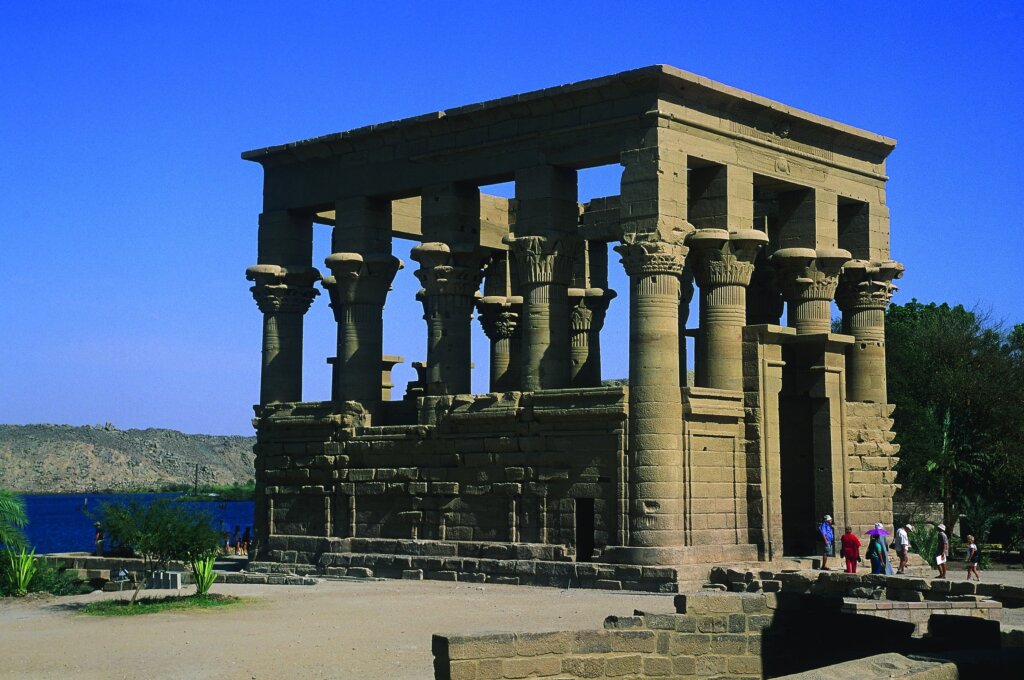
The sanctuary leads back to Isis. Here the goddess mourned Osiris, her husband, whose mythical tomb lay on the neighbouring island of Biga, the Abaton, which no one was allowed to enter. I find the names of the Greek and Roman rulers in the cartouches: Augustus, Tiberius, Nero. All of them took their place in this Egyptian story. At the kiosk of Trajan, where the processions came ashore, the fourteen columns play variations on the papyrus and the lotus; no capital is quite like the next.
Then the crosses carved in the stone bring a change of era. The cult of Isis survived until the 6th century, before coming to an end under Justinian. Part of the temple became a church dedicated to Saint Stephen. In the silence of the morning, these traces sit side by side without a sound. I came to see a temple saved from the water; I also discover everything that followed within its walls.
Gliding on the Nile
In the evening, I finally keep my promise. After the ship of stone, the felucca. The water slips past beneath the bow and I no longer want any explanations. Sailing on the Nile was one of those childhood dreams you keep alongside the Trans-Siberian, the Pan-American Highway or Cape Horn. This time, I do not have to imagine setting off: I am on board.
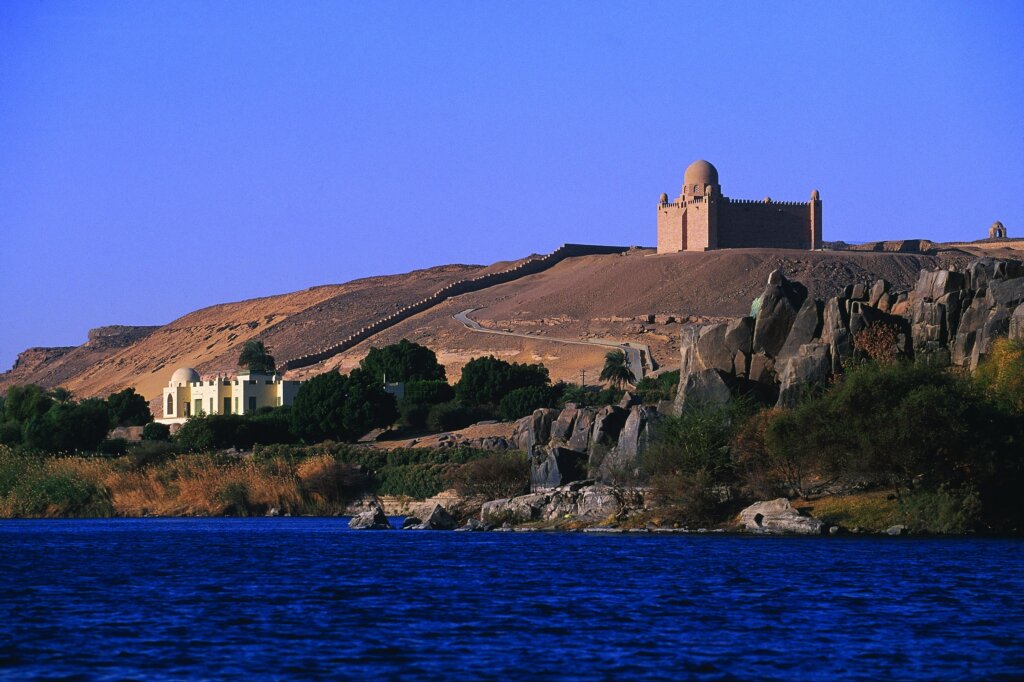
The cliff of the ancient necropolis goes by, then the mausoleum of the Aga Khan. We sail along the gleaming backs of the rocks of Elephantine, capital of the first province of Upper Egypt; Lord Kitchener’s garden island stays to starboard. In the reeds, a grey heron lets itself be seen. The hoopoe, the ibis and the pied kingfisher are more discreet. I watch these banks go by without trying to remember every name.
The gods of the cataract come back to me of their own accord: Hapy, the pot-bellied Nile of abundance, ram-headed Khnum, Satet and Anuket, the goddesses of the waters. What have they been doing since the dam? I imagine Hapy grown thin, deprived of silt to spread on the fields, and Khnum forced to change trades. As for the goddesses, have the giant fish that are said to haunt Lake Nasser devoured them? I leave these questions unanswered. The boatman has waited long enough; now I keep quiet and enjoy his felucca.
Today: the sound and light show at Philae still lights up the temple every evening; it is reached by boat from the Shellal landing stage.
To go further (in French): Philae · Sanctuary of Isis · Kiosk of Trajan · Isis · Osiris · Khnum · Hapy · Anuket · Satet · Elephantine, the frontier island