A king between two highly visible reigns
Thutmose II, Aakheperenre, succeeded Thutmose I and preceded the long reign of Thutmose III, during which Hatshepsut would first exercise government and then kingship. UCL Digital Egypt places his reign approximately c. 1492–1479 BC, but its length is debated. His record is less spectacular than that of his father or his successors. This documentary discretion does not mean that he was a mere transitional name. Inscriptions, architectural blocks and private biographies attest his power. The main challenge is to assess these traces without retrospectively attributing to him the great achievements of Hatshepsut and Thutmose III, and without reducing his action to the conditions of their accession.
The ties of the royal family
Thutmose II was the son of Thutmose I and the husband of Hatshepsut, who also came from the royal family. Their marriage strengthened dynastic continuity. On the king’s death, his son Thutmose III came to the throne while still young; Hatshepsut took a growing place in the government. The documents do not allow us to recount with certainty all the decisions taken at court during the lifetime of Thutmose II. The stories that present him as necessarily weak because his wife later became ruler rest on a retrospective reading. It is better to distinguish attested family facts from judgements of character, which official monuments cannot prove.
A campaign in Nubia
An inscription mentions a campaign against a revolt or opposition in Nubia at the beginning of the reign. It shows the persistent attention of the 18th Dynasty to this region, conquered and administered by his predecessors. The royal text emphasises the speed and effectiveness of the response; like any victory narrative, it must be read with its conventions. It proves a military initiative attributed to the ruler, but it does not describe the whole life of the Nubian communities or the underlying causes of the conflict. The inscriptions near Sehel and the testimony of officers help to place the episode within the geography of river communications. Holding the south required repeated operations.
Monuments from Karnak to Elephantine
UCL records door jambs bearing the name of Thutmose II in the ‘treasury’ of Thutmose I at Karnak, a statue found in the sanctuary and blocks discovered on Elephantine (in French). These attestations show the continuity of the dynasty’s building projects. A reused block does not always reveal the building it first belonged to, but it gives a name and sometimes a phase of intervention. A block from Coptos, in the Petrie Museum, adds another point on the map. Their dispersal does not prove a homogeneous building campaign throughout the country. It nevertheless indicates that the reign expressed itself through durable objects and architecture, beyond military texts alone.
Servants as witnesses
Ahmose Pennekhbet, Ineni and Nebamun mention Thutmose II in their biographies. These private inscriptions are useful for following the continuity of careers between several rulers. They show the offices, the rewards and the place of the royal circle in the workings of the state. They are not complete administrative archives: each selects the episodes that enhance its owner. Comparing them with the royal inscriptions avoids dependence on a single discourse. The reign then appears as an active stage in the lives of officials who had served the father and would serve the successors. This human perspective gives depth to a ruler whose great monuments are less abundant.
A debated burial
The location of the original tomb of Thutmose II is not established with certainty. UCL refers to a Theban rock-cut burial and a presumed association with the Valley of the Kings. The movement of royal mummies, reuse and early discoveries complicate the identifications. A distinction must be drawn between a mummy attributed to a king, the tomb in which it was found and the place of his first burial. The absence of a unanimously accepted identification does not erase the reality of the funerary rites. It is a reminder that the Theban necropolis was transformed over centuries. This record is a good example of the difference between a traditional attribution and direct archaeological proof.
A reign to be appreciated for itself
Thutmose II stands at the crossroads of three generations of the 18th Dynasty. His family ties explain the conditions of Hatshepsut’s government and of the accession of Thutmose III, but his reign has its own evidence: a Nubian campaign, inscribed objects and interventions in the sanctuaries. Examined together, they show a monarchy pursuing its ordinary tasks of defence and building. Caution about the length of the reign and the tomb makes the portrait more reliable. It also helps us understand why a ruler can be historically important without leaving a famous great battle or an intact temple still bearing his name.
Main sources
- UCL Digital Egypt, Thutmose II and his attestations
- UCL Digital Egypt, Hatshepsut and the succession
- UCL Digital Egypt, kings of the New Kingdom
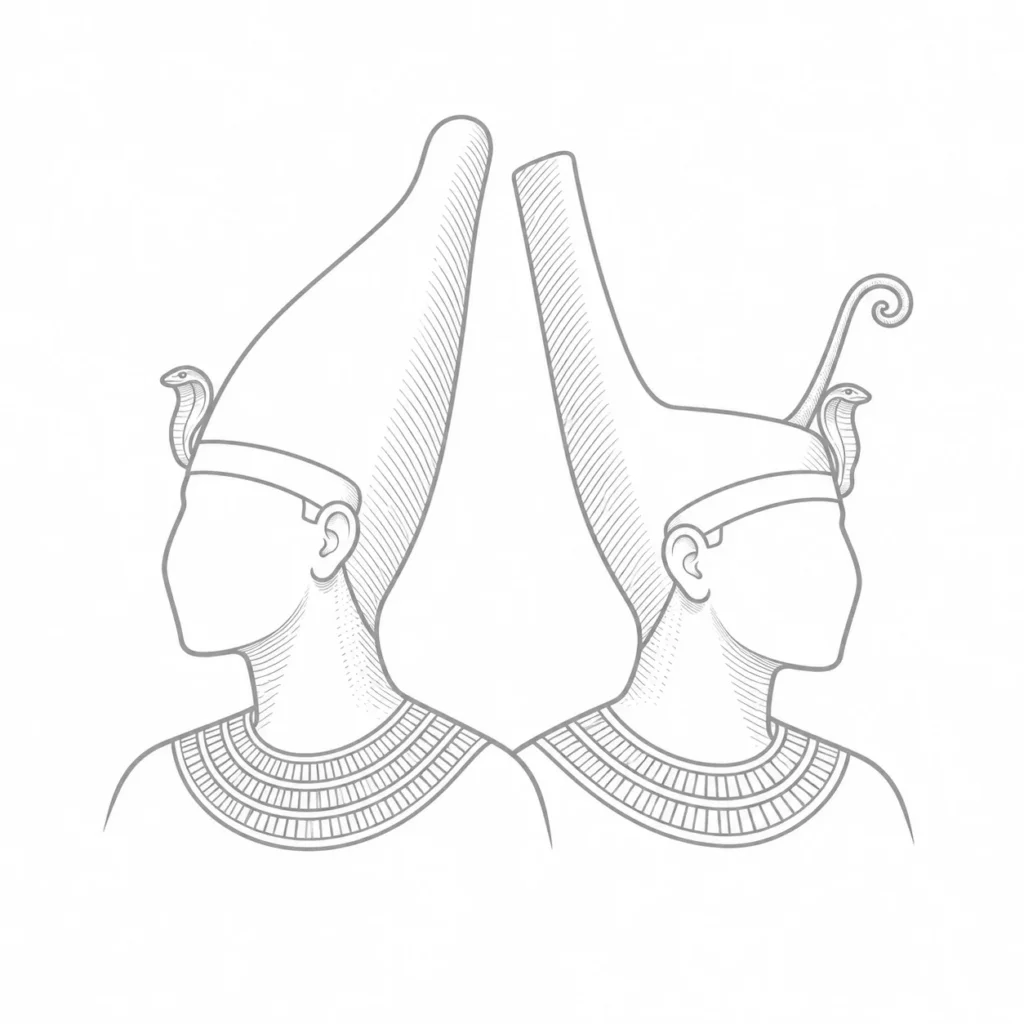
- Crowns drawn from the statue of Senusret I and the relief of Ahmose, Metropolitan Museum of Art.
Reference works
- Ian Shaw (ed.), The Oxford History of Ancient Egypt, Oxford, Oxford University Press, 2000, chronology pp. 479–483
- Aidan Dodson and Dyan Hilton, The Complete Royal Families of Ancient Egypt, London, Thames & Hudson, 2004