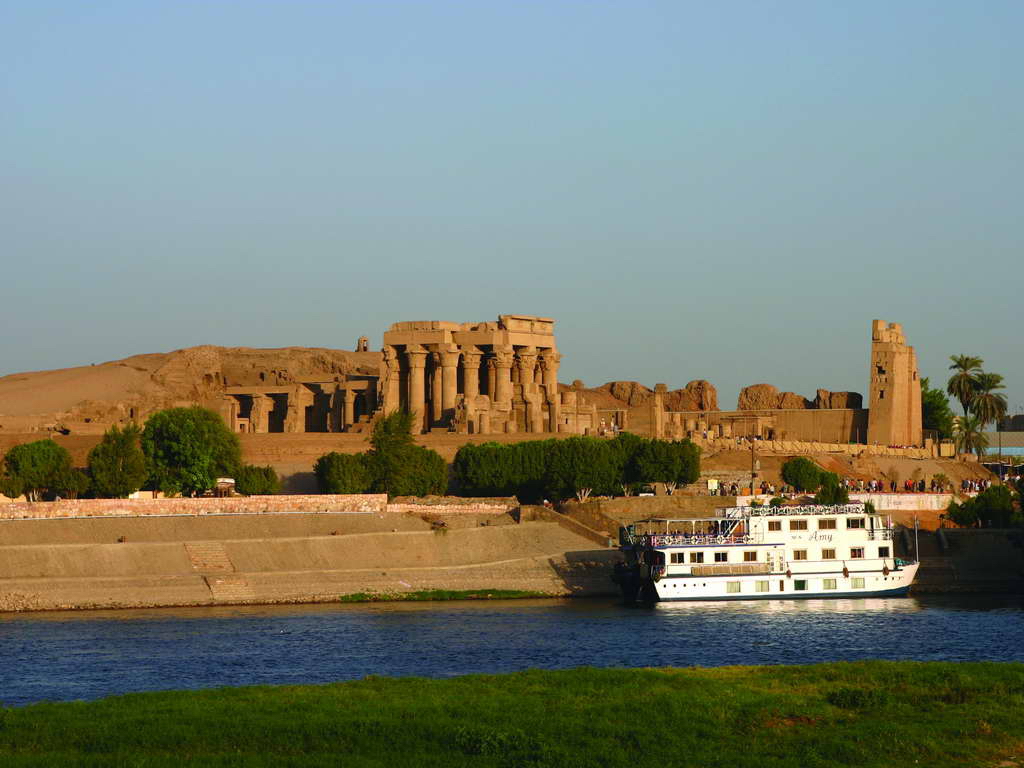
At Kom Ombo the stone looks down on the river. You glimpse the columns from the bank, then discover that the temple does not follow a single path. Two axes run side by side, as if the monument let two voices be heard beneath the same sky.
One temple, two sanctuaries
The surviving building dates mostly from the Graeco-Roman Period. Its plan combines two parallel passages and two sanctuaries. To the south, Sobek, the crocodile god linked to the waters; to the north, Haroeris, Horus the Elder. This arrangement gives the temple its singularity. The two cults share the spaces without becoming identical. For the visitor, the symmetry reveals itself step by step, in the alignment of doors and halls.
The Nile at the foot of the columns
The river is not a mere backdrop. From the water, the temple seems to sit on the very edge of the cultivated valley. Climbing towards the columns, you sense the closeness of boats, fields and banks. The name of ancient Nubt lives on in that of Kom Ombo. The place thus links a long religious history to a landscape that the Nile continues to shape.
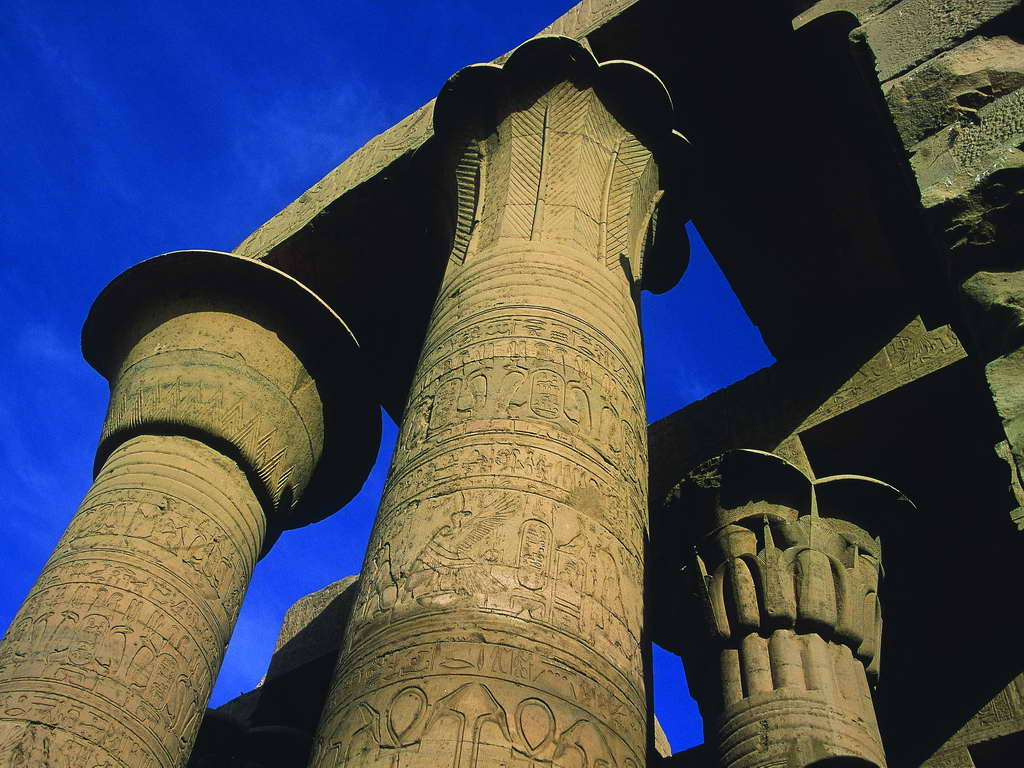
What the walls tell
The reliefs show rulers, gods and ritual acts. One scene is often presented as a set of medical instruments. The Egyptian ministry describes it more cautiously as a depiction of what are thought to be surgical tools. The nuance matters: a temple image follows a religious language first. It needs to be read before serving as direct evidence of ancient practice.
The presence of Sobek
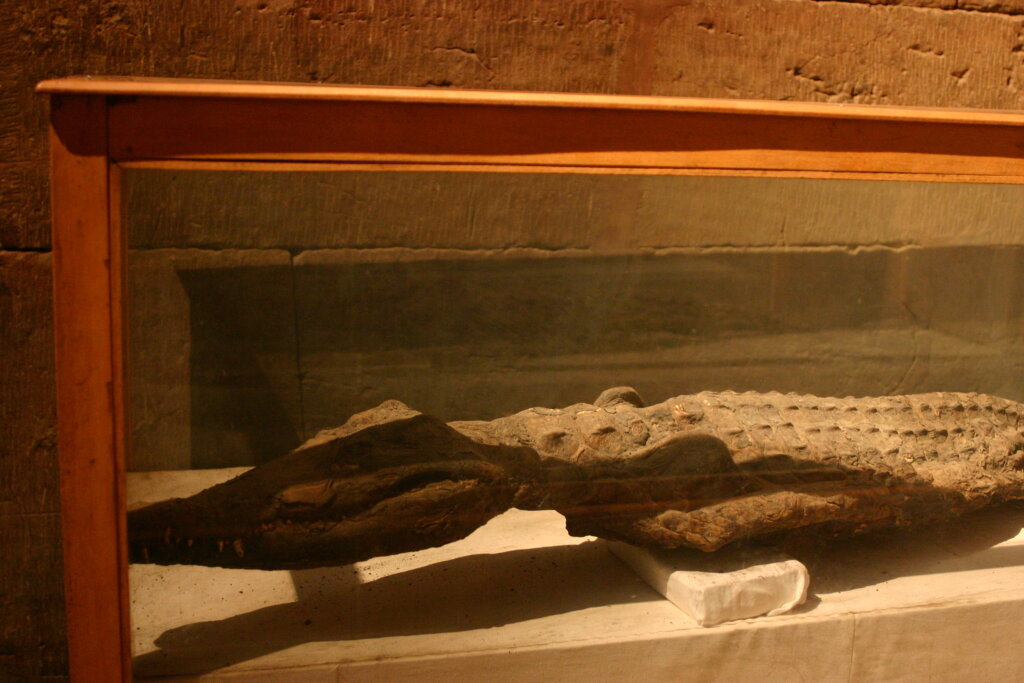
The mummified crocodiles recall the place of Sobek in local beliefs. Their presence gives unexpected depth to the god’s name. You then return to the two paths of the temple with a different attention: the architecture, the images and the consecrated animals belonged to the same world of rites. Nothing, however, allows that world to be summed up as an isolated curiosity.
Between two stages on the river
On the way out, the Nile again fills the whole field of view. The stone stays close to the water, and the temple takes its place again in the valley. Upstream, Aswan opens the way to Nubia; downstream, Edfu shows another Ptolemaic sanctuary. The map helps to follow this route from town to town.