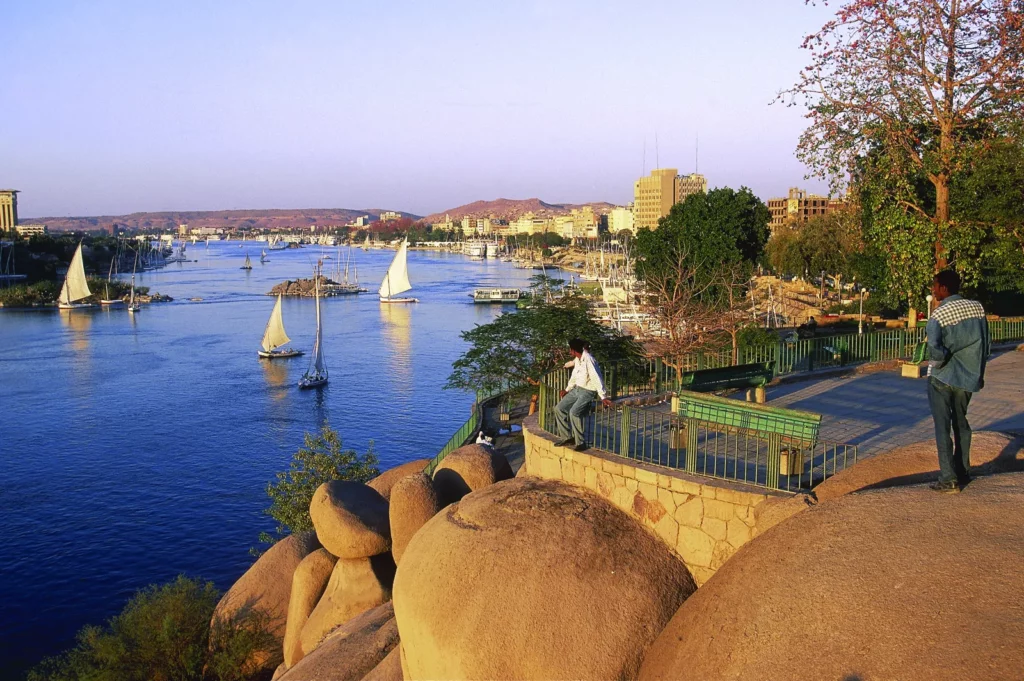
Aswan is not a town you visit. It is a town you listen to. Everything here speaks softly: the light, the wind, the stones, the waters. Here the Nile slows down, as if catching its breath before facing the desert.
A town on the threshold of Nubia
Close to the First Cataract, Aswan long linked the Egyptian valley to the regions further south. Elephantine Island, the granite quarries and the banks of the Nile bear witness to this history. The present-day town also reveals itself through its quays, its museums and the landscapes around it.
The Nile and its islands
On the Corniche, the feluccas half doze. I climb slowly to the viewpoint, where the town melts into the rock. The sun drops behind the cliffs and the river changes colour. The landscape calls for another way of looking: taking the time to tell apart the water, the islands and the town.
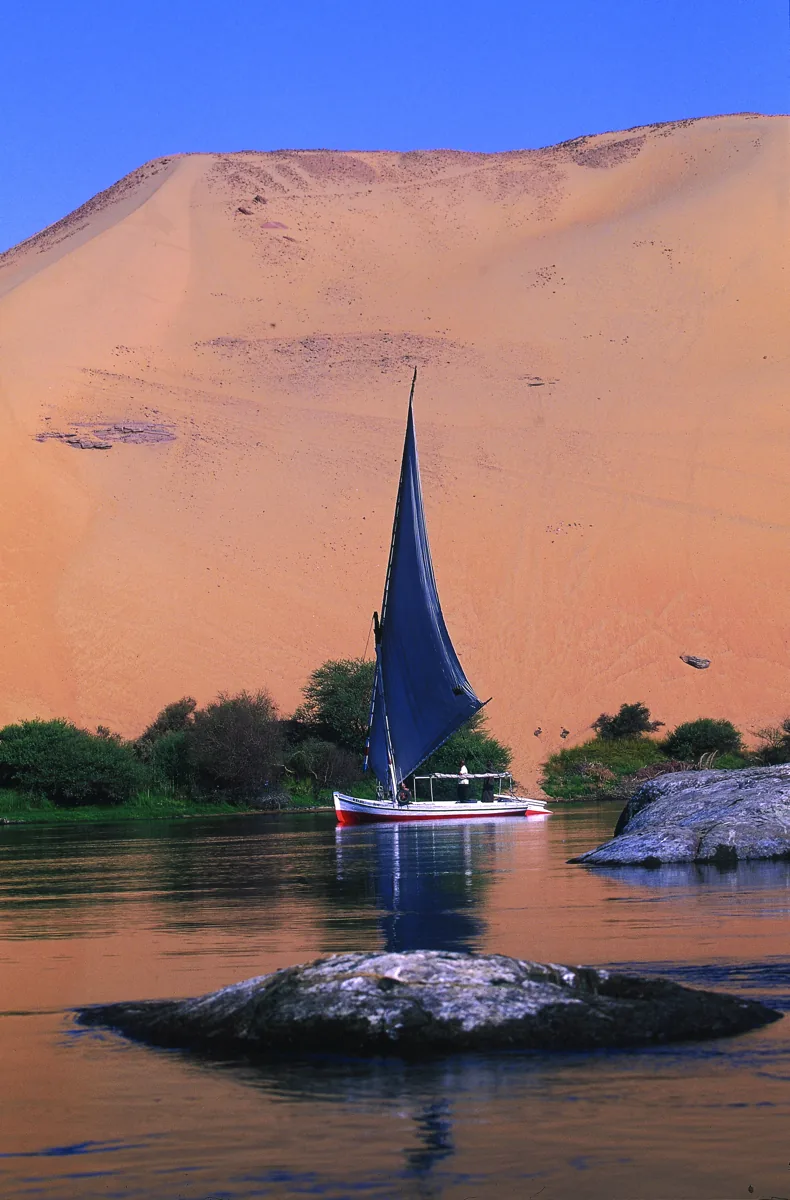
From the boat, Elephantine recalls the long history of exchanges at the First Cataract. Kitchener’s Island and its garden offer another, greener landscape. These places belong to a town lived in today as much as to a territory heavy with history.
Stone and water
In a quarry open to the sky lies the Unfinished Obelisk. It shows the traces of an interrupted project and helps us understand how granite was worked. The High Dam tells of another relationship with the river: an immense modern scheme that transformed the valley upstream. The international campaign to save the monuments of Nubia moved several temples threatened by the rising waters.
The memory of the Nile
The Nubian Museum invites us to look at the cultures of the south in their own history, well beyond the story of the pharaonic monuments alone. The journey continues in the villages of the region, where the colours of the houses give another measure of the landscape.
The colours of the world
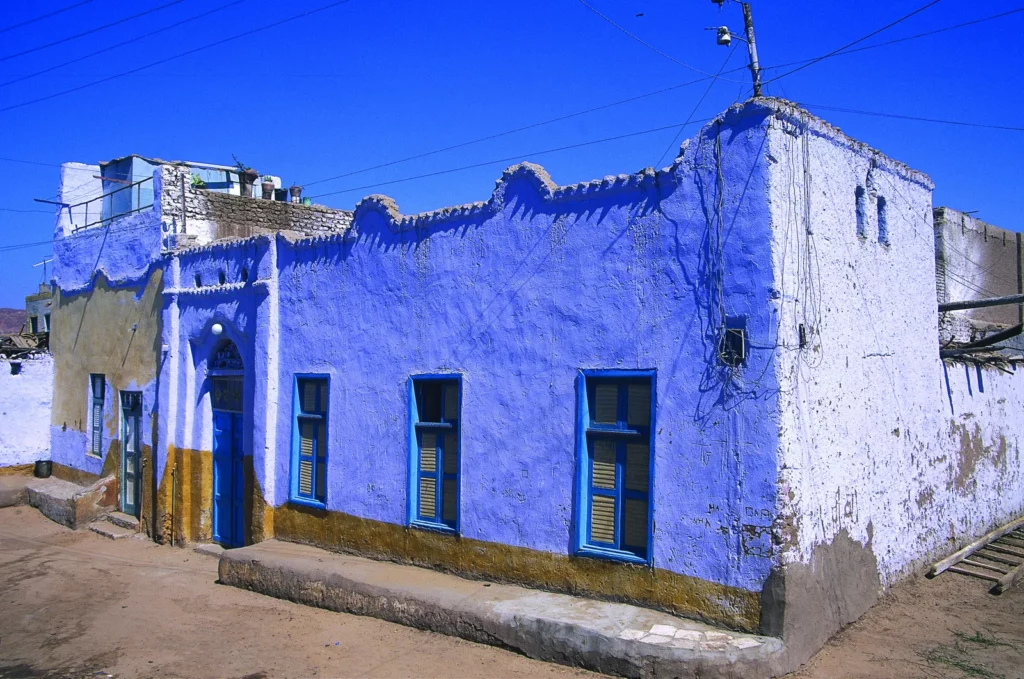
At the end of the day I set off for the villages. The painted houses catch the eye. Night falls slowly over the river. Aswan glitters between water and sand. I think that the ‘last frontier’ is also an invitation to remember the people, landscapes and stories that meet here.
To place Aswan among the other sites of the valley, open the map. The temple of Wadi es-Sebua extends the route towards Nubia.