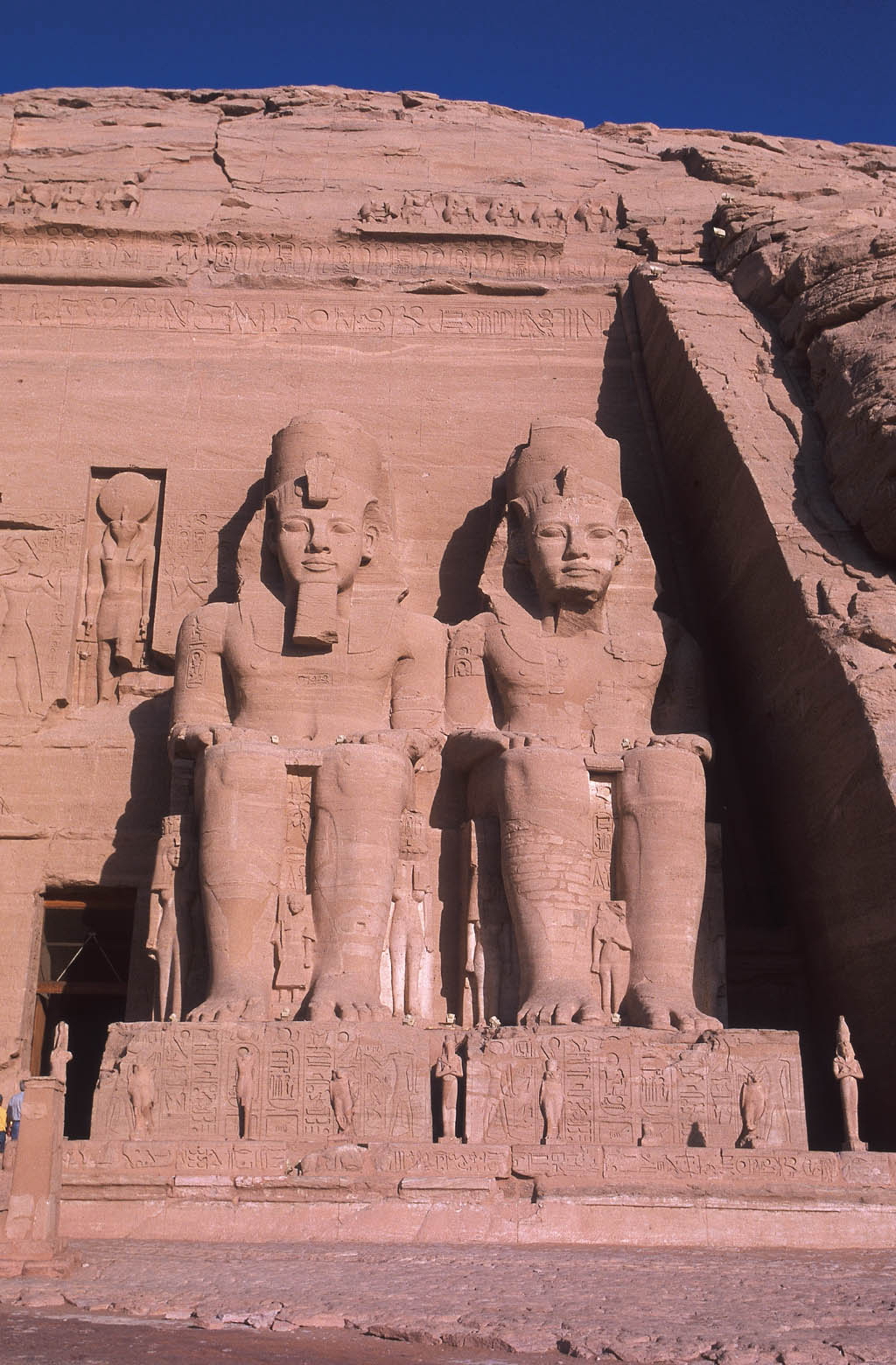
At Abu Simbel the mountain seems to open all at once. Four colossi gaze at the desert; behind them, the stone sinks into shadow. The lake close by is a reminder, though, that the landscape we contemplate today is no longer that of Antiquity.
The mountain turned facade
The great temple was cut in the reign of Ramses II (Ramesses II). One of the four seated statues broke in Antiquity; its fragments have stayed at the foot of the facade. Nothing here is merely decorative: the entrance announces the ruler, the halls lead towards the gods and the depth of the rock gives the route its gravity. To the north, a second temple is dedicated to Hathor and to the great royal wife Nefertari.
From sunlight to half-light
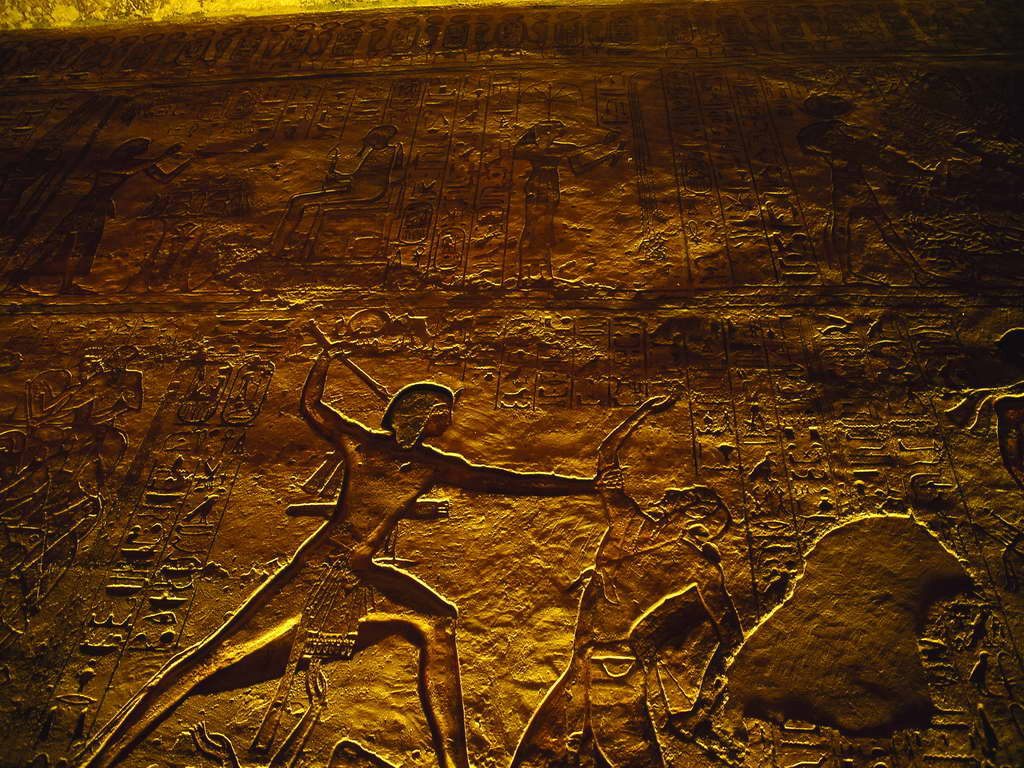
Once past the threshold, the space narrows. Reliefs accompany the walk and the light gradually gives way to shadow. We leave the immense silhouette of the colossi to look at scenes carved at human height. The temple then changes scale: what seemed a facade raised against the desert becomes an inner path, made of successive halls and attentive gazes.
A light awaited
Twice a year, around 22 February and 22 October, the sun’s rays reach the sanctuary of the great temple. The figures at the back are lit up, while Ptah remains in shadow. This passage of light still fascinates. It is better to describe it as it is documented than to attach to it a date of birth or coronation of Ramses II that the sources used do not confirm.
A mountain moved
Lake Nasser did not exist when the temples were cut. Its creation threatened to submerge them. During the international campaign to save the monuments of Nubia, Abu Simbel was cut up, carried and reassembled higher up. The move is now part of its history. Before the facades, we are therefore looking at both an ancient work and a conservation choice made in the 20th century.
Today’s shore
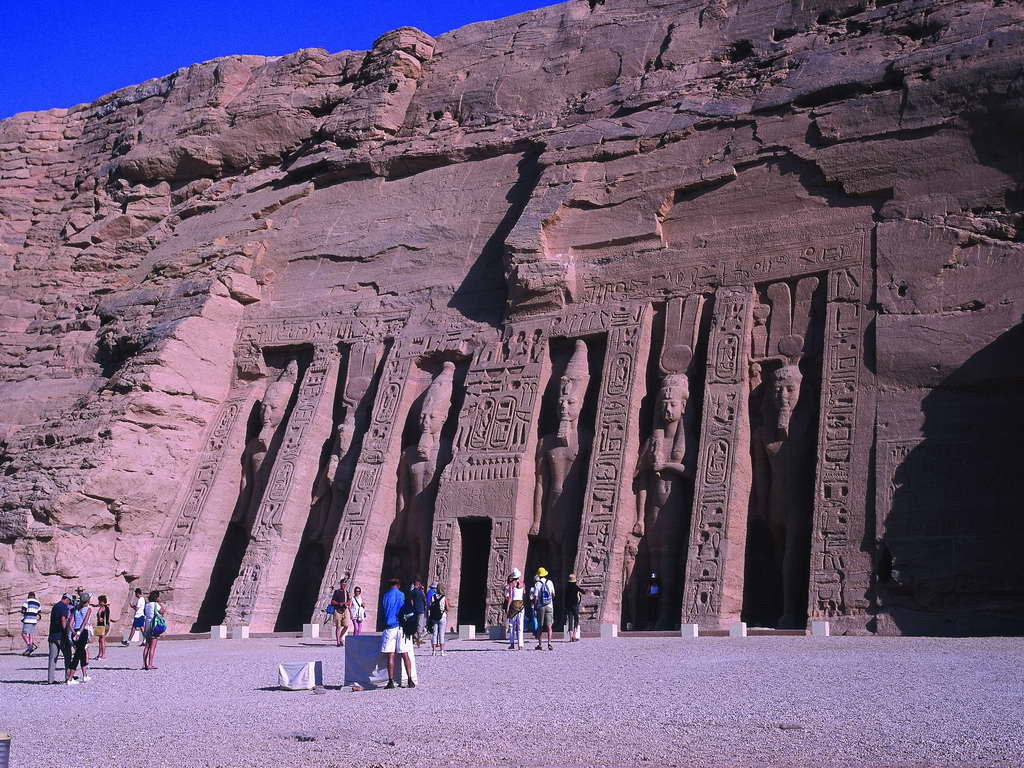
As we move away, the two temples take their place again in a landscape of rock, water and sky. The contrast is striking: monuments designed for an ancient mountain now line a modern lake. The journey to Nubia does not stop at this shore. Aswan and the temple of Wadi es-Sebua tell of other meetings between the Nile, the stones and their rescue.