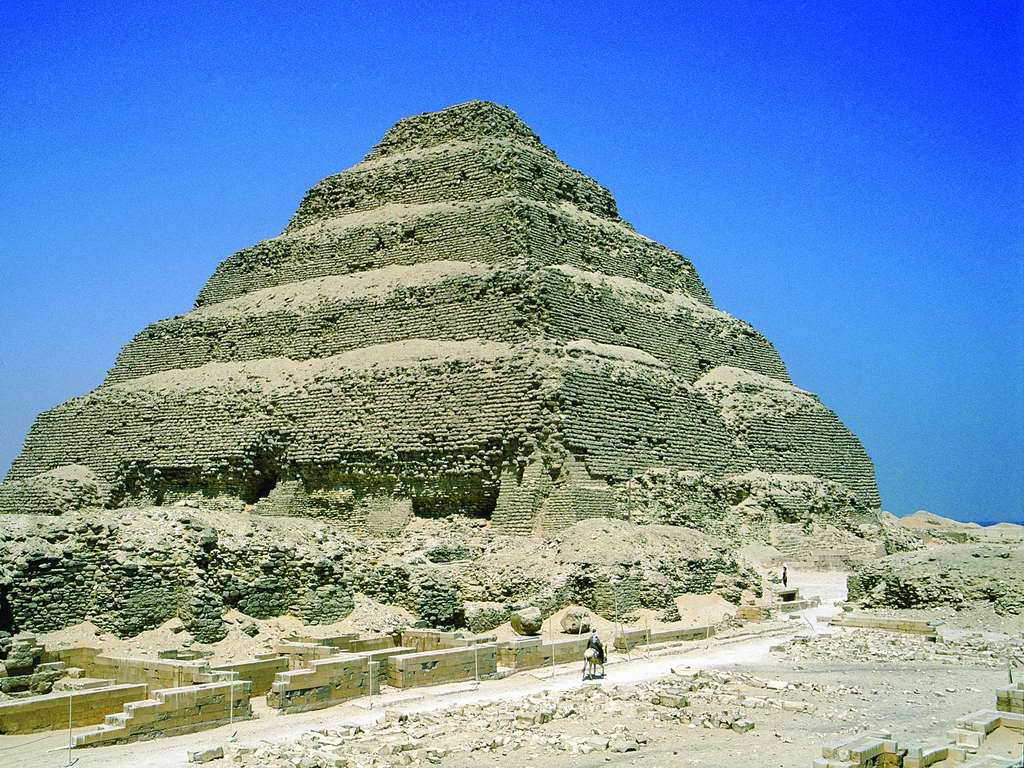
At Saqqara the desert does not reveal everything at once. The Step Pyramid stands out first; then other tombs, courts and passages appear. The place asks you to walk slowly, for its history does not fit into a single monument.
The memory of Memphis
Saqqara was one of the great necropolises of Memphis. Rulers and officials were buried there in different periods. The pyramid of Djoser, built under the 3rd Dynasty, marks an important stage in stone architecture. Yet it does not exhaust the site. Mastabas, other pyramids, decorated tombs and later remains occupy the same edge of the desert.
Walking between the centuries
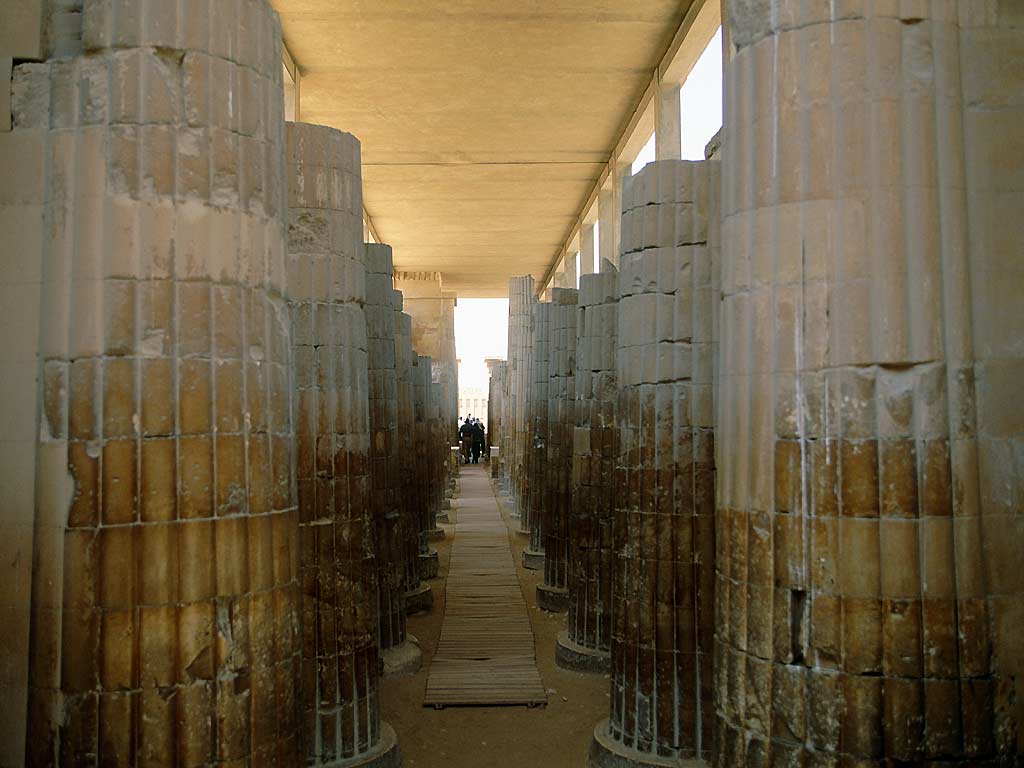
A bright court leads to a darker passage. The monuments do not line up to tell an easy story: they answer one another across centuries of use. An Old Kingdom tomb and a sanctuary of another period do not say the same thing, even though they share the landscape. This diversity makes Saqqara an open-air archive, each stage of which changes the reading.
Words for the afterlife
In the pyramid of Unas, texts inscribed in the burial chamber accompanied the king after his death. Their presence changes how we see the mass of stone: inside lay a space of words, rites and hope. Elsewhere, the decoration of the tombs of officials shows gestures and activities that give another measure of Egyptian society.
Stone and sand
The desert light sometimes simplifies forms from a distance. Up close, the surviving walls, the reliefs and the entrances open different stories. Saqqara is not visited as a frozen backdrop around Djoser. Research and conservation go on bringing new questions to light there. The landscape is ancient; our way of understanding it remains on the move.
A wider territory
To the north, Giza also belongs to the great funerary region of Memphis. Comparing the two sites helps to go beyond the single image of the pyramid. The map brings them close, but the road between them recalls the extent of this territory. At Saqqara the sand keeps the memory of many periods, not only that of the first kings.