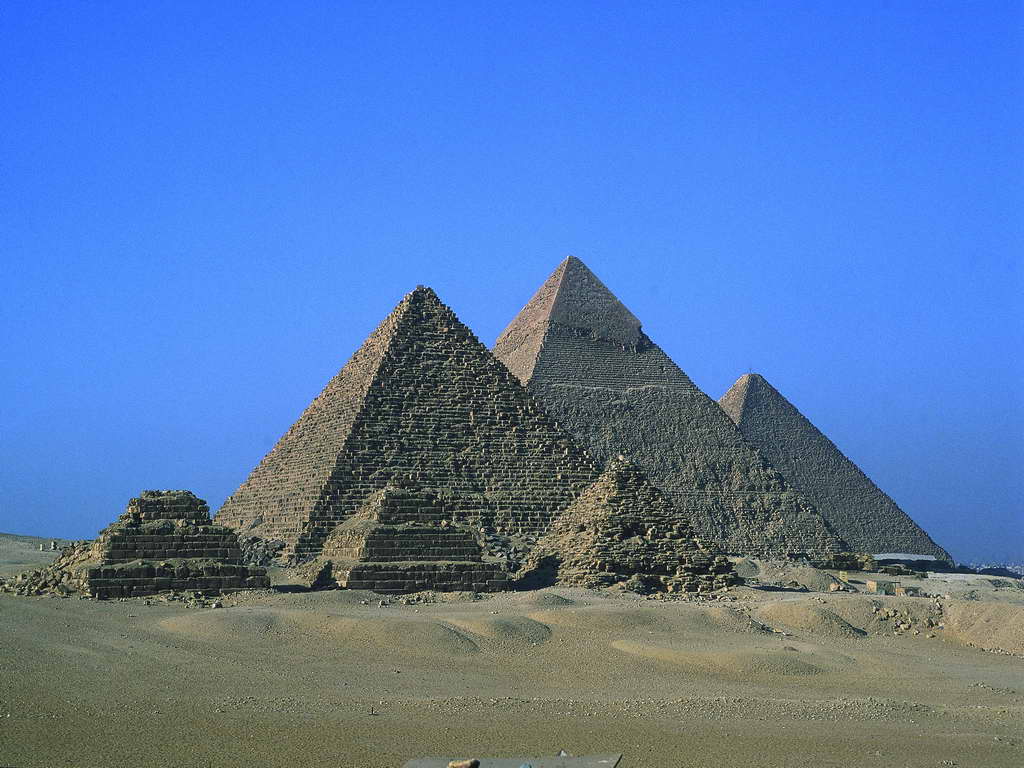
At Giza the pyramids first seem to be nothing but three silhouettes set on the horizon. Yet the city is very close. Between this closeness and the long line of the plateau, the eye changes: it discovers paths, tombs and traces of lives around the royal monuments.
One plateau, several complexes
The great pyramids of Cheops (Khufu), Chephren (Khafre) and Mycerinus (Menkaure) date from the 4th Dynasty. Each belonged to a larger funerary complex, with temples, causeways and other burials. The tombs of officials and relatives extend this landscape further. The pyramids are therefore not three isolated objects: they occupy an organised territory, linked to the ancient region of Memphis.
Changing distance
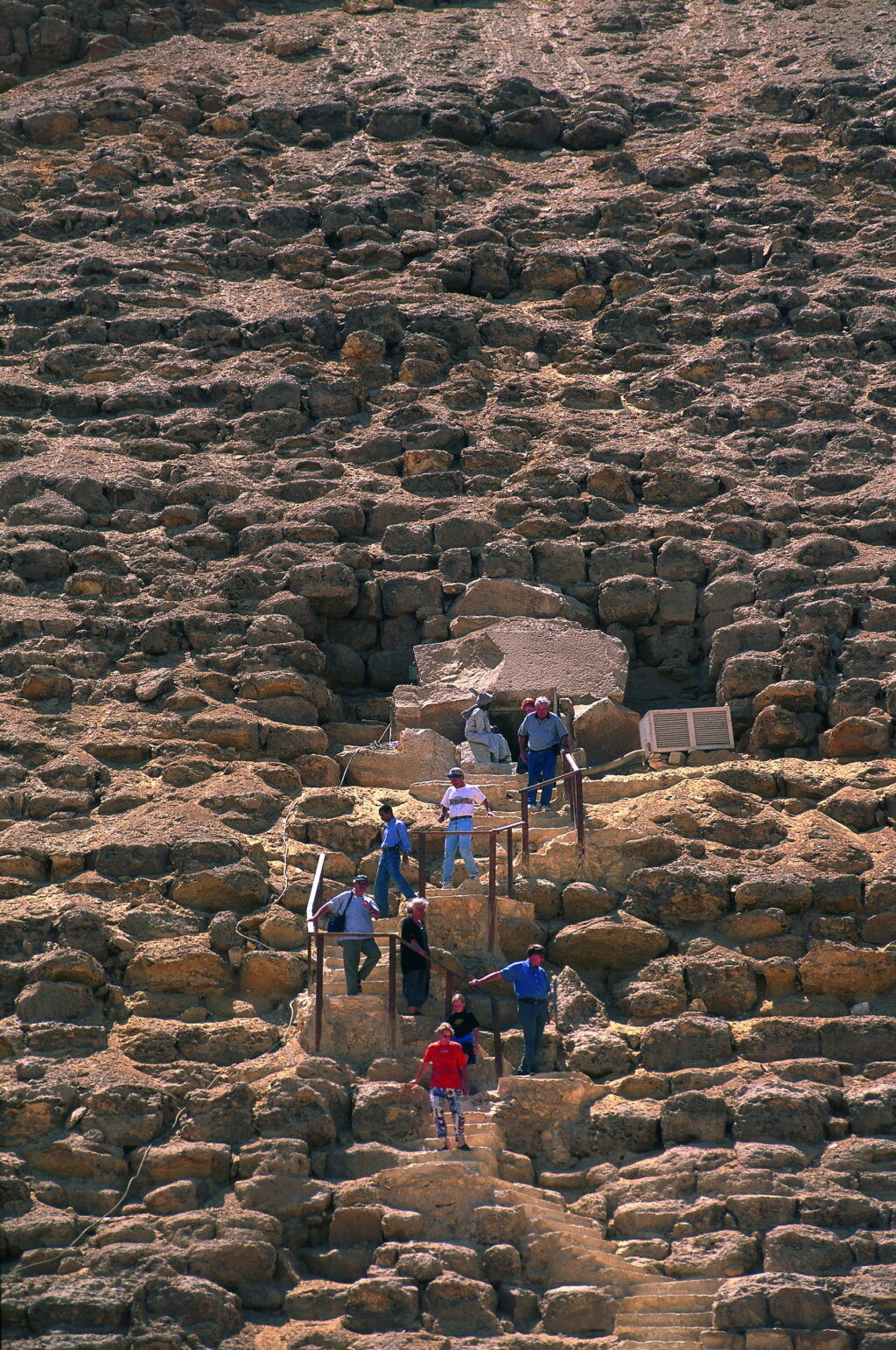
From afar, the faces rise with an almost abstract simplicity. Up close, the courses of stone, the breaks in the ground and the size of the blocks impose another measure. The plateau asks you to walk and to retrace your steps. A single viewpoint is not enough. This movement does more to convey the scale of the site than a pile of figures often repeated without a sure source.
The Sphinx and the causeways
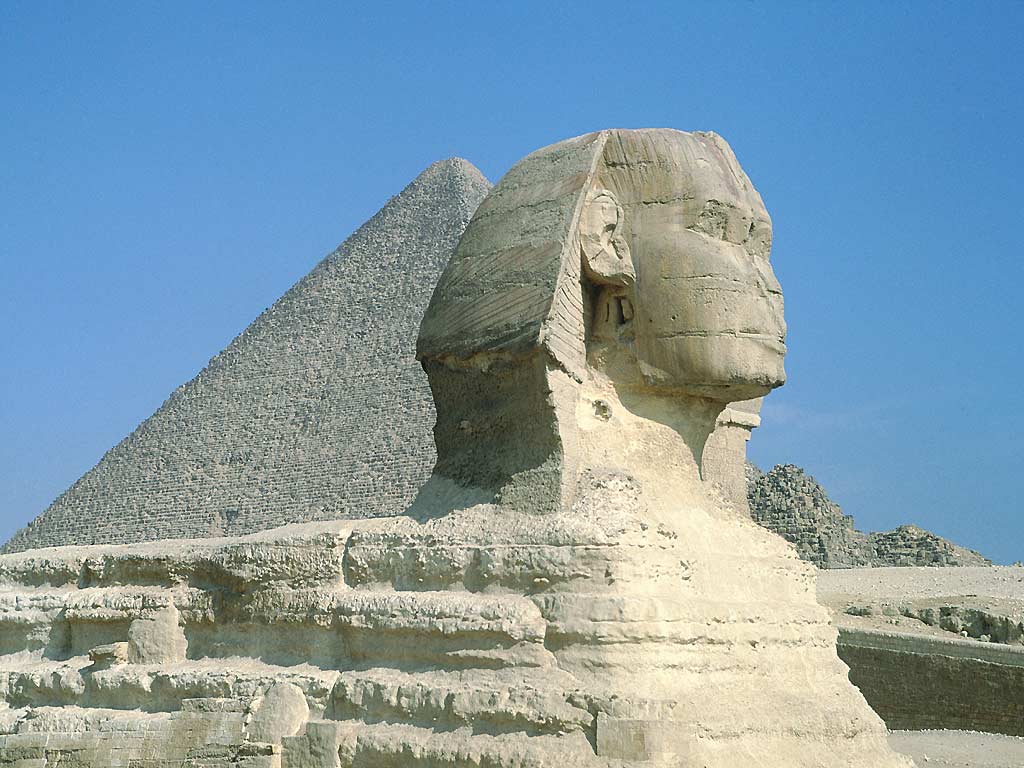
The Great Sphinx belongs to the landscape of the complex of Chephren. Near it, the valley temple and the causeway recall that a route linked the different parts of the royal monument. The remains linked to the building works and the burials of the elite widen the story further. Behind the names of the rulers appear craftsmen, officials and communities who gave this plateau its form.
The city on the edge of the desert
The boundary between the sand and the metropolis is never far away. It makes the place singular: an Old Kingdom funerary area now lies next to an immense city. The contrast takes nothing away from the pyramids; it is a reminder that the landscape goes on changing. The monuments pass through the ages while their surroundings are transformed.
Beyond the three peaks
The eye can leave the pyramids without leaving their history. To the south, Saqqara preserves other pages of the Memphite necropolis. To the east, Cairo opens an urban route of an entirely different span. On the map, these places close to one another show how the memory of Egypt can be read on several scales.