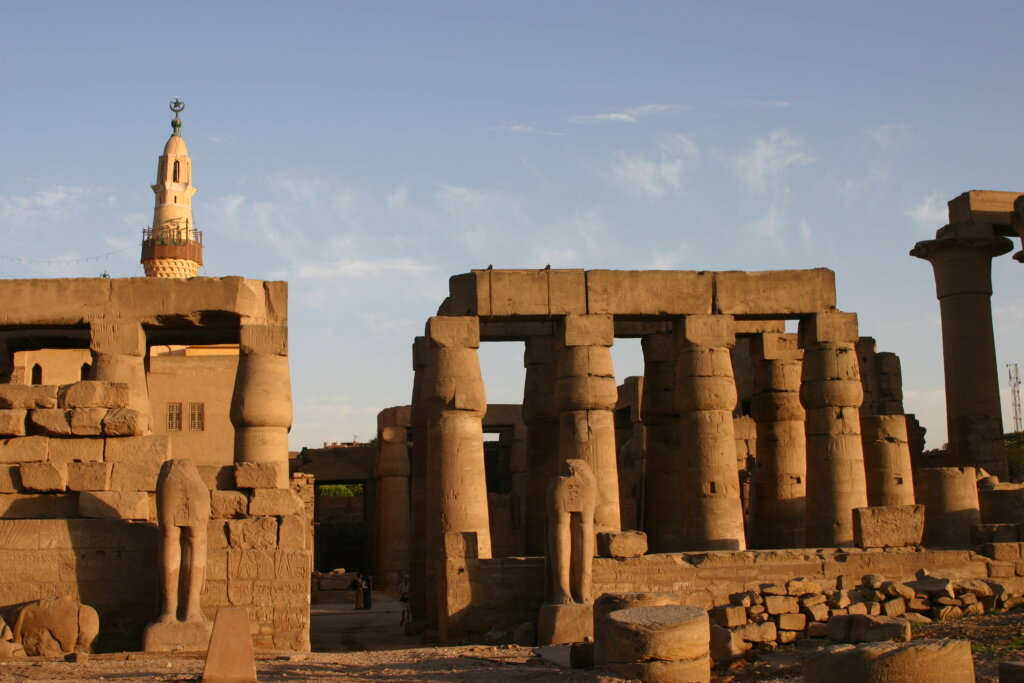
At Luxor the columns do not rise at the end of a desert track. They stand in the town, near the Nile, close to the streets and the passers-by. Here the ancient stone shares the light with a life that has never stopped.
A sanctuary at the heart of the town
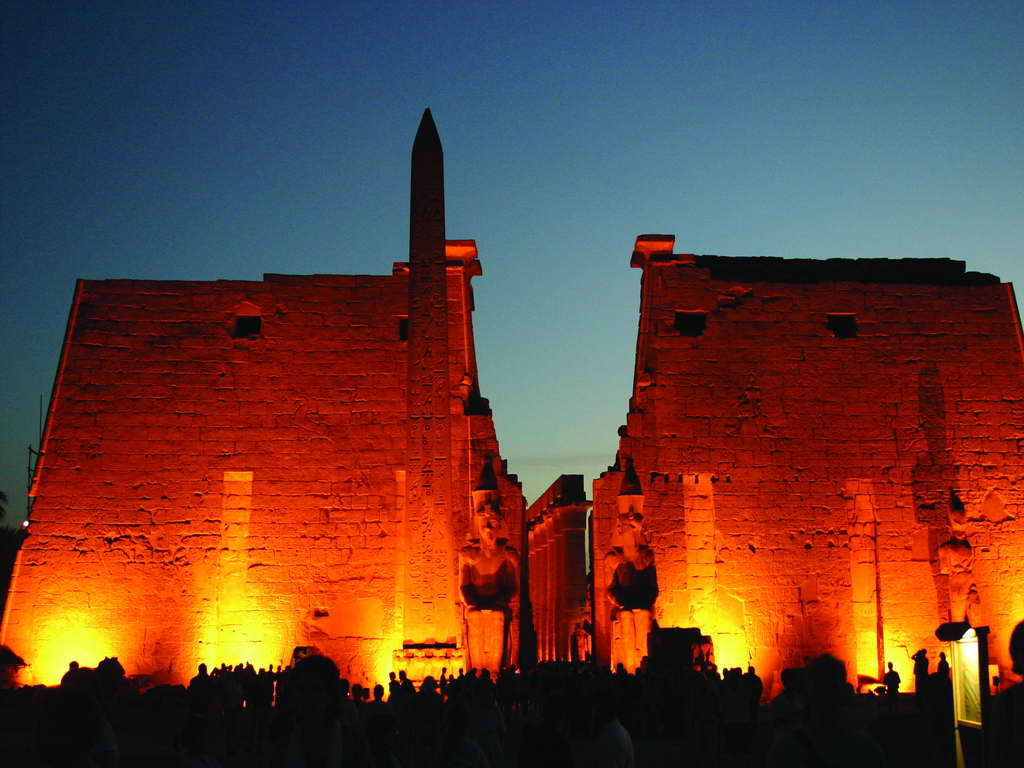
The temple of Luxor was developed by several rulers. Amenhotep III had its core built; Ramses II added, among other things, a pylon, a court and colossal statues. The monument therefore does not tell of a single reign. Its spaces form a sequence of decisions and uses whose traces can still be seen. The present town surrounds it instead of leaving it alone in the landscape.
The way of Opet
A processional way once linked Luxor to the sanctuaries of Karnak. During the Opet festival, the images of Amun, Mut and Khonsu were carried to the temple of Luxor. The procession brought the town into the religious life of the sanctuary. Today the avenue lined with sphinxes makes visible again this relationship between two complexes that one might think separate.
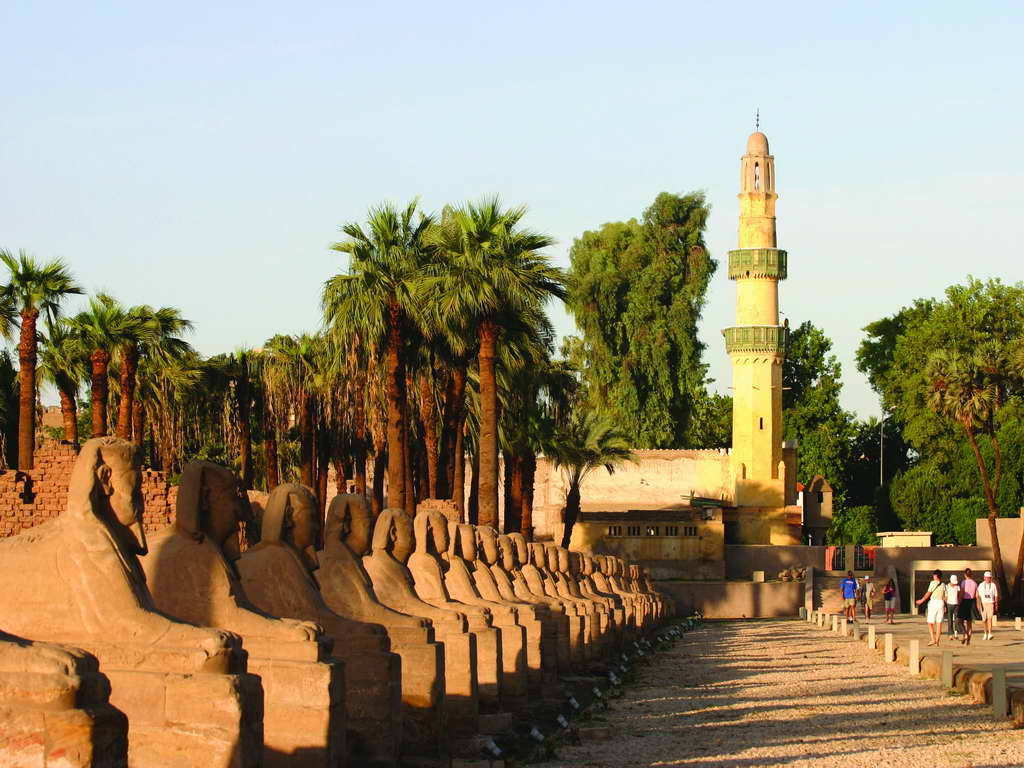
The columns and the minaret
In the court, the Mosque of Abu el-Haggag is a reminder that the place has known other uses and remains present for its inhabitants. The minaret rises among the ancient forms. This closeness is one of the strongest features of Luxor. It invites us to see the temple as part of an inhabited town, not as a ruin cut off from everything that followed it.
When the light changes
As the day fades, the reliefs take on a new depth. The shadows separate the columns and bring the statues closer to the pylon. One can imagine the ancient processions without confusing them with the present spectacle. The temple still gives shape to movement: you walk from the street to the court, then return to the town with different eyes.
The other bank of the Nile
Facing Luxor stretches the west bank of ancient Thebes, with its necropolises and mortuary temples. Karnak, Luxor and these places in the west belong to a single vast heritage ensemble. The river separates and links them. The map helps to place this route between the town, the sanctuaries and the mountain of the tombs.