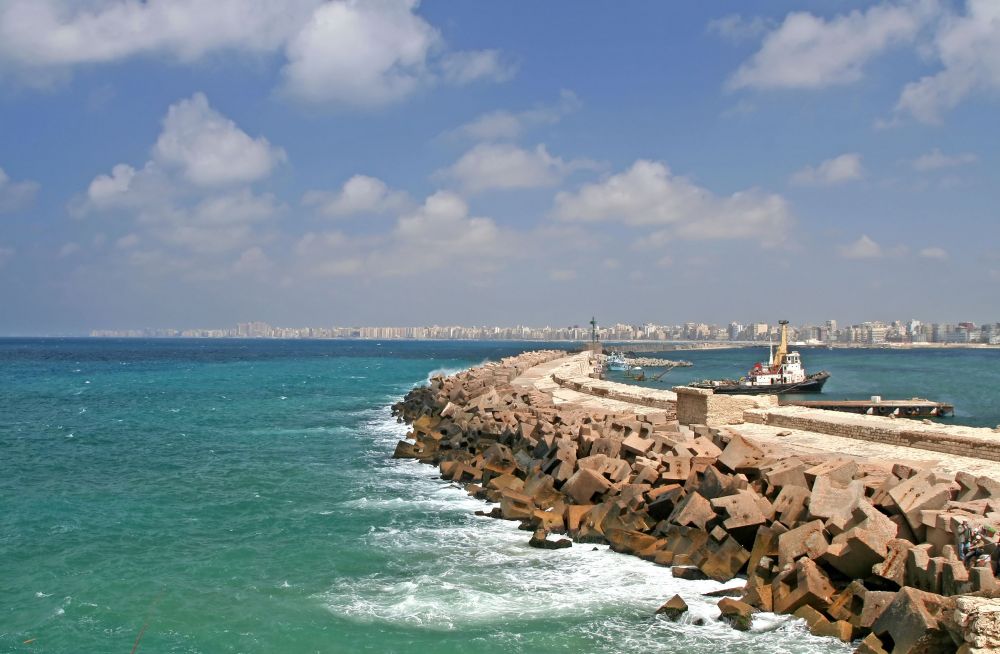
In Alexandria the eye is always looking for the sea. It appears at the end of a street, behind a facade, along the quays. The wind brings back famous names, the lighthouse, the library, but the city does not yield its past at a single glance. You have to follow its fragments.
A city open to the Mediterranean
Founded by Alexander the Great in 331 BC, Alexandria became the capital of the Ptolemies. Its port linked Egypt to other shores of the Mediterranean. People, goods and ideas circulated there. The library and the lighthouse hold an immense place in the city’s memory, even though their buildings have vanished. What can be seen today calls for another kind of attention.
The shore and what it hides
Walking along the water, you realise how much ancient Alexandria has been transformed. Part of the old royal quarter lies beneath the sea. Research in the Eastern Harbour reveals remains without restoring an intact city. The present coast does not erase the past; it covers it, cuts through it and sometimes lets it reappear. The landscape changes depending on whether you look at the surface or at what lies below.
Scattered traces
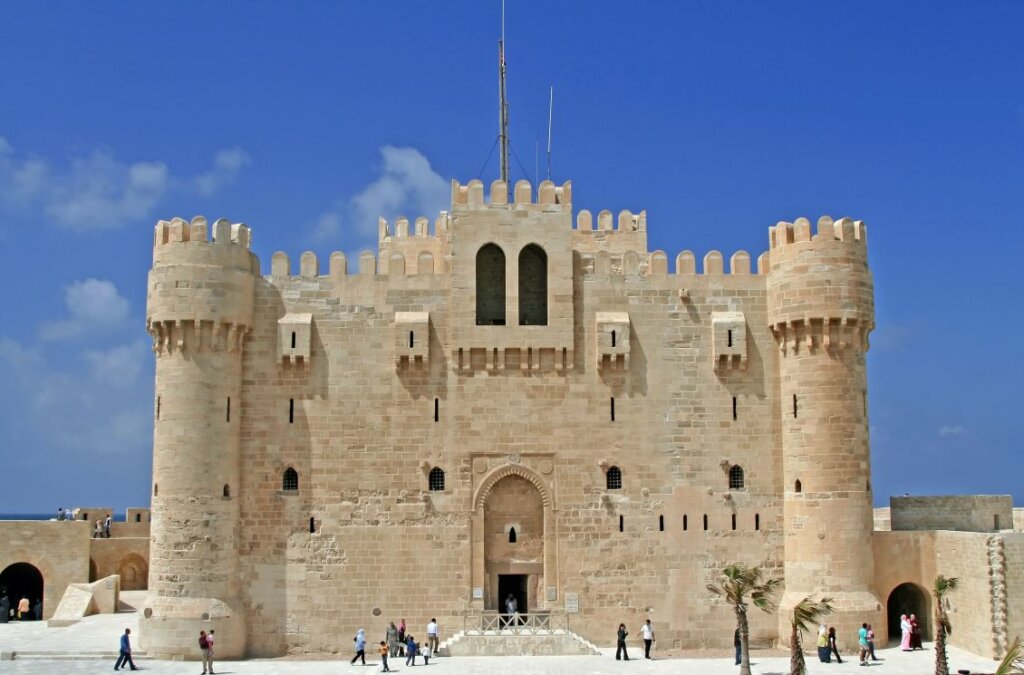
Near the Citadel of Qaitbay, the memory of Pharos returns. Further on, Kom el-Dikka preserves buildings of the late Roman period, among them a theatre, baths and teaching halls. You have to move from one place to another to understand that Alexandria never belonged to a single period. Each remain opens a window, but none can replace the vanished streets and quarters.
Beneath the city, other worlds
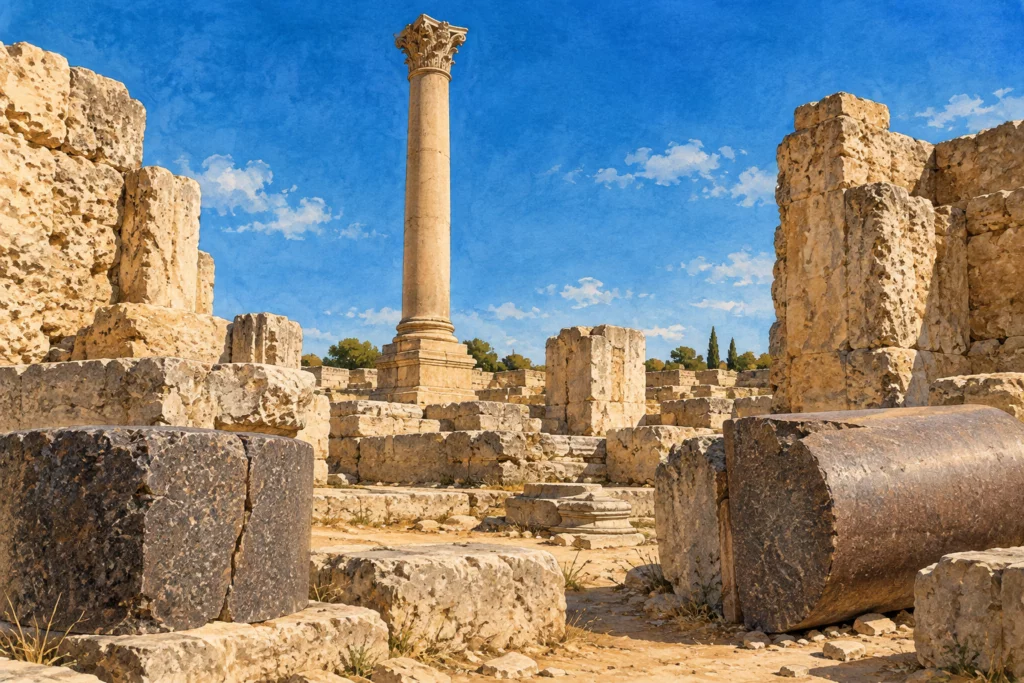
The catacombs of Kom el-Shuqafa combine Greek forms and Egyptian motifs. At the Serapeum, a column still rises above the stones. These places recall the religious and cultural diversity of the city without allowing it to be reduced to a simple meeting of two traditions. Alexandria was built in successive layers, to the rhythm of powers, beliefs and inhabitants.
Back to the shore
The sea goes on giving its movement to the present city. Along the quays, ancient history is neither entirely visible nor entirely lost. It is read in the excavations, the scattered monuments and the names still spoken. The map places Alexandria on the edge of the Delta; from there, the route can follow the Nile towards Cairo.